Twist or Pull: The Real Story on Screw Caps vs. Cork
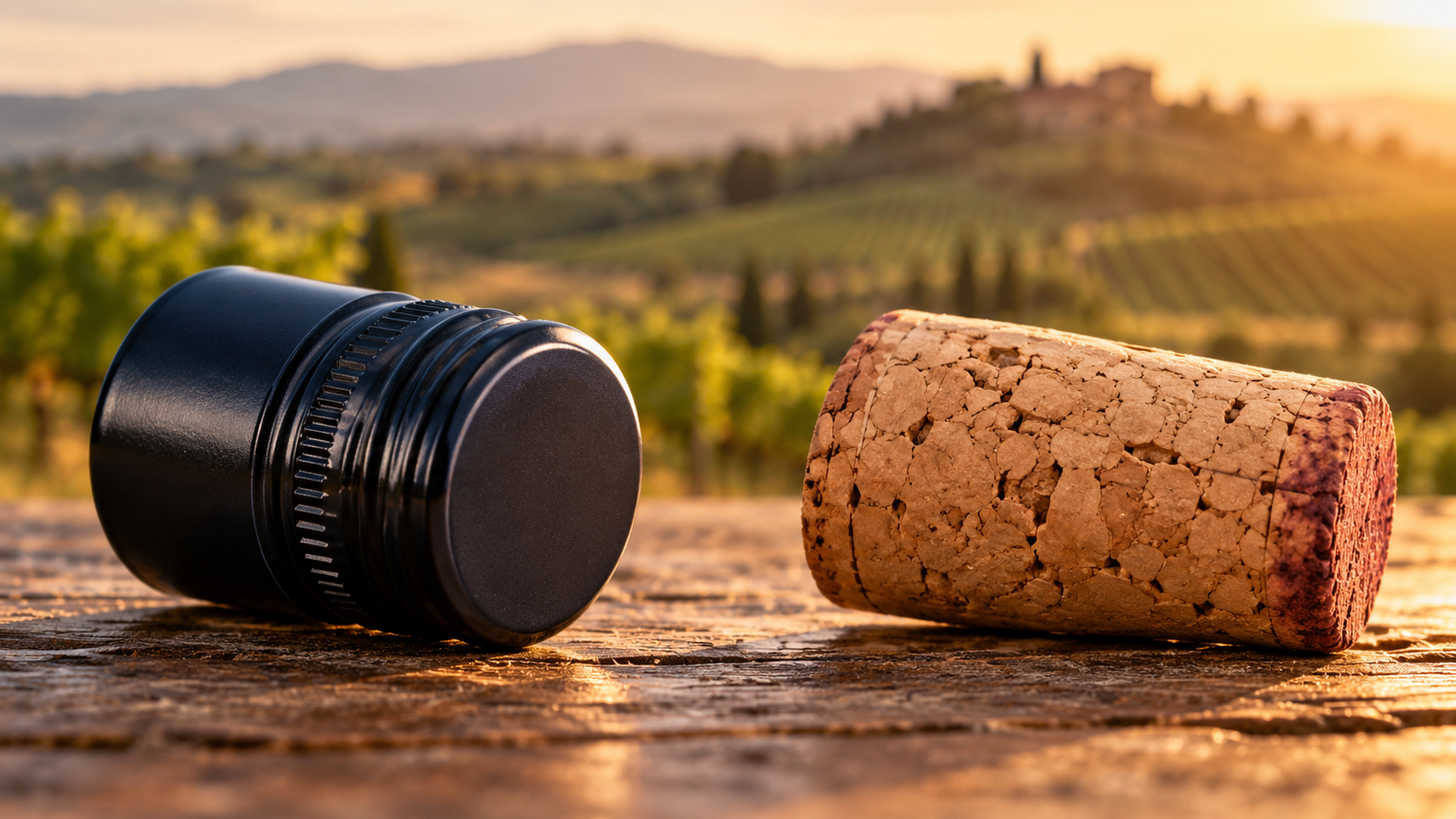
The pop of a cork is the most successful sound effect in the wine business, and it has almost nothing to do with what's in the bottle. That little ceremony — foil cut, worm twisted in, the soft thunk as the stopper gives way — has convinced generations of drinkers that a screw cap means a cheap wine. It doesn't. It hasn't for a long time.
What a closure actually does is quieter and more interesting than the ritual suggests. It decides how much oxygen gets into your wine over months and years, and it decides whether a mold-born chemical gets a shot at ruining a bottle you paid good money for. Those are real stakes. The romance is optional.
Why the thing on top deserves a second look
Most wine drinkers never think about closures until a bottle goes wrong — and when it does, they usually blame the wine. That's the part that bothers me. A musty, flat bottle of a perfectly good Pinot Noir gets written off as "not my style," the producer loses a customer, and the actual culprit — a two-inch plug of tree bark — walks away clean.
The closure is the last decision a winemaker makes, and it's one of the few that keeps working after the wine leaves the cellar. Every other choice — the vineyard, the harvest date, the barrel — is locked in on bottling day. The seal on top keeps acting for as long as the bottle sits on your counter or in your basement. If you care about getting the wine the winemaker meant to make, the closure is worth about ninety seconds of your attention.
And this isn't a niche question. By one widely cited industry estimate, the world seals roughly 20 billion bottles of wine a year. Somewhere between 6 and 7 billion of those get a screw cap. Another 1 to 2 billion get a synthetic stopper, and the rest — still the majority — get cork in some form. So the next bottle you open has a real chance of landing in any of those camps, and each camp has its own strengths and its own failure modes.
Cork's real problem has a chemical name
The villain is 2,4,6-trichloroanisole, mercifully shortened to TCA. It forms when certain molds interact with chlorine-based compounds, and cork bark happens to be a hospitable place for that reaction. A tainted wine smells like a damp basement, wet newspaper, or a dog that came in from the rain. At lower levels it doesn't smell like much of anything — it just mutes the fruit, so the wine seems tired and flat. That second version is the sneaky one, because most people never recognize it as a fault.
The quantities involved are absurd. A 2005 study in the journal Food Quality and Preference put the average detection threshold for TCA in white wine at about 2.1 nanograms per liter — parts per trillion — and the point where consumers started rejecting the wine at about 3.1. That's a few billionths of a gram spread through a full bottle. Nothing else in your kitchen is that potent, and individual sensitivity varies enormously, which is why one person at the table swears a bottle is corked while another happily refills.
How often does it happen? That depends on who's counting and when. In 2005, Wine Spectator's James Laube reported that about 7 percent of the roughly 2,800 bottles he sampled that year were tainted. A French journal report from 2003 put the range at 5 to 8 percent. Australian winemakers in the late 1990s were dealing with rates well north of 5 percent, which is a big reason the screw-cap movement started there.
The trend since then has been downward. The International Wine Challenge, which opens tens of thousands of bottles a year, reported an average cork-taint rate of about 1.3 percent over 2007–2017, and wine writer Jamie Goode reported that roughly 0.8 percent of cork-sealed bottles at the 2022 competition were judged tainted. Closer to home, Northwest Wine Report's Sean Sullivan tallied his own tasting records from 2015 to 2021: about 357 musty bottles out of roughly 10,000 wines reviewed — around 3.6 percent — and his analysis attributed at least 94 percent of those to the cork rather than the winery.
So the honest summary is this: cork taint is far less common than it was 25 years ago, and it still hasn't gone away. One bottle in a hundred sounds small until you remember how many bottles a restaurant opens in a week, or that the one in a hundred might be the anniversary bottle.
How the screw cap got a second chance
The screw cap is not a new invention dressed up as innovation. A French company called Le Bouchage Mécanique brought its screw cap to market in 1959. In 1964, Peter Wall, then production director at Australia's Yalumba, approached the firm about developing a closure suited to wine. The result became the Stelvin, trialed on Swiss Chasselas in the early 1970s — Swiss producers had their own cork-taint headaches — and used commercially in Australia from 1976.
Then the public said no. Australian and New Zealand drinkers associated screw caps with cheap fortified wine and cheaper jug wine, and by the early 1980s the experiment had been largely shelved. The closure wasn't failing the wine. It was failing the image.
The turnaround came from a valley better known for dry Riesling than for marketing campaigns. In 2000, a group of Clare Valley producers in South Australia decided they were done losing their most aromatic, delicate wines to cork taint, and they bottled Riesling under screw cap together, so no single winery would carry the risk of looking cheap alone. The Clare Valley's own regional association describes the decision as a commercial risk rather than a marketing win — the closure offered no sales advantage at the time, and arguably a disadvantage.
New Zealand followed within a year. Marlborough winemakers organized around the screw cap in 2001, when adoption in the country was estimated at around 1 percent. By 2004, estimates put it near 70 percent. Today New Zealand is, in Goode's phrase, almost exclusively a screw-cap country. Australia moved nearly as fast: data compiled by the Australian Wine Research Institute show screw-cap use climbing from about 51.5 percent of the closures used in 2007 to almost 88 percent in 2018, while natural cork fell to under 6 percent.
The United States has been slower, and two American stories show why. In 2000, Napa's PlumpJack announced that half of its 1997 Reserve Cabernet Sauvignon — about 150 cases — would go out under screw cap at $135 a bottle, ten dollars more than the cork-finished version. It was a deliberate provocation from a top-tier Oakville producer, and it got the industry talking. A few years later, Washington's own Hogue Cellars ran a 30-month closure trial on a Merlot and a Chardonnay. Hogue's tasters found cork taint in 18 percent of the cork-sealed wines across the study, and of 40 cork lots examined, only one was judged usable. "We're trying to address the insidious nature of cork taint," said David Forsyth, Hogue's director of winemaking at the time. Starting with the 2004 vintage, Hogue moved about 70 percent of its 500,000-case production to screw caps, and after a second, longer study it eventually moved its entire portfolio — reds included.
That's a big Columbia Valley winery betting its everyday shelf presence on a closure that American drinkers still associated with gas-station wine. It's worth remembering the next time a twist-top Washington red makes you hesitate.
What the seal is actually doing
Here's the part that gets lost in the cork-versus-cap shouting match: neither closure is a perfect wall, and neither is supposed to be.
Every closure lets in some oxygen, measured as an oxygen transmission rate. A little oxygen over time helps a wine evolve; too much makes it flat, brown, and stale; too little can leave some wines smelling of struck matches or cabbage, a fault winemakers call reduction. The closure is effectively a valve set to a particular slow drip.
The Australian Wine Research Institute's landmark closure trial, which started in 1999, is the best evidence anyone has on this. Researchers bottled the same Clare Valley Semillon under 14 different closures — natural corks, technical corks, a stack of synthetics, and a screw cap — across roughly 8,600 bottles, then tracked them for years. The screw-capped wine held onto the most sulfur dioxide (the preservative that protects wine from oxygen), kept its fruit freshest, and developed the least browning. The synthetic stoppers of that era oxidized quickly. Photos of the bottles at two, five, and ten years make the point without any chemistry degree: the screw-capped wine stayed pale while some others darkened.
The more useful finding for everyday drinkers is about consistency. AWRI's research shows that screw caps vary very little in how much oxygen they let through, while natural corks vary a lot from one stopper to the next — they're pieces of bark, after all. In a 2018 AWRI tasting, 4 of 30 bottles under natural cork showed cork taint, and several more showed excess oxidation. The best cork-sealed bottles tasted as good as the screw-capped ones. The problem was everything that wasn't the best cork-sealed bottle.
That's the phenomenon people mean by "bottle variation." Buy six bottles of the same wine under natural cork and age them for ten years, and you may have six slightly different wines. Under screw cap, you're much more likely to have the same wine six times.
Screw caps aren't flawless, either. Because they let in so little oxygen, a wine that's already prone to reduction from how it was made can show those struck-match smells more readily under a screw cap. But AWRI's analysis of International Wine Challenge data from 2007 to 2017 — more than 117,000 wines — found that sulfide-type faults showed up at about the same rate under cork, screw cap, and synthetic closures. Reduction is mostly a winemaking issue, not a closure issue. And the closure industry has responded with liners that let in different amounts of air: Hogue, for example, chose a liner known as Saranex specifically because it admits a small amount of oxygen and helped its reds develop without reductive notes.
Cork didn't just sit there and take it
The cork industry had every reason to panic in the early 2000s, and to its credit it did something about it.
The most visible answer is the technical cork. Diam, now used by producers from Burgundy's Louis Jadot and Bouchard Père et Fils to Alsace's Hugel, grinds cork into granules and cleans them with supercritical carbon dioxide — essentially the same process used to decaffeinate coffee — to strip out TCA before the granules are molded into a stopper. Diam closures also come in grades rated for different aging windows, so a winemaker can choose a stopper matched to how long the wine is meant to last.
Natural cork got its own upgrade. In 2016, Amorim, the world's largest cork producer, launched a system it calls NDtech that screens individual corks on the production line using gas chromatography, rejecting any stopper above 0.5 nanograms per liter of releasable TCA — below what nearly anyone can smell. Those corks cost more, but they let a producer keep the traditional closure without rolling the old dice.
There's also a real environmental case for cork, and it's not just industry spin, though the industry certainly makes it loudly. Cork comes from the bark of the cork oak, Quercus suber, which regrows after harvest. According to the Portuguese Cork Association, a tree is first stripped at around 25 years old, then every nine years after that, and can keep producing for more than 150 years. Portugal alone accounts for roughly half the world's cork, with more than 730,000 hectares of cork oak forest. Those forests support rural jobs and a lot of wildlife, and a healthy market for wine corks is part of what keeps them standing. Screw caps are aluminum, which is highly recyclable — when it actually gets recycled, which, with small caps, is not guaranteed.
One more wrinkle worth knowing: a musty wine under screw cap is not impossible. TCA and related compounds can come from contaminated barrels, wooden pallets, cardboard shipping cases, or a winery's own structure, and a closure can't protect a wine that was tainted before it was bottled. Those cases are rare — remember that 94 percent figure — but they're why "screw cap" doesn't mean "guaranteed perfect," and why "corked" isn't always technically correct.
Myths worth retiring
Screw caps mean cheap wine. This one should be gone by now. Some of the most respected Rieslings in Australia, much of New Zealand's top Sauvignon Blanc and Pinot Noir, and plenty of serious bottles from Washington, Oregon, Austria, and Germany ship under screw cap. Price tracks the wine, not the closure. Market research suggests the perception lingers anyway: a 2012 Wine Intelligence study found that 66 percent of regular American wine drinkers were fans of natural cork, while just 22 percent said they were willing to buy wine with a twist-off top. That's a perception problem, not a quality one.
Wine needs to breathe through the cork. It doesn't, at least not the way people imagine. A good natural cork lets in very little oxygen — AWRI's data put the best natural corks in the same low range as screw caps.
Red wines can't age under screw cap. The evidence says they can. PlumpJack's split 1997 Reserve Cabernet has become an informal long-term experiment among collectors, and Hogue's second closure study ran its reds for five years before the winery moved them to screw cap. What we don't yet have is a large body of hundred-year evidence on great reds under screw cap — mostly because the closure hasn't been used on them that long. That's a real limitation, not a verdict.
A crumbly cork means the wine is ruined. Not necessarily. A dry, crumbly cork can let in extra oxygen, but plenty of wines with ugly corks are perfectly fine. Smell the wine, not the stopper. Sniffing the cork is mostly theater; it smells like cork.
Synthetic corks are just as good. The early synthetics were the clear losers in both the AWRI and Hogue trials, oxidizing within a couple of years. Newer synthetics have improved since those trials, but for a wine you plan to cellar, a synthetic stopper is still the closure that deserves the most skepticism.
So what to buy?
You don't need to pick a side. You need a few habits.
Stop judging the closure at the shelf. A screw cap on a $25 Pinot Noir from New Zealand or a dry Riesling from the Clare Valley tells you the producer prioritized freshness and consistency. It tells you nothing about whether the wine is good. Judge the producer and the region.
For wines you'll drink this week, prefer the screw cap when given the choice. For aromatic whites — Riesling, Sauvignon Blanc, Grüner Veltliner, Albariño — and for bright, fruit-driven reds you'll open soon, a screw cap is the closure most likely to deliver the wine exactly as it left the winery. It also means no corkscrew hunt at the picnic table.
For wines you'll cellar, look at the producer, not the closure. A serious estate using high-grade natural cork, a screened cork, or a technical cork like Diam has thought about this. If you're buying multiple bottles to age, consider splitting across vintages so one unlucky cork doesn't ruin the whole plan.
Learn the smell, then trust it. If a wine smells like a damp cellar or wet cardboard, or just seems weirdly muted compared to what you expected, that may be TCA. Pour a little in a glass, swirl, and give it a minute. If it doesn't improve, it's not your palate failing you.
Send it back without apology. At a restaurant, a corked bottle is the restaurant's problem, and any decent wine list will replace it. Say it smells musty or flat. You don't need the chemical name. At a wine shop, bring the bottle back with most of the wine still in it; many retailers will exchange it.
Don't fear the twist at the table. If you're hosting and you open a screw-capped bottle, there's no need to apologize or perform. Crack it, pour it, move on. Your guests are there for the wine, and the wine just arrived in better shape.
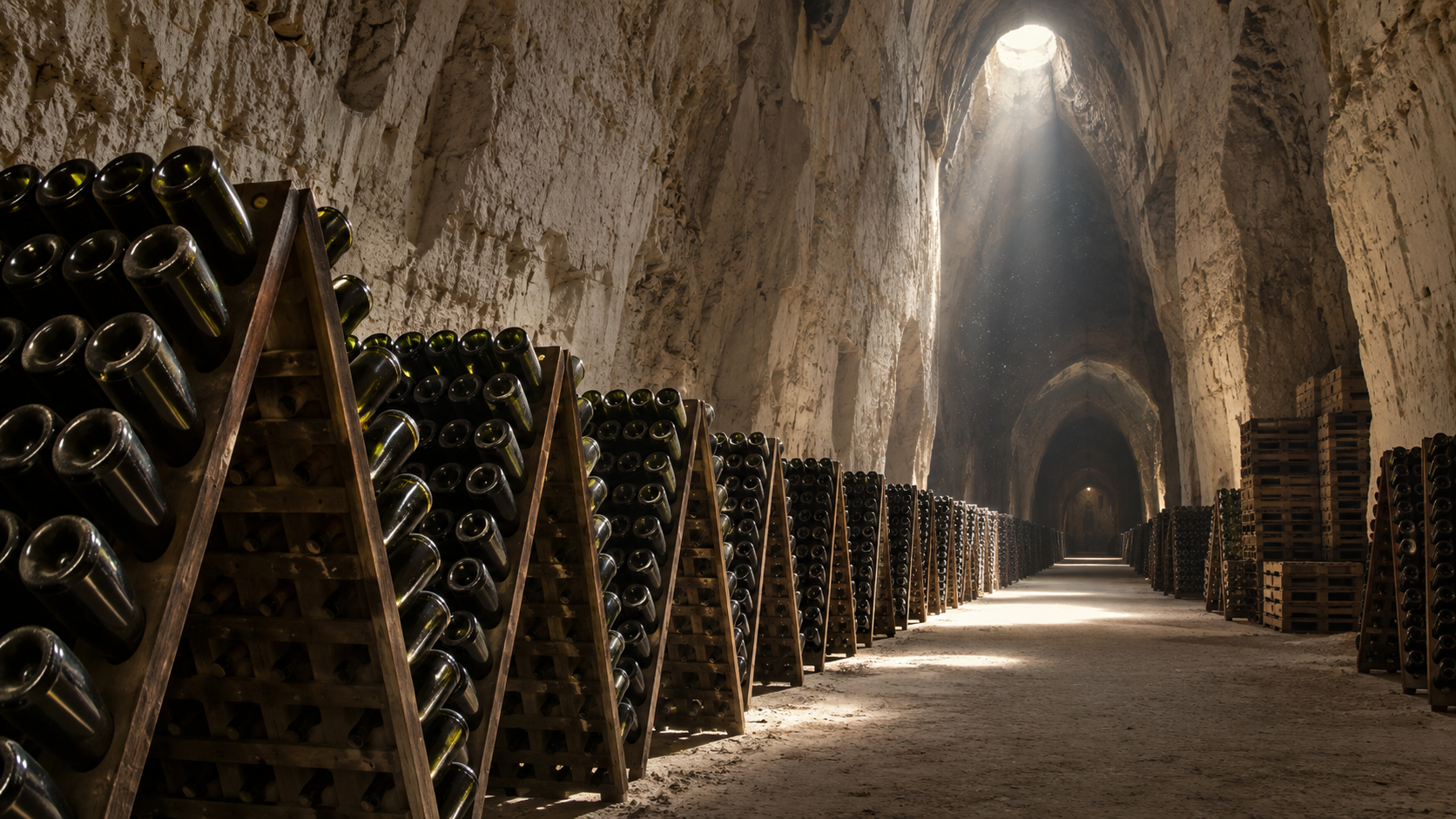
Store screw-capped bottles any way you like. Cork-sealed bottles headed for long storage traditionally go on their sides to keep the cork moist. Screw-capped bottles don't care. Upright in the pantry is fine.
Where this is headed
The closure question is not going to end with a winner. It's ending with a menu. Winemakers can now choose a screw cap with a liner tuned for a specific oxygen rate, a natural cork that's been individually screened, or a technical cork rated for five or ten years in bottle. That's genuinely better for drinkers than the old setup, where the choice was essentially cork or nothing and a few percent of bottles were lost to chance.
What hasn't caught up is the cultural script. In much of the US, the screw cap still carries a whiff of the convenience store, and the cork still carries the halo of the special occasion. Both reputations are about twenty years out of date. The producers who pioneered screw caps did it because they cared too much about their wine to lose it to a moldy stopper, and the cork producers who fought back did it by making their product dramatically more reliable.
So the next time a server presents a bottle and twists instead of pulls, don't read it as a downgrade. Read it as a winemaker who decided the pop wasn't worth the gamble. And if the bottle does have a cork, enjoy the sound — it's earned more honesty than it used to — but let your nose make the final call.