Turkey Is the Easy Part: A No-Nonsense Thanksgiving Wine Guide
Here is the honest situation: turkey is one of the more wine-friendly proteins on the table. It's mild, lean, and takes on the character of whatever you've cooked it in. The wine industry has spent decades telling you the bird is the challenge. The bird is not the challenge.
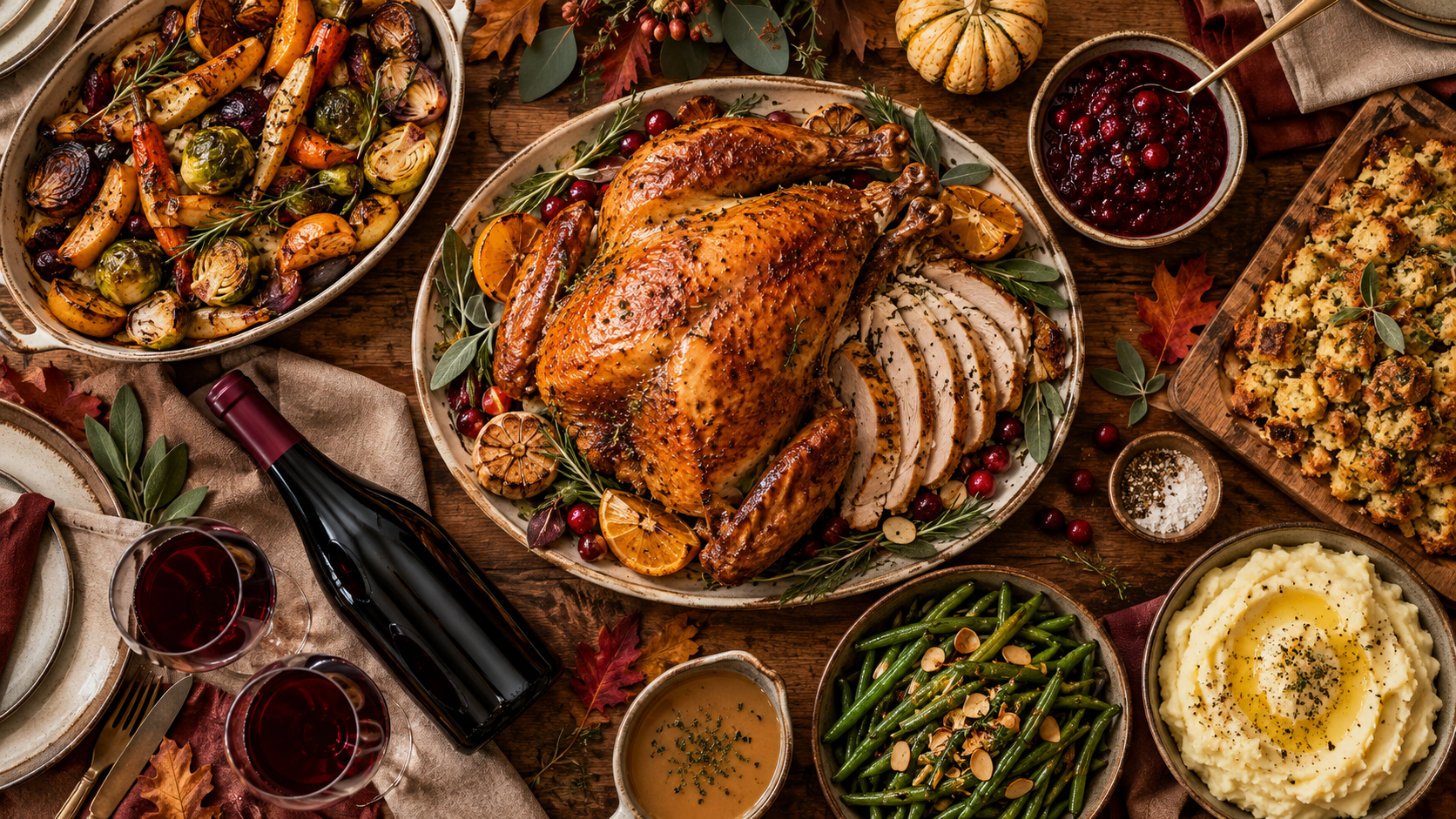
The challenge is the cranberry sauce. And the sweet potato casserole with the marshmallow crown. And the stuffing loaded with sage and sausage. And the mashed potatoes drowning in butter. And the green bean casserole. And the gravy—simultaneously savory, rich, and sticky. And all of it arriving at the same table at the same time, demanding a single bottle to be everything at once.
Thanksgiving is the hardest wine pairing in the American calendar. Not because of the turkey. Because nobody has ever tried to pair wine with a food fight.
Why Most Thanksgiving Wine Advice Fails You
Most Thanksgiving wine guidance follows one of two scripts. The first: "Go with Pinot Noir—light, goes with everything." The second: "Just get what you like. It's family." Both answers are fine. Neither one explains anything.
And at a table where one side dish has marshmallows torched on top of it, understanding the why actually matters—because the marshmallows are going to wreck your Cabernet Sauvignon, and you deserve to know that before you open it.
Thanksgiving isn't a meal you pair wine with. It's six meals simultaneously. You have turkey (mild, lean, receptive), cranberry sauce (tart, sweet, acidic), sweet potato casserole (sweet, rich, starchy), stuffing (savory, herby, fatty), gravy (umami-forward, glutinous, coating), and at least two vegetable preparations competing for the plate's remaining real estate. Any wine that's "perfect" with turkey alone is, at best, partially wrong for at least four other things on the table.
The good news: a handful of grape varieties were essentially built for exactly this kind of chaos. Understanding why they work—and why the usual suspects don't—takes about five minutes and will make every Thanksgiving better for the rest of your life.
What Actually Governs the Pairing
Strip food and wine pairing to its useful core, and three variables drive most of Thanksgiving's decisions:
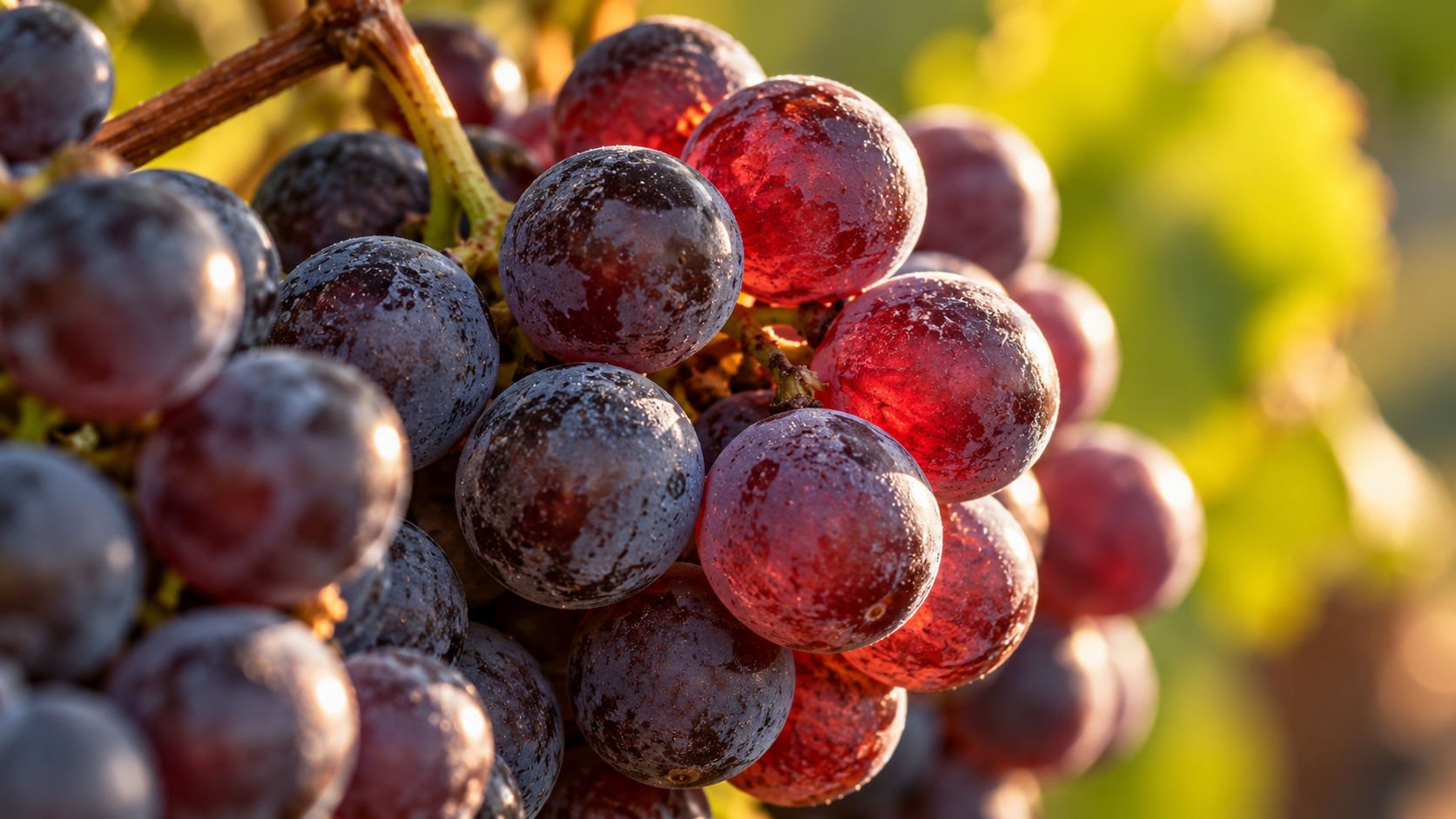
Tannin and sweetness do not get along. Red wine's grippy, drying texture comes from tannins—compounds pulled from grape skins during fermentation. In the presence of fat and protein, tannins integrate and soften. They're your friend when you're eating a fatty ribeye. But in the presence of sweetness—cranberry sauce, marshmallow-topped sweet potatoes—those same tannins taste harsher and more bitter than they actually are. This is why a Cabernet Sauvignon that seems perfectly pleasant on any other night becomes sandpaper the moment it meets the sweeter end of your table. The wine didn't get worse. The food changed what you taste in it.
Lean protein needs less tannin. Turkey white meat is low in fat. Tannins need fat to soften. Without it, they dominate—drying out your palate between bites rather than melting into them. This explains why wines that shine against fatty lamb, braised short rib, or aged beef—your Barolos, your serious Napa Cabernets—often feel wrong with Thanksgiving. There's nothing for them to anchor to.
Acidity is the table's best friend. A wine with genuine brightness refreshes your palate between bites of rich, buttery food, cuts through the fat in the gravy, and stays lively through a meal that runs three hours if the football game goes to overtime. Cool-climate growing regions build this naturally: Oregon's Willamette Valley, Germany's Mosel, Austria's Wachau, France's Alsace. The grapes that show up on every credible Thanksgiving recommendation list almost universally come from these kinds of places. The acidity is doing structural work.
One more piece of useful chemistry: sweetness on the plate raises your perception of bitterness and astringency in the glass. The sweeter the table, the more you want a wine that leads with forward fruit—not necessarily residual sugar, but generous, rounded flavor rather than a lean, austere edge. A wine that performs well on its own can collapse against a dessert-adjacent side dish. Plan for the table, not the tasting note.
The Preparation Changes the Equation
Most Thanksgiving wine advice treats "turkey" as one thing. It isn't. How you cook the bird shifts the pairing considerably:
Classic oven-roasted turkey is the most wine-forgiving preparation—mild, receptive, and flexible enough that almost any medium-bodied wine finds purchase. The whites and light reds below all work here.
Deep-fried turkey is a different animal. The high-heat crust and richer dark meat can take more body. A wine with more presence—a Grenache with some age, a fuller Pinot Noir, even a light Côtes du Rhône—sits more comfortably against the fried preparation's richness.
Smoked turkey introduces a savory, slightly funky dimension that points toward wines with earthy character rather than pure fruit. Oregon Pinot Noir with some age, Cru Beaujolais (especially Morgon, which carries a savory, almost ferrous quality), and Cabernet Franc from the Loire—with its herbal, smoky undertone—are worth considering here.
White meat and dark meat also behave differently in the glass. White breast meat is the leanest protein on the table—it benefits most from wines with lightness and acid. Dark meat carries more fat and flavor and can absorb more body. If you're serving both, this is another argument for the three-bottle approach outlined later.
The White Wine Argument
Turkey's natural allies are whites with good acidity and enough body to handle the richer sides. These four are worth knowing:
Riesling is the most underrated Thanksgiving white in America. Dry or off-dry Riesling from Germany, Oregon, or Washington State brings exactly what this table needs: strong acidity to cut through butter and gravy, a fruit-forward character that works with cranberry sauce rather than against it, and aromatic range—stone fruit, citrus, sometimes a flicker of something floral—that holds interest across multiple dishes. Off-dry versions (with 8–15 grams of residual sugar per liter) work especially well when the sides lean sweet. Washington State Riesling is built for this table—Columbia Valley's high-acid, clean finish makes it function almost like a universal solvent across the full spread. Expect to spend $18–28 for a bottle worth opening.
Grüner Veltliner is the intelligent contrarian pick. Austria's flagship white—from the Wachau, Kremstal, or Kamptal appellations—is one of the most accommodating wines to a diverse table. Its signature is a herbal freshness with a flick of white pepper, making it feel more savory than most whites without being as weighty as Chardonnay. It doesn't announce itself. It just makes whatever's on the plate taste better—which is exactly what you want from a wine at a table this complicated. Producers like Schloss Gobelsburg, Hirsch, and Loimer regularly land at $20–35 and are increasingly available outside specialty wine shops.
Pinot Gris—but not the Italian supermarket version. The crisp, high-volume Pinot Grigio sold in liter bottles for $9 has neither the body nor the flavor to stand up to Thanksgiving's weight. Alsatian Pinot Gris is a different thing: broad-shouldered, textured, with stone fruit and a slight spice note that holds up against roast turkey, stuffing, and gravy simultaneously. Oregon Pinot Gris splits the difference—more weight than Italian Grigio, more acid than Alsace, mid-range in price at $18–28. Either version handles the full table.
Chardonnay, with conditions. A heavily oaked, butter-forward California Chardonnay struggles at this table. Oak bitterness gets amplified by the sweetness of the sides, and the wine ends up flat against anything that carries sugar. A restrained, lightly oaked Chardonnay is an entirely different case. Mâconnais Chardonnay from Burgundy's southern end, and Oregon's Willamette Valley Chardonnay (particularly the 2024 vintage—just beginning to reach shelves—which winemakers like Seth Morgen Long are calling the most acid-driven and precise of their careers), suit the table. Low alcohol, striking acidity, texture without oak-derived bitterness. Worth seeking out.
The Red Wine Argument
The reds that work at Thanksgiving share three qualities: moderate tannin, bright acidity, and forward fruit. Most of the reds that dominate retail—Cabernet Sauvignon, Malbec, full-sized Merlot—were built for fatty proteins and powerful flavors, not lean poultry surrounded by sweet side dishes.
Pinot Noir is the most reliable Thanksgiving red. Low tannin, genuine acidity (rare in reds), and a natural flavor profile—red cherry, dried cranberry, earth—that practically mirrors the table's own flavors. Oregon's Willamette Valley is the domestic champion. The 2023 vintage produced generous, accessible wines drinking well right now; the 2024 vintage is, by multiple accounts, exceptional—Josh Bergstrom has called it the best vintage for elegance and longevity since 1999, and several winemakers cite it as the best of their careers. Both years are on shelves now. A Willamette Valley Pinot in the $25–45 range handles the full table without complaint. Russian River Valley from California delivers a richer style at a similar price if you want more body.
Cru Beaujolais is the best-value Thanksgiving red most people leave on the shelf. Gamay—the grape of the Beaujolais region—has exactly the profile this table demands: minimal tannin, high acidity, vivid red fruit, and a weight that sits comfortably between a rosé and a light Pinot Noir. It won't overwhelm the turkey or clash with the cranberry. There's a timing angle worth noting: Beaujolais Nouveau 2026 releases November 19—exactly one week before Thanksgiving this year. The Nouveau itself is built for immediate, party-friendly drinking; it's intentionally light and approachable. The Cru Beaujolais—Morgon, Fleurie, Brouilly, Moulin-à-Vent, Côte de Brouilly—is the more serious tier, offering genuine depth alongside Gamay's brightness. A Morgon from Jean-Paul Thévenet or an Antoine Sunier bottling in the $20–32 range is, at this table, one of the more intelligent glasses you'll pour. The wider wine community knows this. Retail pricing has not fully caught up.
Grenache is the overlooked pick for dark meat. Turkey legs and thighs—higher fat, deeper flavor—can take more body than white meat, and Grenache's soft tannins, ripe berry character, and natural warmth settle against them without friction. A Spanish Garnacha from Campo de Borja or Calatayud ($12–18) or a Southern Rhône Côtes du Rhône ($15–22) gives you a step up from the lighter reds without the tannin problem. Serve it slightly chilled—15 minutes in the fridge brings it to the temperature where it reads bright rather than heavy.
Cabernet Franc is the play for adventurous tables. Loire Valley Chinon or Bourgueil—100% Cab Franc—brings an herbal, slightly earthy quality that sits well against stuffing loaded with sage, thyme, and sausage. Less tannin than Cabernet Sauvignon, more structure than Pinot Noir, and a flinty, savory quality that rewards attention. It's increasingly available in the $18–35 range.
The Three-Bottle Move (My Favorite)
Stop trying to find one bottle that does everything. Organize the table around three distinct roles:
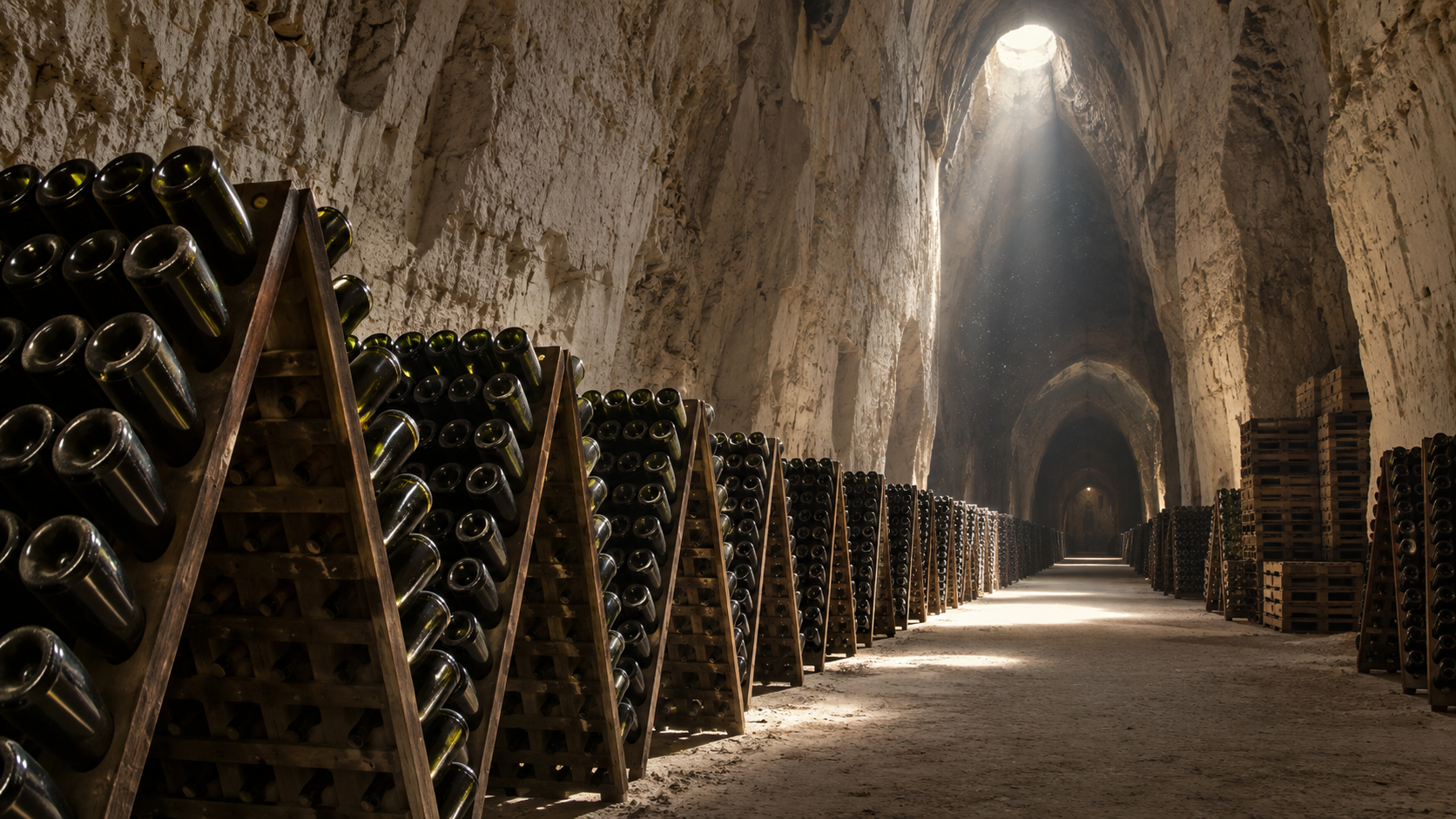
One bottle of something sparkling for the hour before dinner. This is the easiest call of the night. Cava from Spain, Prosecco, or an entry-level Champagne serves as the aperitif while the turkey rests and the sides come together. Sparkling wine's acidity and carbonation prime the palate for a heavy meal. More practically: it gives people something to drink during the longest stretch of Thanksgiving, which is the waiting. Cava Reserva in the $16–24 range is genuinely excellent for this role—made by the same method as Champagne at a fraction of the price.
One bottle of white for the table. The turkey, the lighter sides, and the guests who always ask for white wine. A dry or off-dry Riesling from Washington State or Germany in the $18–28 range handles this best. Grüner Veltliner or Alsatian Pinot Gris in the same price range works if you want something more neutral. This white will navigate the sweet potato casserole, the turkey, and the stuffing with considerably less friction than most reds.
One bottle of light red for the dark meat and the stuffing. Pinot Noir or Cru Beaujolais, depending on budget and enthusiasm. At $20–25, a Cru Beaujolais (Morgon or Fleurie) is the high-value choice. At $30–45, an Oregon Pinot Noir from 2023 or 2024 is the wine-lover's choice. Either one handles turkey, gravy, stuffing, and cranberry sauce without the friction you'd get from a bigger red.
With three bottles, you've covered pre-dinner drinks, white-wine drinkers, red-wine drinkers, and the actual food on the table. You've also spent roughly $60–90 total—less than one mediocre Napa Cabernet that would have divided half your guests.
What to Skip (No Exceptions)
Big Cabernet Sauvignon. The tannins fight lean turkey protein and turn harsh the moment they meet cranberry sauce. Save it for a night with a fatty protein.
Oaked Chardonnay in the butter-bomb style. The oak bitterness amplifies with sweet sides. Not the wine's fault—but not the right table.
"Something special" from the cellar. Your 2015 Barolo deserves a table where the wine is the centerpiece, not a supporting player competing with marshmallow-topped sweet potatoes. Thanksgiving is the wrong show for it.
High-alcohol wines above 14.5%. At a meal this heavy, elevated alcohol makes everything feel more fatiguing, and it interacts poorly with the sweetness on the table. Wines from cooler regions—Oregon, Germany, Austria, the Loire—tend to land naturally between 12–13.5%.
The Bigger Picture
Plan for half a bottle per adult, plus one bottle of sparkling for the opening hour. A table of eight needs four to five bottles of table wine and two bottles of sparkling. That's a reasonable spend that covers everyone without anyone feeling like they're being handled.
Thanksgiving happens once a year, which gives the pairing stakes an outsized feeling they don't actually deserve. The cranberry sauce is going to fight everything in the glass a little. That's fine. The goal isn't precision—it's giving everyone at the table something worth drinking while the good parts happen around it.
The month after Thanksgiving is when wine genuinely does its best work: Christmas and holiday tables reward the bigger, more structured bottles you wisely held back from November. That's when the serious Burgundy, the aged Barolo, the cellar bottle with the significant birthday gets its moment. Thanksgiving is for the wines that know how to share the stage.
Pour something lively, pour it generously, and let the table take it from there.