Suisun Valley: The Wine Country Hiding Next Door to Napa
Drive east from Napa, and California wine country changes quickly.
The crowds thin. The tasting rooms get farther apart. Vineyards share the landscape with orchards, produce stands, and working farms. There are no grand resort entrances announcing that you’ve arrived in wine country.
And that’s part of Suisun Valley’s appeal.
I spent a day exploring three very different wineries here — Wooden Valley Winery, Suisun Creek Winery, and Caymus-Suisun. On paper, they don’t have much in common. One is an old family winery with roots stretching back to the end of Prohibition. Another is a small estate winery operating from a former airplane hangar. The third carries one of the most recognizable names in Napa Valley wine.
But by the end of the day, a common thread had emerged.
Petite Sirah.
Dark, tannic, intensely colored Petite Sirah has become something of a calling card for Suisun Valley. And tasting through these three wineries offers an unusually good way to understand both the grape and the valley that is increasingly claiming it as its own.
Suisun Valley Isn’t Napa — and That’s the Point
Suisun Valley sits just southeast of Napa, but comparing the two only gets you so far.
Yes, Suisun generally offers a quieter, less formal wine-country experience. You’ll find family farms, small tasting rooms, orchards, roadside produce stands, and wineries where there’s a reasonable chance the person talking about the vineyard actually works in it.
But Suisun doesn’t need to be sold merely as the cheaper, quieter alternative to Napa.
It’s an established wine region with its own agricultural identity.
Commercial winemaking here dates to the 19th century. By 1909, more than 2,000 acres were planted to vines. Prohibition and phylloxera took their toll, and many farmers shifted toward stone fruit and nuts before vineyards began returning.
That agricultural history still shows everywhere you look. The line between orchard and vineyard remains remarkably thin.
Suisun Valley became an American Viticultural Area in 1982. The AVA is compact — roughly eight miles long and three miles wide — but it contains meaningful climatic differences.
Cool marine air arriving from San Pablo and Suisun Bays moderates temperatures, particularly in the southern portion of the valley. Farther north, conditions become warmer.
That gives growers room to work with everything from crisp white varieties to decidedly warm-climate reds.
And one of those reds has become particularly important.
Petite Sirah: Suisun’s Calling Card
Petite Sirah may have one of wine’s most confusing names.
For starters, it isn’t simply a smaller version of Syrah.
The grape’s actual name is Durif, named for French botanist François Durif. It’s a crossing of Syrah and the obscure French grape Peloursin. DNA research at UC Davis confirmed Syrah as one of its parents in 1997.
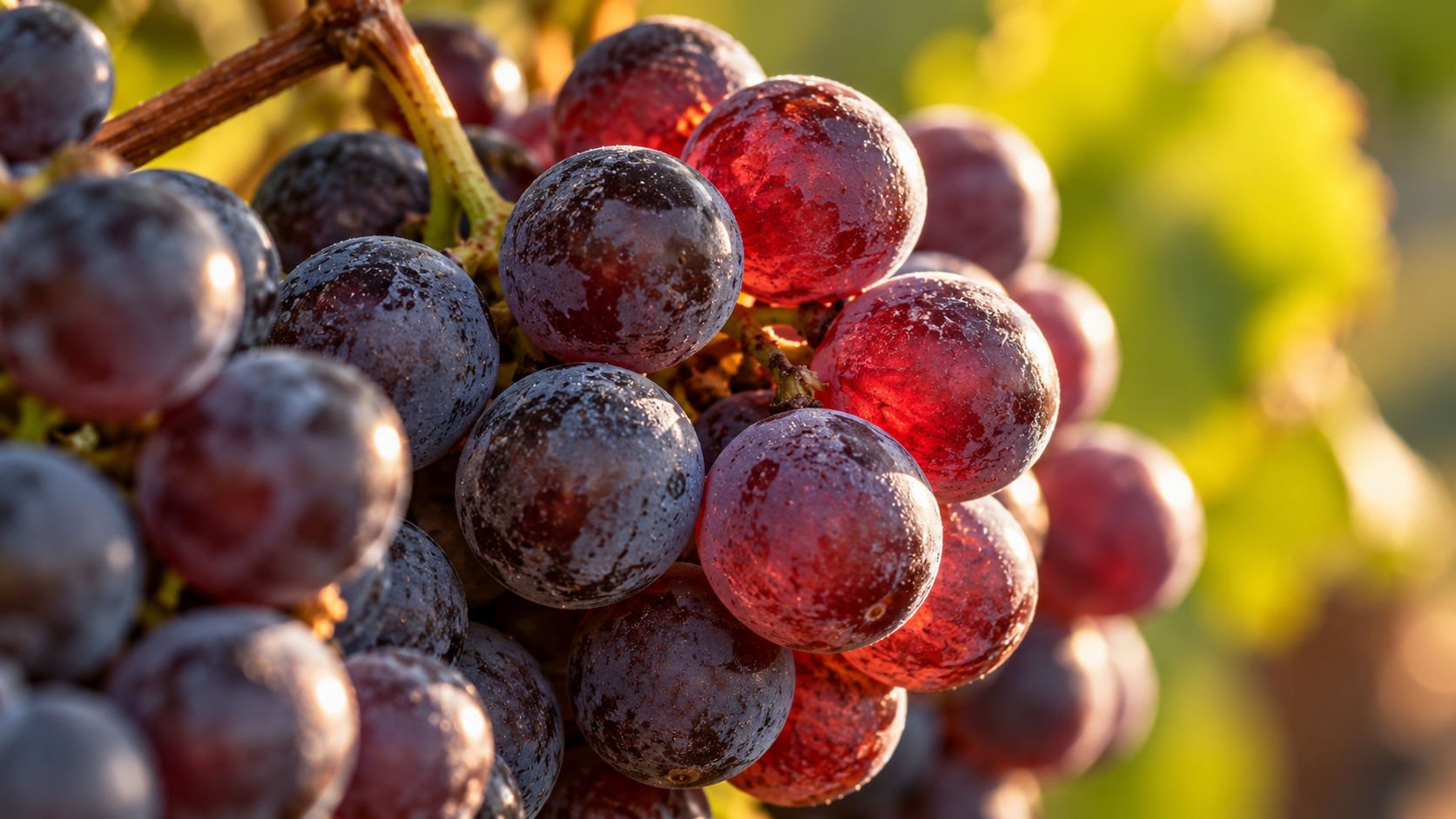
The “petite” refers to the berries.
Those small berries have a high ratio of skin to juice, and grape skins are where much of a wine’s tannin and color originate.
The result is exactly what you’d expect.
Petite Sirah can be almost opaque in the glass, with substantial tannin, good acidity, and flavors that commonly run toward blackberry, blueberry, plum, black pepper, chocolate, and espresso.
It’s not a shy wine.
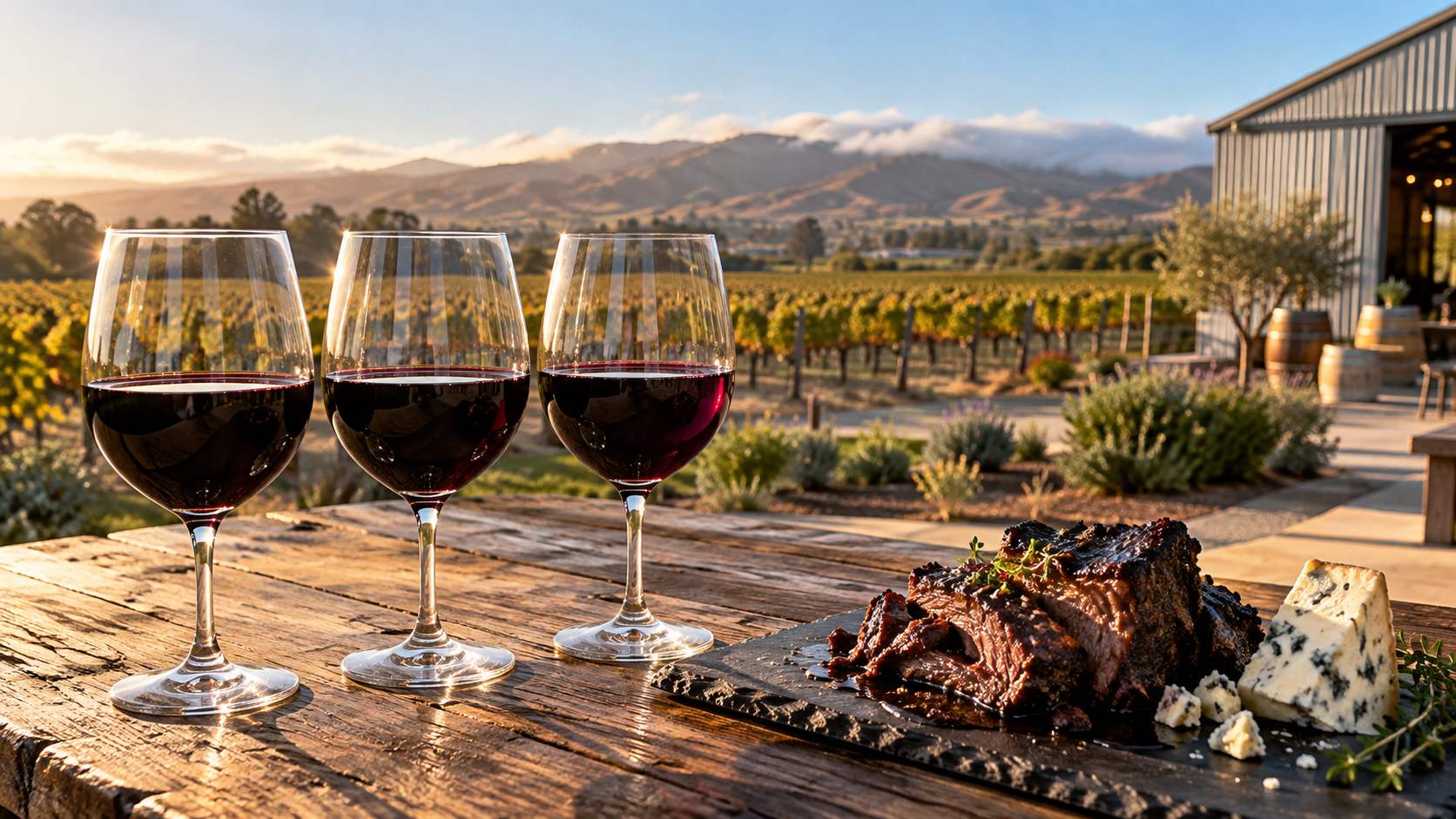
Put it next to braised short ribs, barbecue, grilled lamb, chili, or a pungent blue cheese and those aggressive tannins suddenly make much more sense.
It’s also a useful grape for anyone who describes their wine preference simply as “big reds.”
Petite Sirah will make you define what big actually means.
Suisun Valley has increasingly embraced the grape as a regional signature, and all three wineries I visited approach it differently.
That made it the perfect thread to follow through the valley.
Stop One: Wooden Valley Winery
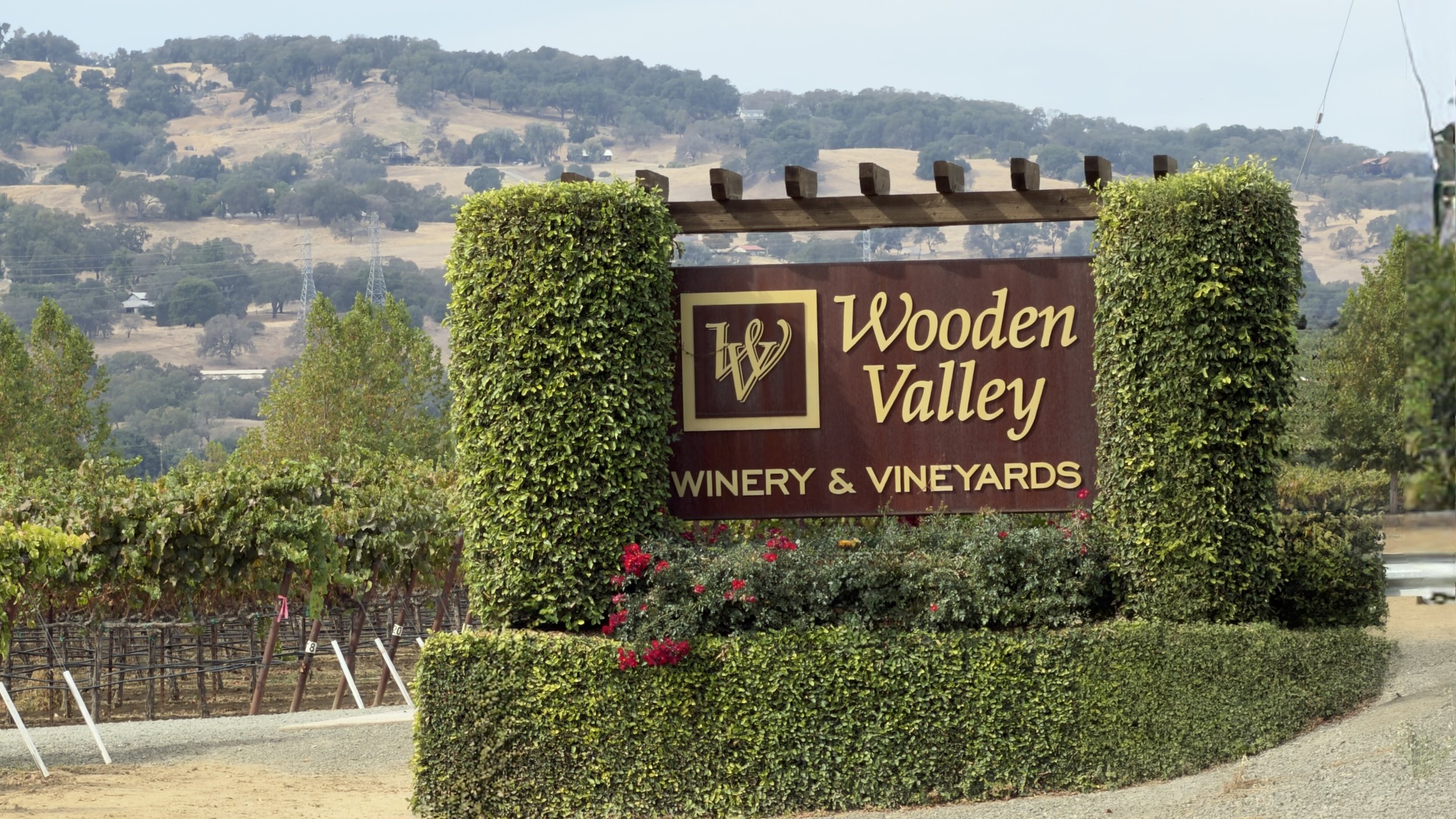
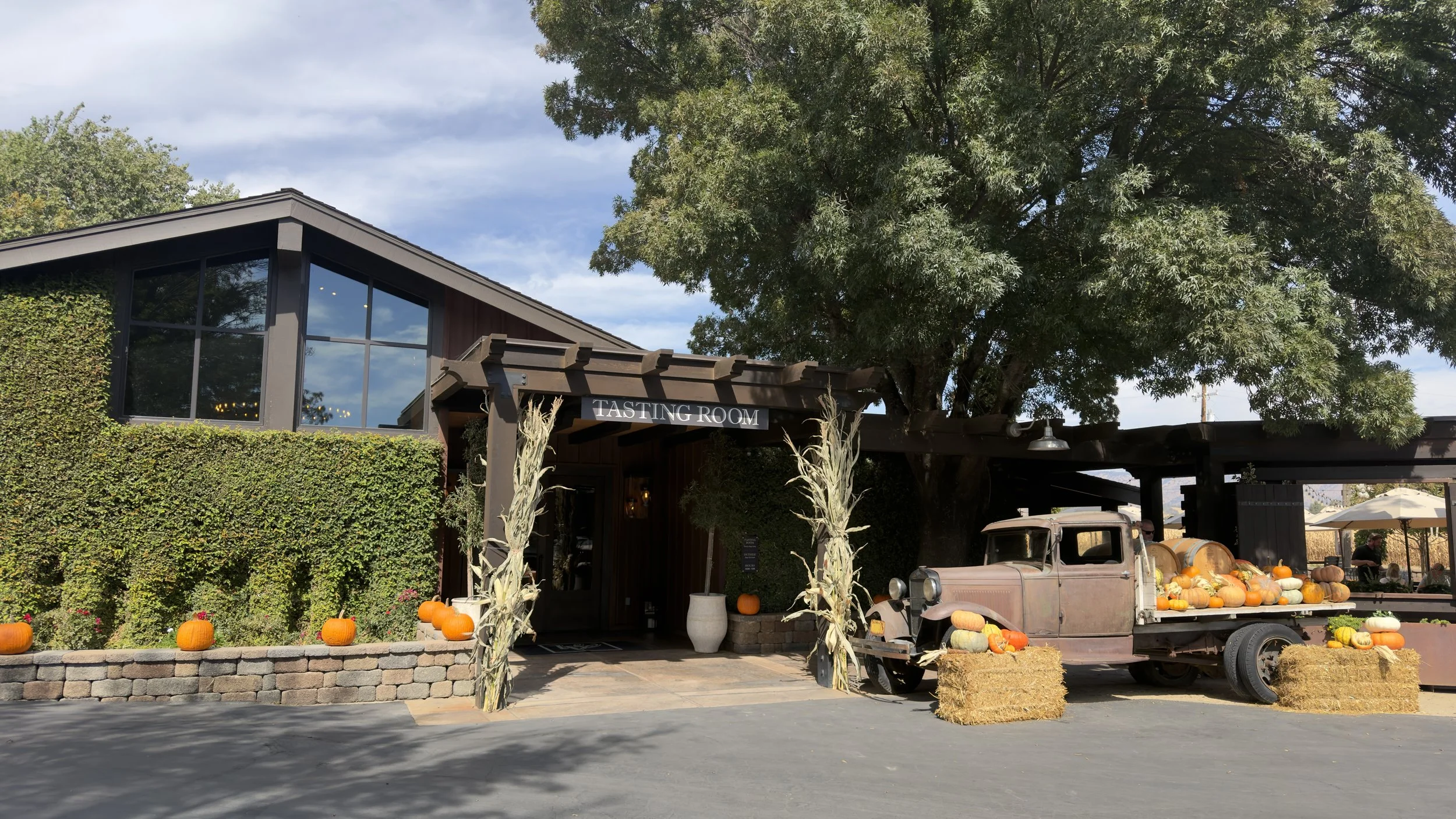
If you want to understand where Suisun Valley has been, Wooden Valley Winery is the logical place to start.
Brothers Salvador and Manuel Brea founded the winery in 1933, just as Prohibition was ending. Mario Lanza became a partner in 1944 and eventually assumed full ownership.
The Lanza family’s story mirrors Suisun Valley itself.
Mario purchased neighboring farmland in 1946 and began replacing pear and prune orchards with grapevines. What started as a relatively small ranch eventually developed into a vineyard operation encompassing more than 300 acres.
Mario’s son Richard “Chick” Lanza later played an important role in establishing the Suisun Valley AVA.
Today, the family’s wine portfolio provides a surprisingly broad introduction to what can grow here.
You’ll find familiar California varieties alongside Italian grapes such as Barbera, Primitivo, and Sangiovese.
Those Italian varieties are particularly interesting.
Warm-climate grapes need enough heat to ripen fully, but good wine still needs acidity. Suisun’s combination of California sunshine and cooling marine influence provides an environment where varieties such as Barbera and Sangiovese make sense.
Then there’s Petite Sirah.
Wooden Valley’s Exit Forty One red blend puts the grape prominently in the spotlight, making it an ideal reference point for the rest of the day.
Exit Forty One
This was my kind of red — dark, rich, and full of fruit without going overboard. I got blackberry and plum up front, followed by black pepper and a little spice. The Petite Sirah brings some grip, but it doesn’t beat you up with tannin. A big wine, but an easy one to enjoy.
Primitivo
The Primitivo was all about ripe fruit for me. Blackberry and dark cherry stood out, with a little spice coming through toward the finish. It’s full-bodied but not overly heavy, and probably one of the easiest wines in the lineup to put on the dinner table. Give me this with pizza or barbecue.
Barbera
This was a nice contrast to the bigger reds. Bright cherry and raspberry came through immediately, with good acidity keeping everything fresh. It’s lighter on its feet and very food-friendly. This is the kind of red I’d reach for when I want something flavorful without all the weight.
What I like about starting here is the breadth.
Before trying to decide what Suisun Valley should taste like, Wooden Valley lets you see just how many directions the valley can go.
Then the next stop narrows the lens considerably.
Stop Two: Suisun Creek Winery
Suisun Creek Winery tells another version of the same agricultural story.
The family’s property was once planted to cherry, prune, and pear trees. The fruit was harvested and sold through the family’s own fruit stand.
Eventually, those orchards gave way to grapevines.
Today, Suisun Creek grows and produces its wines on the property, giving you a direct connection between the vineyard surrounding you and what’s being poured into your glass.
The vineyard includes Petite Sirah, Zinfandel, Chardonnay, Sauvignon Blanc, Cabernet Sauvignon, Verdelho, and Charbono.
That last part caught my attention.
Verdelho, with its Portuguese roots, isn’t something you encounter in every California tasting room. Charbono is even more unusual.
That’s one of the pleasures of visiting smaller producers. There is often room for varieties that don’t necessarily make sense on a national marketing spreadsheet.
The setting reinforces that small-farm character.
The tasting area occupies a refurbished airplane hangar with an outdoor patio among the vines. It’s a dramatically different experience from the polished tasting rooms most people associate with California wine country.
Petite Sirah
This was exactly what I wanted from a Suisun Valley Petite Sirah — dark, concentrated, and unapologetically big. Blackberry and blueberry dominated, with black pepper underneath. There’s plenty of tannin here, but there’s also enough fruit to stand up to it. This one wants food and a little time to breathe.
Zinfandel
The Zinfandel was ripe and generous, with blackberry and plum leading into pepper and spice. It’s a full-bodied wine, but I didn’t find it overly heavy or jammy. There’s enough structure to keep everything together. I’d happily put this next to something smoky off the grill.
Verdelho
The Verdelho was one of the more interesting wines of the stop simply because I don’t run across it very often. It’s crisp and refreshing, with citrus and tropical fruit and enough acidity to keep it bright. After several bigger reds, this was a welcome palate reset — and a good reminder that Suisun isn’t just about powerful red wines.
There’s also a question worth asking at a winery like this:
Of everything you grow, what’s the one grape you’d stake the farm on?
At a small estate growing several varieties on the same property, the answer can tell you far more than a tasting sheet.
And after seeing Suisun through an established local family and a small estate producer, the final stop offers a completely different perspective.
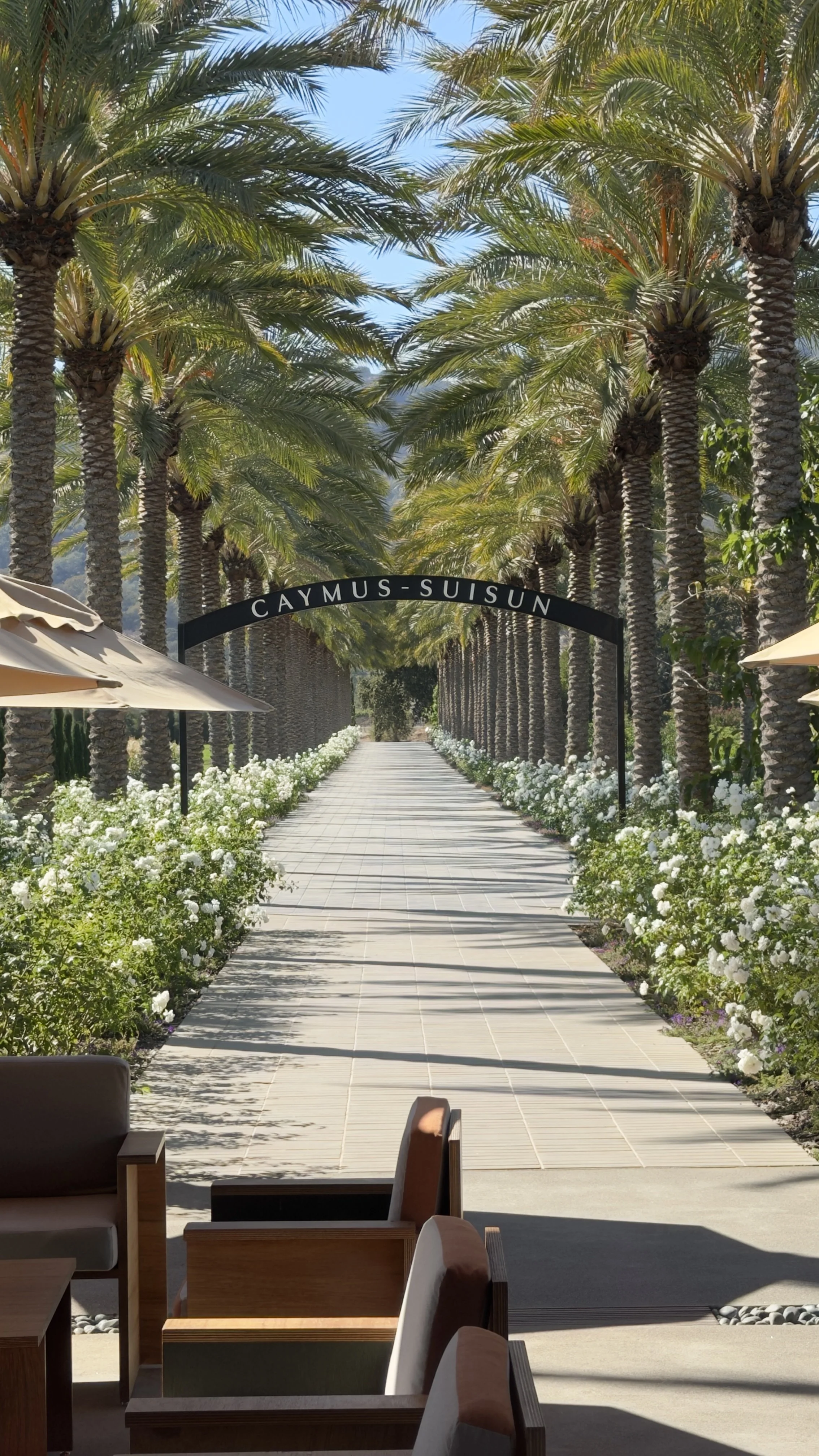
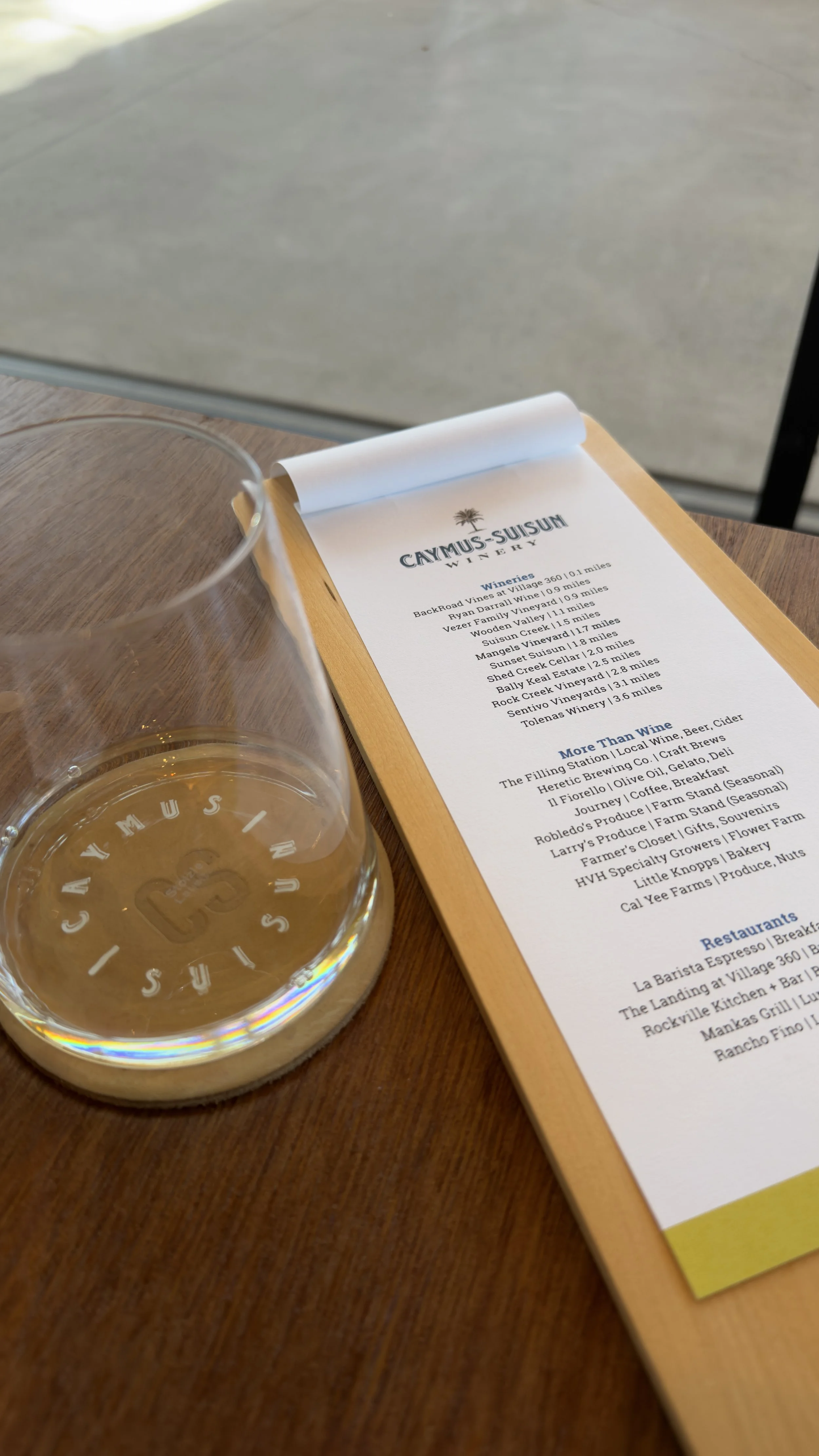
Stop Three: Caymus-Suisun
Caymus-Suisun changes the scale of the conversation.
The Wagner family founded Caymus Vineyards in Rutherford in 1972, building the Caymus name primarily around Napa Valley Cabernet Sauvignon.
So when a family so closely associated with Napa decides to establish another Caymus property in Suisun Valley, it’s worth paying attention.
Caymus-Suisun opened in 2022 after the Wagner family had spent years exploring the valley and developing relationships with local growers.
And look at the wines they chose to emphasize.
Grand Durif is Petite Sirah made exclusively from Suisun Valley fruit.
The Walking Fool combines Petite Sirah and Zinfandel.
Bay Rosé is also produced from local fruit.
That’s a notable statement.
The Wagners could have arrived in Suisun and attempted to recreate their Napa Cabernet identity.
Instead, one of their flagship Suisun wines carries Petite Sirah’s original name — Durif — right on the bottle.
The property itself provides the day’s biggest contrast.
Compared with the rustic, agricultural feel of the earlier stops, Caymus-Suisun is considerably more polished. The grounds incorporate fruit trees, vegetables, flowers, and a walking vineyard planted with crown-pruned vines rather than conventional modern trellising.
The tasting also provides an interesting opportunity: Caymus Cabernet from Napa can appear alongside the Suisun wines.
Taste it, certainly.
But if you’re here to understand Suisun Valley, pay closer attention to Grand Durif and The Walking Fool.
Grand Durif
This was the wine I really wanted to taste at Caymus-Suisun, and it’s a serious expression of Petite Sirah. It’s dark, rich, and concentrated, with blackberry and blueberry followed by chocolate and spice. There’s plenty of tannin, but all that ripe fruit keeps it balanced. This isn’t a subtle wine, and I don’t think it’s trying to be.
The Walking Fool
The Walking Fool was immediately more approachable. The combination of Zinfandel and Petite Sirah gives it plenty of ripe blackberry, cherry, and plum, but with a softer feel than the Grand Durif. There’s some spice on the finish and enough structure to keep it interesting. Of the bigger reds here, this is probably the one I’d open first.
Bay Rosé
After all that Petite Sirah, the Bay Rosé was a welcome change of pace. I got fresh strawberry and watermelon with some citrus keeping the finish clean. It’s light, refreshing, and uncomplicated in the best way. It also shows that Suisun Valley doesn’t have to turn the volume all the way up to make an enjoyable wine.
For me, this is what makes Caymus-Suisun particularly interesting.
A prominent Napa wine family didn’t simply build another tasting room.
It placed a very visible bet on Suisun Valley.
And Petite Sirah is at the center of that bet.
Three Wineries, Three Versions of Suisun
By the end of the day, the three stops began to look less like unrelated wineries and more like three chapters in the same story.
Wooden Valley represents Suisun’s roots: multigenerational farming, a broad range of wines, and a family that helped establish the AVA itself.
Suisun Creek represents the valley’s agricultural present: a family farm that evolved from orchards into vineyards and now grows and makes its wines on the same property.
Caymus-Suisun hints at what might come next: outside recognition, greater investment, more visitors, and a much larger spotlight.
And running through all three is Petite Sirah.
That’s what makes this particular tasting route more interesting than simply visiting three wineries in a day.
You’re tasting three interpretations of the same place.

How I’d Do the Day
If you want to recreate the trip, check current hours before leaving. Suisun Creek has operated on weekends, making it the scheduling constraint among the three.
I’d start at Wooden Valley. Its broad portfolio makes it a good introduction to the valley.
From there, move to Suisun Creek for the smaller estate perspective.
Finish at Caymus-Suisun, where the experience becomes more polished and you can see how a nationally recognized wine family interprets the same region.
And eat.
Petite Sirah on an empty stomach isn’t wine education. It’s punishment.
More importantly, ask questions.
At each winery, ask how Petite Sirah is being used. Is it bottled alone or blended? Where is the fruit grown? How is oak being handled? What does the winemaker think Petite Sirah gets from Suisun Valley that it doesn’t get somewhere else?
The answers are more valuable than memorizing tasting notes.
If you’re sufficiently committed to the experiment, buy a Petite Sirah from each producer and repeat the comparison at home.
Put all three on the table. Give them air. Add short ribs, grilled lamb, barbecue, or blue cheese.
Then taste Suisun Valley without the tasting rooms influencing the result.
Suisun Valley on Its Own Terms
It’s tempting to describe Suisun Valley entirely in relation to Napa.
It’s nearby.
It’s quieter.
It’s less crowded.
In many cases, it’s less expensive.
All true.
But after spending a day here, I don’t think that’s the most interesting reason to visit.
The better reason is that Suisun is still trying to tell you what kind of wine region it wants to be.
Its agricultural roots remain visible. Small family wineries still matter. New investment is arriving. Growers are experimenting with different sites and varieties.
And increasingly, Petite Sirah sits at the center of that identity.
At Wooden Valley, it’s part of a family’s long history in the valley.
At Suisun Creek, it’s one piece of a working estate vineyard.
At Caymus-Suisun, Durif has been given a considerably larger stage.
Three wineries. Three very different tasting experiences. One grape connecting them.
Napa may get you into this part of California.
Suisun Valley gives you a reason to turn east.