Our First National Park in the RV: What Could Possibly Go Wrong?
One of the big goals of our RV adventure is to visit all 63 U.S. National Parks. Well, as of this week there are now 64 – but that’s another story! Pulling into Pinnacles National Park in California, we checked off a major milestone: our first National Park with our RV. (We had already been to Redwoods a few years ago).
What could possibly go wrong?
As it turns out, quite a bit.
Getting to Pinnacles: The Middle of Nowhere Is an Actual Place
About 30 minutes outside the park, we passed a small roadside shop with a hand-painted sign warning us that it was the last store before the park.
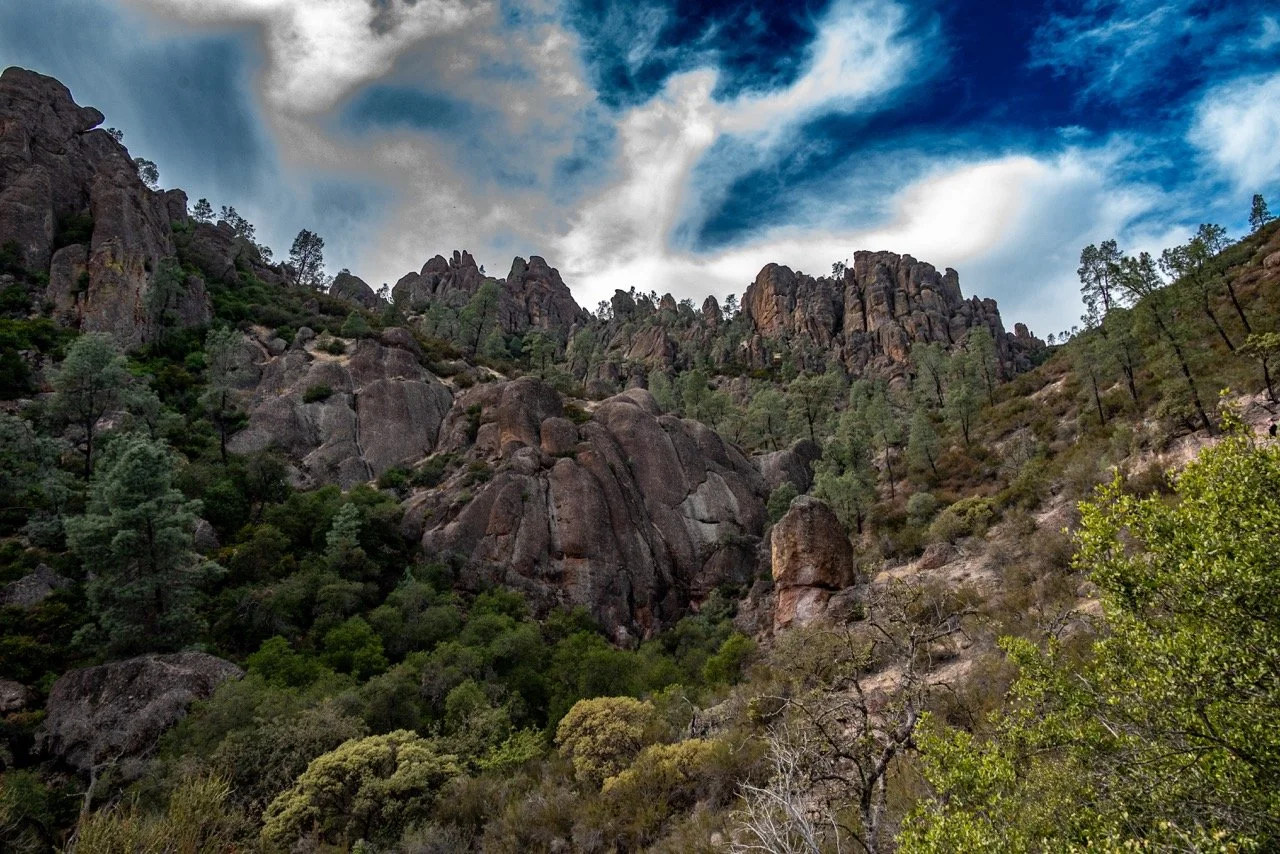
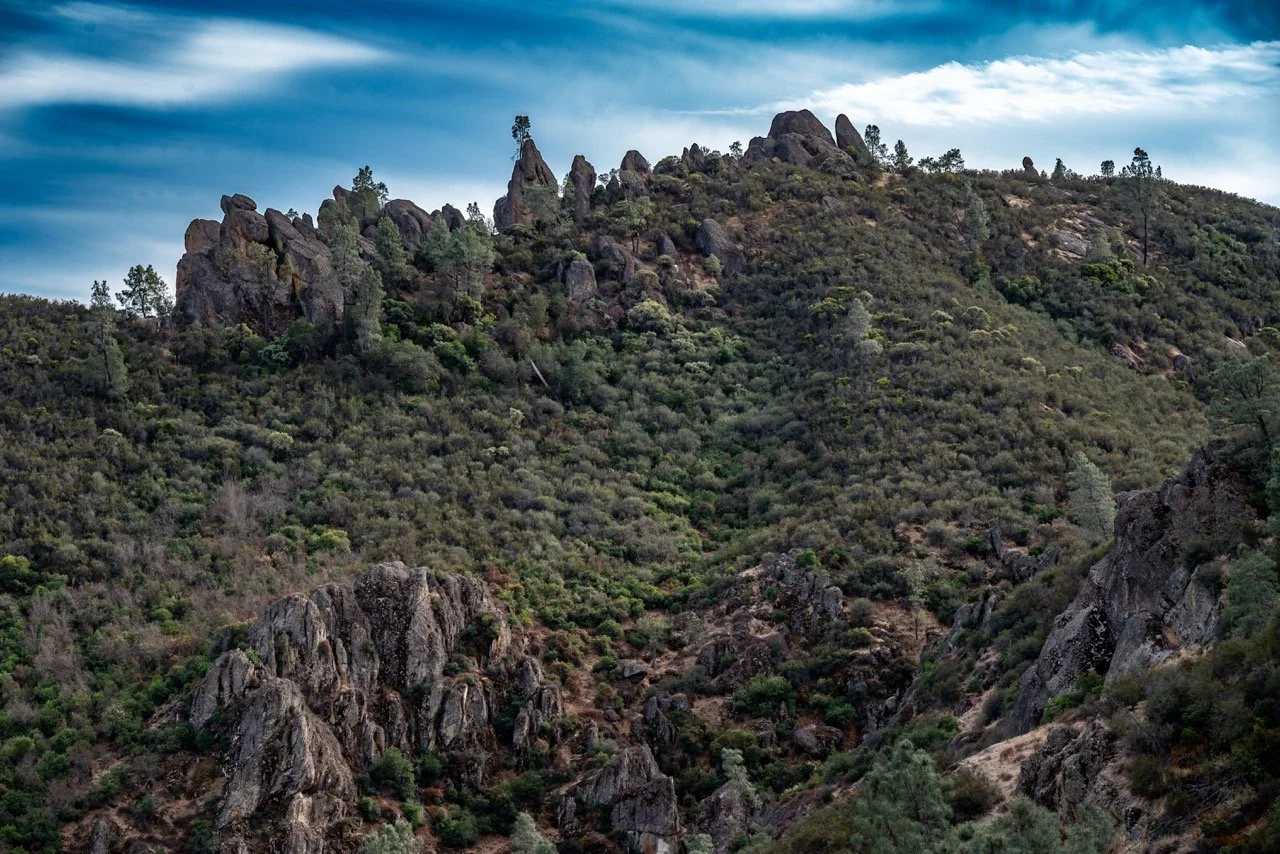
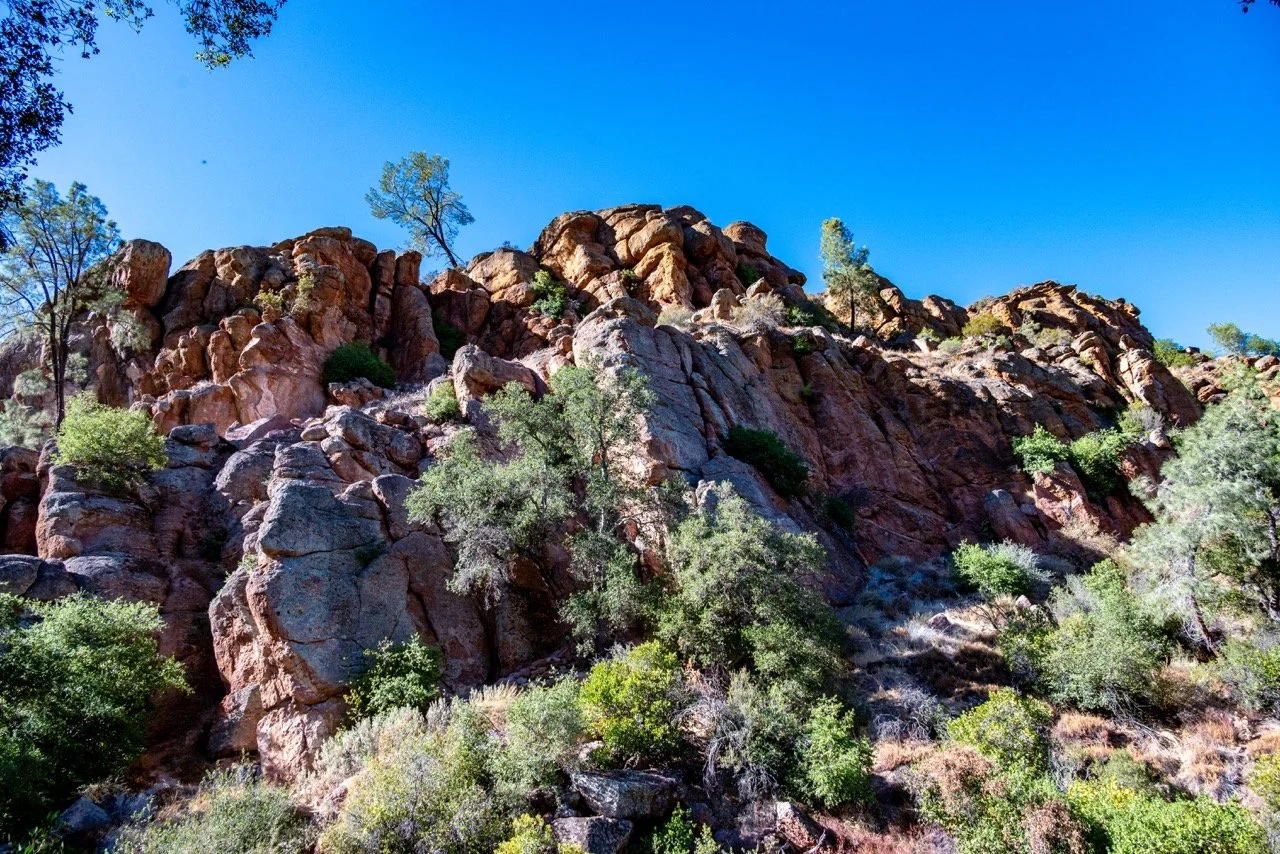
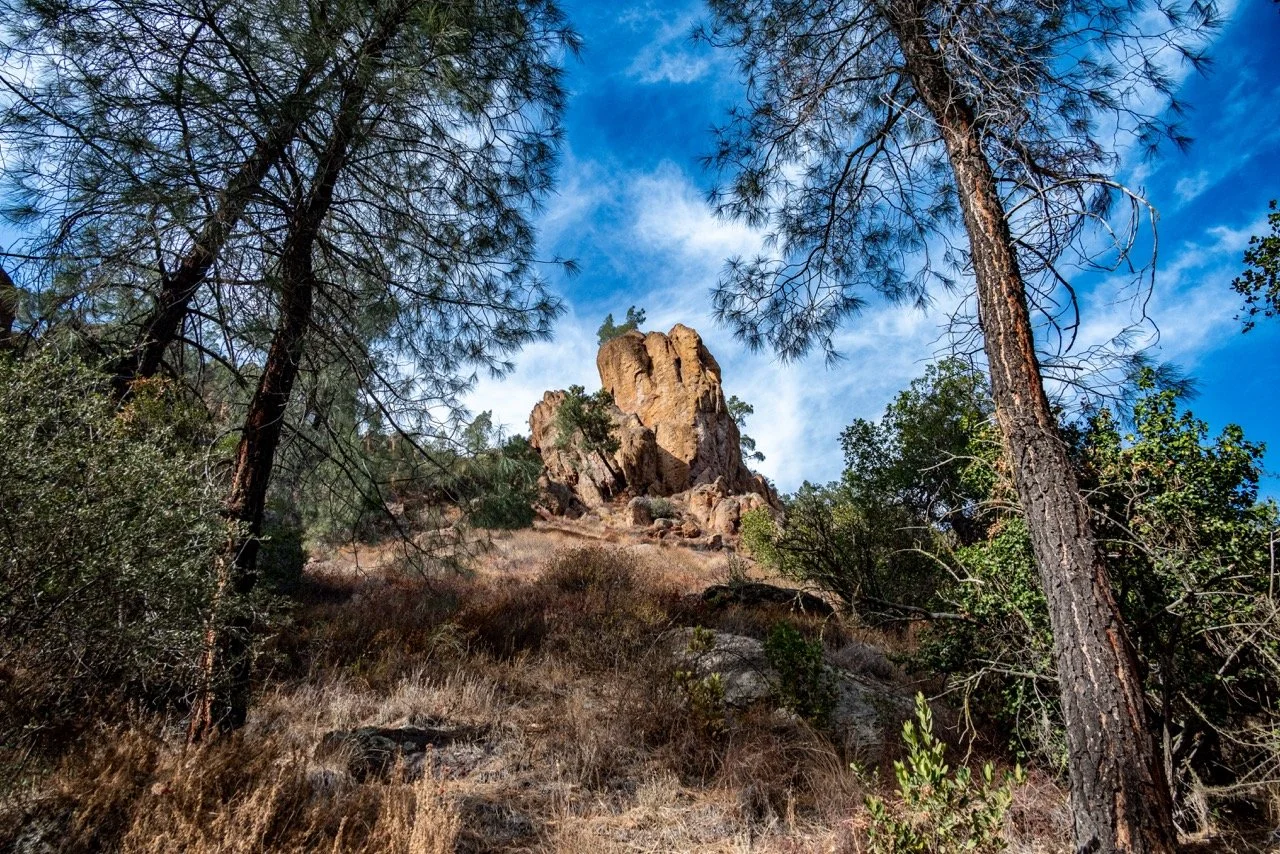
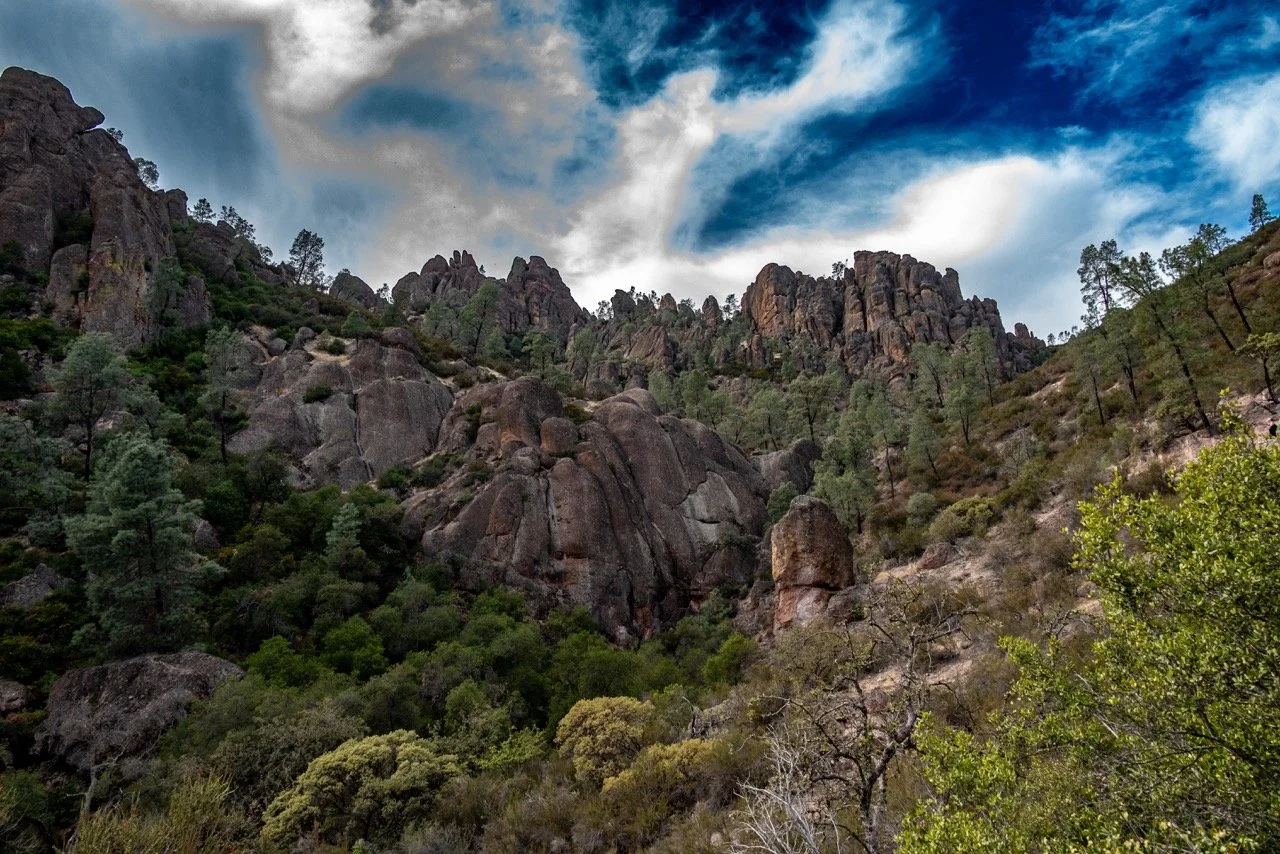
Pinnacles is one of California's more distinctive National Parks, known for its dramatic rock formations, rugged hiking trails, caves, and opportunities to spot California condors.
The road into the park was narrow and winding, which the cats found deeply offensive. By the time we arrived, the evidence of their displeasure was unmistakable: a kennel full of vomit. Poor babies.
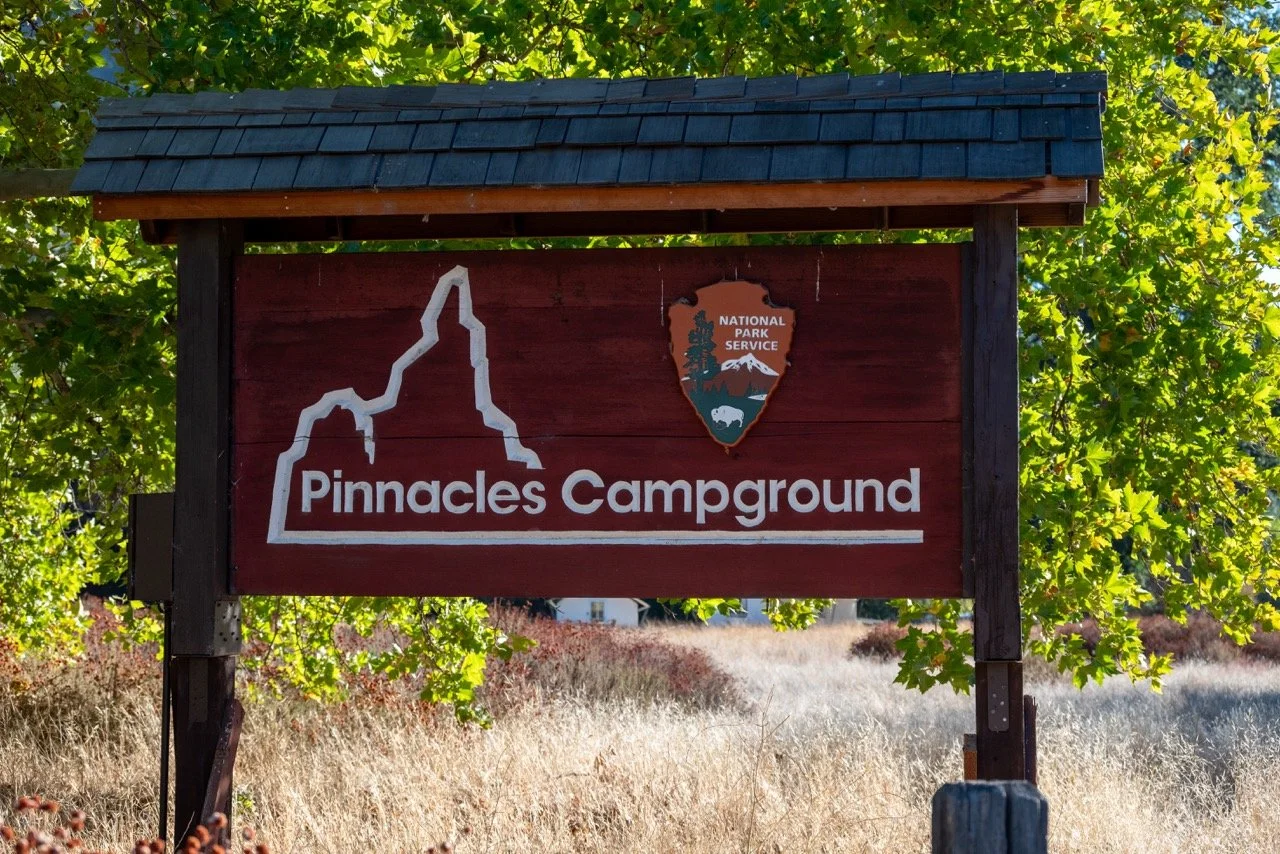
We chose to stay in Pinnacles Campground, located inside the park, to spend less time driving and more time exploring.
By the time we reached our campsite, we were hot, covered in dust, under attack by an impressive number of flies, and thoroughly tired of smelling cat puke. We were ready to park, put out the slides, and start the A/C.
Reality Check
No water. No electricity. No showers.
Our site was covered in fine, dusty soil that looked like moon dust. There wasn't a convenient tree nearby for shade, and there also wasn’t a water hookup.
We arrived with an empty water tank, as we never drive with water. And we went into habit and set up without filling our tanks. But then reality set in and Juanita convinced Brandon that we really didn't need to make life harder than necessary. So, we pulled in the slides, retracted the leveling jacks, and drove over to a water spigot to fill our fresh-water tank.
We put approximately 30 gallons of water into our tank and began paying much closer attention to how much we used.
On the second day, there was construction down the road and they turned the power off to the entire campground without warning, and generators are strictly forbidden. So, we were grateful for our in-house reserve battery that kept the laptops and Starlink running. The heat had died down so it wasn’t horrible with a few windows open.
Every new campground comes with its own personality—and occasionally, its own set of challenges.
Hiking Bear Gulch Trail: We Didn't Expect a Cave Adventure
One of our first adventures was the Bear Gulch Trail, which includes the fascinating Bear Gulch Cave.
Bear Gulch Cave is a talus cave formed by enormous boulders that fell into a narrow canyon and piled up, creating dark passages between the rocks.
The route took us through rocky passages, narrow sections, staircases carved into stone, and small water crossings. At times, we had to duck, squeeze through tight spaces, and watch our footing as we worked our way through the cave.
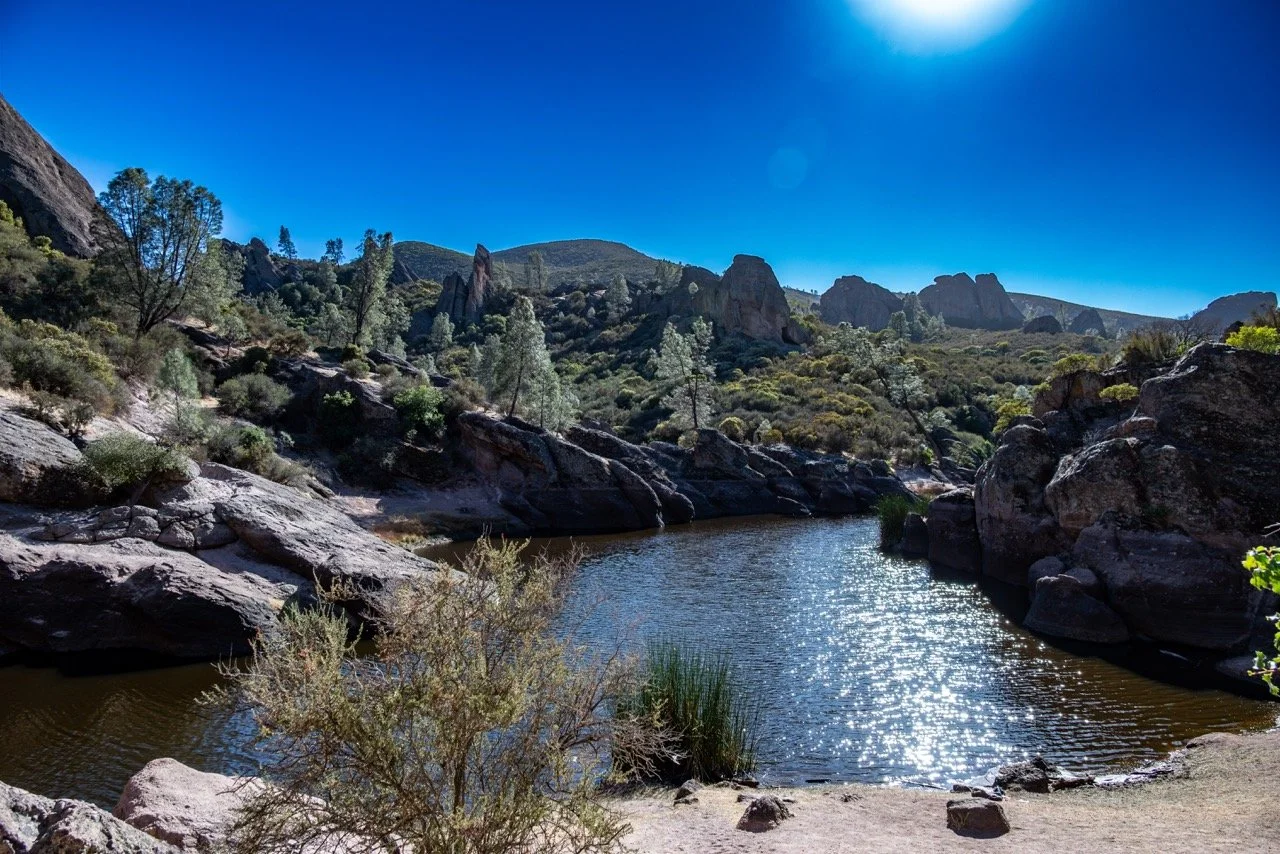
The route led us toward Bear Gulch Reservoir, a man-made reservoir tucked among the dramatic rock formations.
We also hiked the Condor Gulch Trail, which took us toward an overlook with beautiful views of Pinnacles' rugged landscape.
Even without a condor sighting, the overlook made the hike worthwhile.
And after the challenges of getting settled into our campsite, it felt good to get out, stretch our legs, and remember why we wanted to do this in the first place.
But then, there are only two designated men’s and two designated women’s showers for the entire park!
Is Pinnacles National Park Worth Visiting in an RV?
Maybe.
Pinnacles offers dramatic scenery, unusual geological features, memorable hiking, and a chance to experience a quieter side of California. The campground was crawling with beautiful deer, turkeys, rabbits, raccoons, quail, and acorn woodpeckers.
However, RVers should know a few things before arriving.
What to Know Before Visiting Pinnacles in an RV
Stock up before entering the park. Services are limited, and the last convenient store may be farther away than you expect.
Expect winding access roads. Drive carefully and check the route for your rig.
Understand your campsite's hookups. Don't assume you'll have water, electricity, or sewer connections. The sites here had 30-amp power only.
Fill your fresh-water tank in advance. If your site doesn't have water, you'll want enough for your planned stay.
Plan for power outages. Generators are strictly prohibited in the park.
Prepare for the weather. Shade can be limited at some campsites, and the dry, dusty environment can make hot days feel even hotter.
Plan your hikes by park entrance. The east and west sides aren't connected by a road through the park.
Would We Do It Again?
Meh.
The primitive campground, the power outage, the disgusting shower situation, the curvy road getting here, and the remoteness mean you really have to want to see this national park.
Hopefully, the next destination means less cat vomit and nice showers!