Cruise Stop 4: Sauternes — Where the Rot Is the Whole Point
Every stop on this cruise so far has been about red wine, gravel, and clay. Stop four traded all three for fog, fungus, and gold. Sauternes is the strangest great wine region in France — a place that built centuries of fame on letting its grapes decompose on purpose — and our visit came with an upgrade no itinerary can guarantee: at Château Sigalas Rabaud, a Premier Cru Classé from the original 1855 ranking, we were welcomed by the owner herself, Laure de Lambert Compeyrot, sixth generation of the family and one of the people most visibly dragging this old, odd, wonderful category into the present.
The fog machine
Back in part one of this series I called Sauternes the misty corner of the Bordeaux map, and the mist deserves a fuller explanation, because everything here depends on it. South of the city, a small, cold, spring-fed river called the Ciron slips out of the pine forests and empties into the much warmer Garonne. On autumn mornings, that temperature collision manufactures fog that rolls over the vineyards of five communes — Sauternes, Barsac, Bommes, Fargues, and Preignac — and burns off by early afternoon. Damp mornings, dry golden afternoons, repeating for weeks.
That daily rhythm is the precise recipe for Botrytis cinerea — noble rot — a fungus that in the wrong conditions simply ruins grapes, and in exactly these conditions performs a magic trick instead. It pierces the skins of ripe Sémillon and Sauvignon Blanc, the afternoon warmth evaporates the water inside, and each berry shrivels into something between a raisin and a piece of candied ginger — sugar, acid, and flavor concentrated severalfold, plus a signature the fungus itself contributes: notes of saffron, honey, beeswax, and marmalade that no other winemaking process on Earth can replicate. The difference between noble rot and the gray rot that destroys harvests elsewhere is nothing but weather timing. Sauternes is a wine region balanced on a coin flip that its geography rigs in its favor — most years.
The math of madness
Now the part that explains the price of the real thing. Botrytis doesn't arrive uniformly — it speckles across a vineyard berry by berry, bunch by bunch. So the great estates harvest by hand in successive passes called tries, pickers walking the same rows again and again across weeks, taking only the properly shriveled fruit each time and leaving the rest to ripen further. Four, five, six passes are normal. Some years the fog doesn't cooperate and there's almost nothing worth picking at all. And because each berry has surrendered most of its water, yields are absurd: where a productive Bordeaux vineyard might give a bottle or more per vine, top Sauternes properties famously measure output in a glass per vine. It is, per drinkable drop, some of the most labor-expensive agriculture in the world — and as I argued back in part one, the market prices this heroism like an afterthought. We'll get to why that's your opportunity.
The other 1855 classification
When Napoleon III's brokers ranked the Médoc in 1855, they made a second list the casual wine world mostly forgets: a classification just for the sweet wines of Sauternes and Barsac. It has its own royalty — Château d'Yquem stands alone at the top in a tier invented for it, Premier Cru Supérieur, a rank no red wine estate received — followed by the Premiers Crus and Deuxièmes Crus. Barsac, the distinct commune closest to the Ciron's mouth, enjoys a quirk worth knowing at the shelf: its châteaux may label their wine as either Barsac or Sauternes, and the Barsac name tends to signal a slightly lighter, zestier style. The sweet classification has the same virtues and vices as its Médoc sibling — a genuinely useful map of the best fog-and-limestone real estate, frozen in the commercial reality of 1855 — and one of its Premiers Crus was exactly where we were headed.
It's worth pausing on how completely the world has flipped on these wines, because the flip is the story. For most of the eighteenth and nineteenth centuries, sweet wine wasn't a niche — it was the summit. Russian grand dukes paid record-shattering prices for Yquem; the courts of Europe treated great Sauternes the way collectors now treat First Growth Pauillac. The twentieth century reversed the polarity: dry became sophisticated, sweet became suspect, and an entire tier of 1855-classified estates watched demand migrate away from the very style their terroir was built to produce. The vineyards didn't get worse. The fog didn't stop. Fashion just walked off — and fashion, as this cruise keeps demonstrating, is the single most unreliable indicator of what's actually in the glass.
Château Sigalas Rabaud: the jewel that refused to be sold
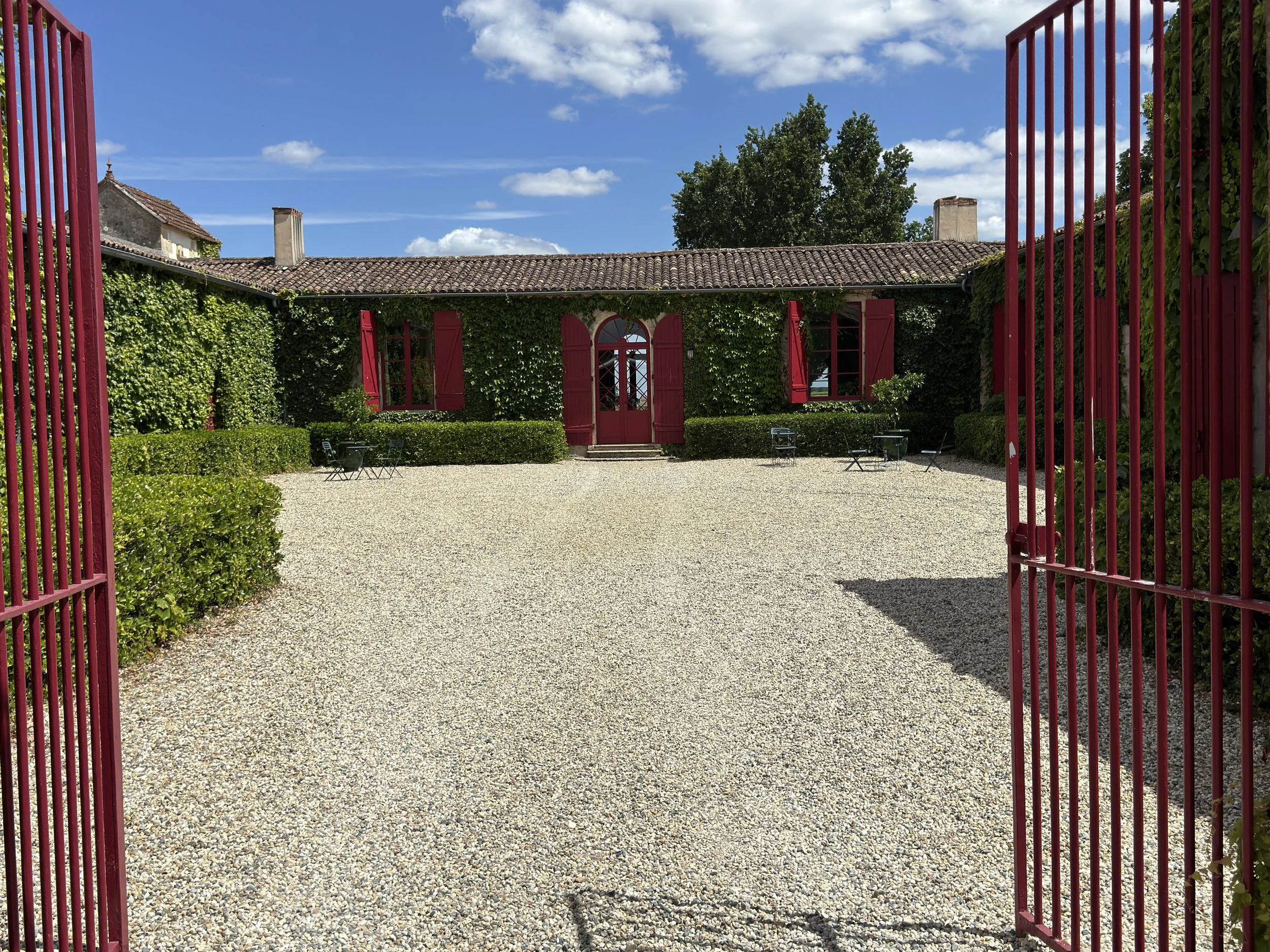
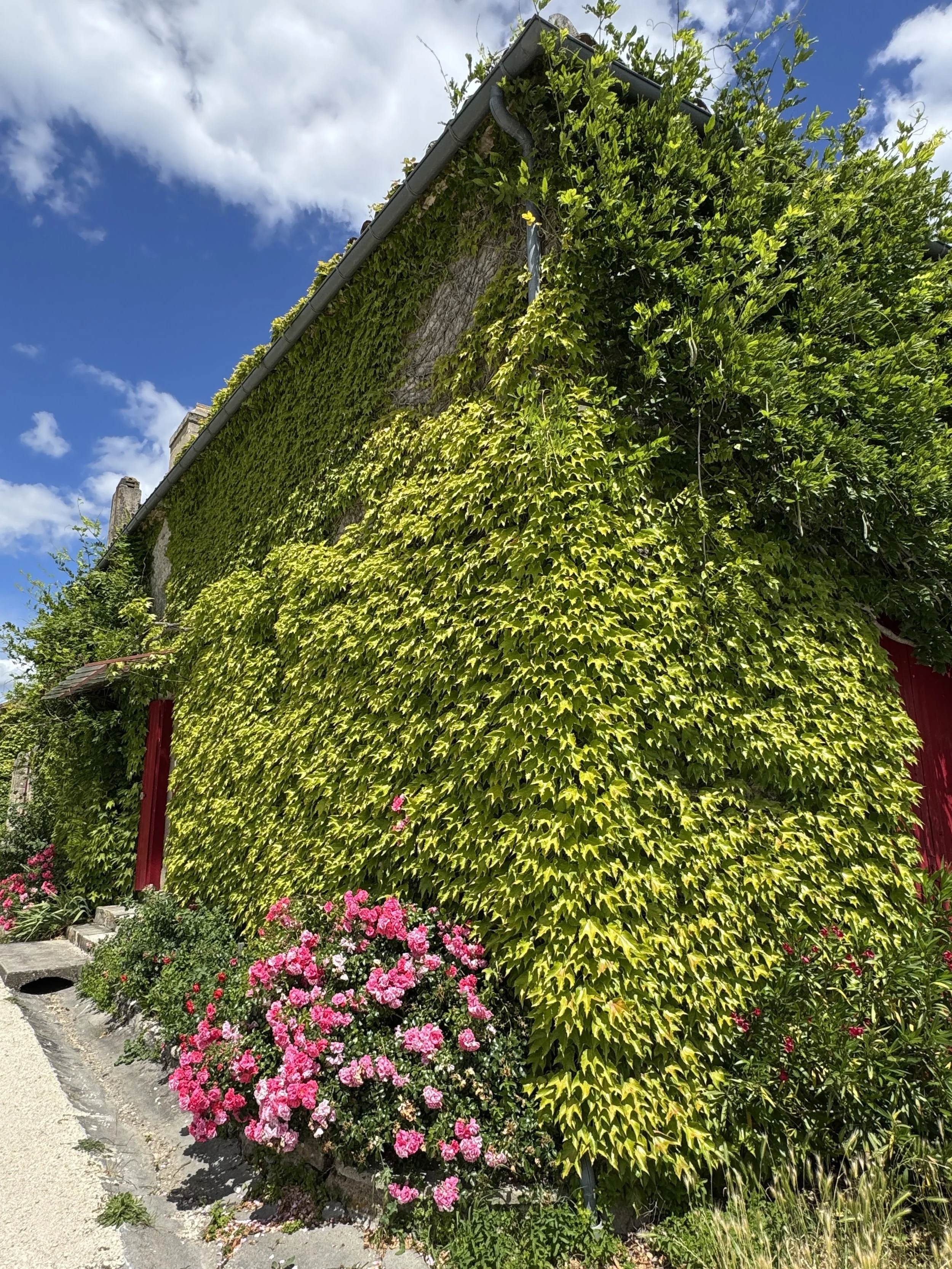
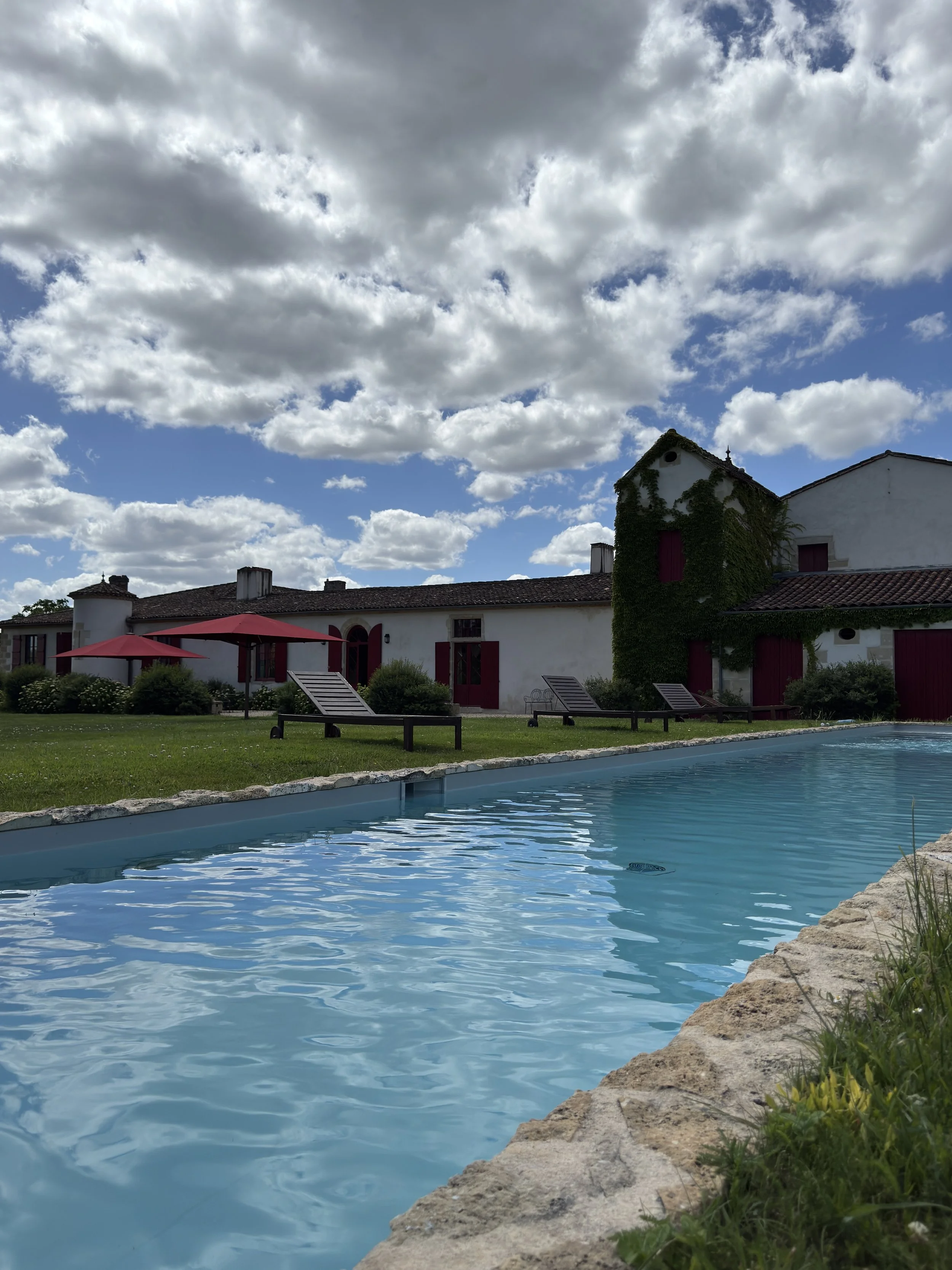
Sigalas Rabaud sits on a south-facing slope in Bommes, and its story is Bordeaux estate arithmetic running in the opposite direction from most. It begins in the 1600s, when a councilor of the Bordeaux Parliament named Rabaud assembled a 60-hectare vineyard near the Ciron; by 1832 the Jullien guide was ranking Rabaud's production alongside Yquem, and the 1855 brokers made it a Premier Cru. Henri de Sigalas bought the run-down property in 1863 and rebuilt its reputation. Then in 1903 his son sold the grand château and 45 hectares — the portion that became today's Château Rabaud-Promis — and kept only what he considered the untradeable core: 14 hectares of the best south slope, wrapped around a seventeenth-century chartreuse, a parcel the family called the Jewel of Sigalas. Most estates grow by acquisition. This one shrank to its best dirt on purpose, and the 1855 rank rode along with the jewel rather than the acreage.
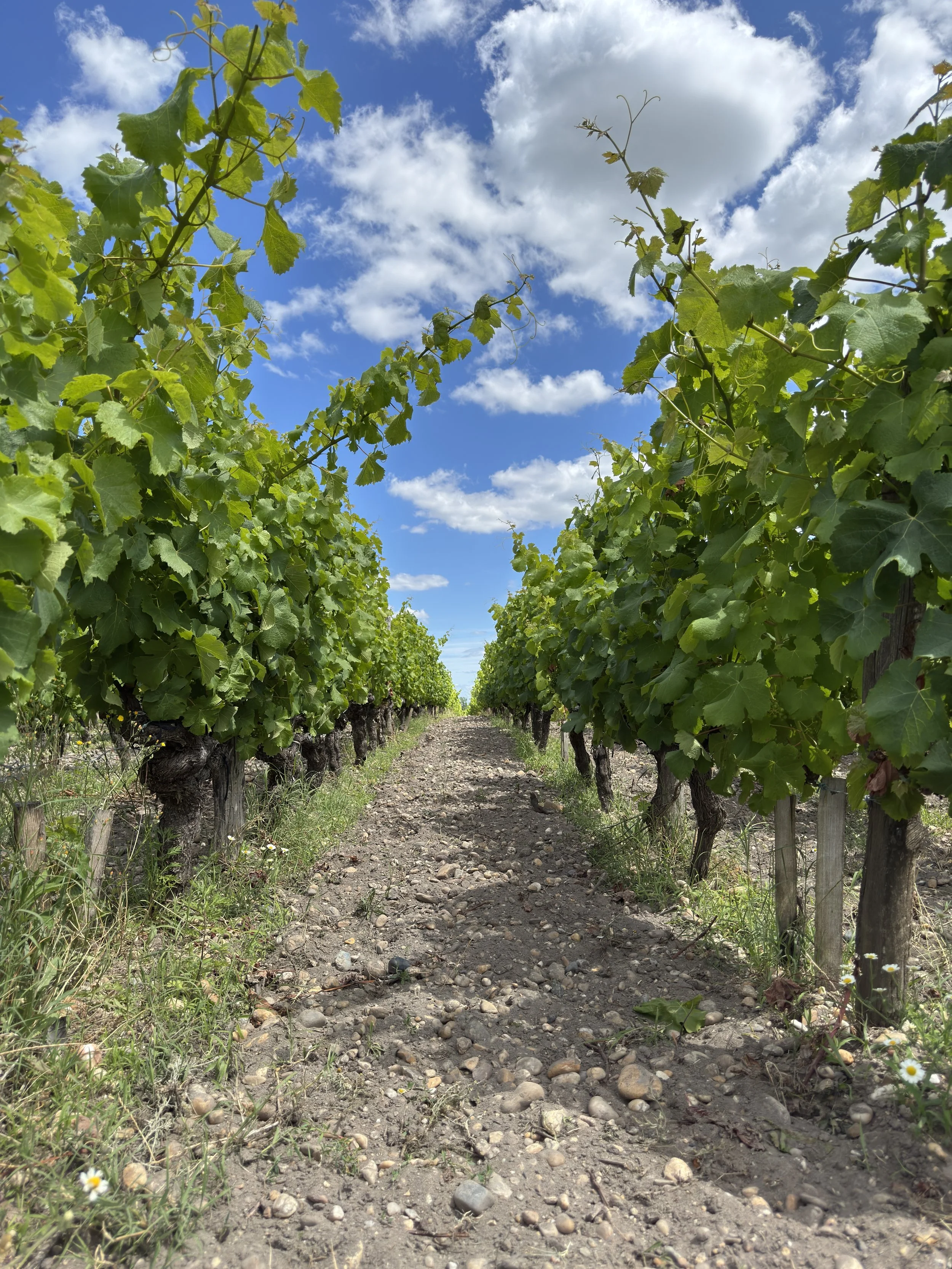
The family thread has never broken since: Pierre-Gaston's granddaughter Marie-Antoinette de Sigalas and her husband, the Marquis de Lambert des Granges, revived the property from 1951; their son Gérard ran it from 1984, modernizing through a long technical partnership with the team at neighboring Lafaurie-Peyraguey and creating the second wine, Le Lieutenant de Sigalas, named in memory of a family lieutenant lost in 1940. Today the vineyard remains that same 14-hectare jewel — roughly 85% Sémillon and 15% Sauvignon Blanc on sand, gravel, and clay, vines averaging 45 years old, producing a grand total of about 2,500 cases of the grand vin in a good year. For a Premier Cru of anything, that is a rounding error of a production number.
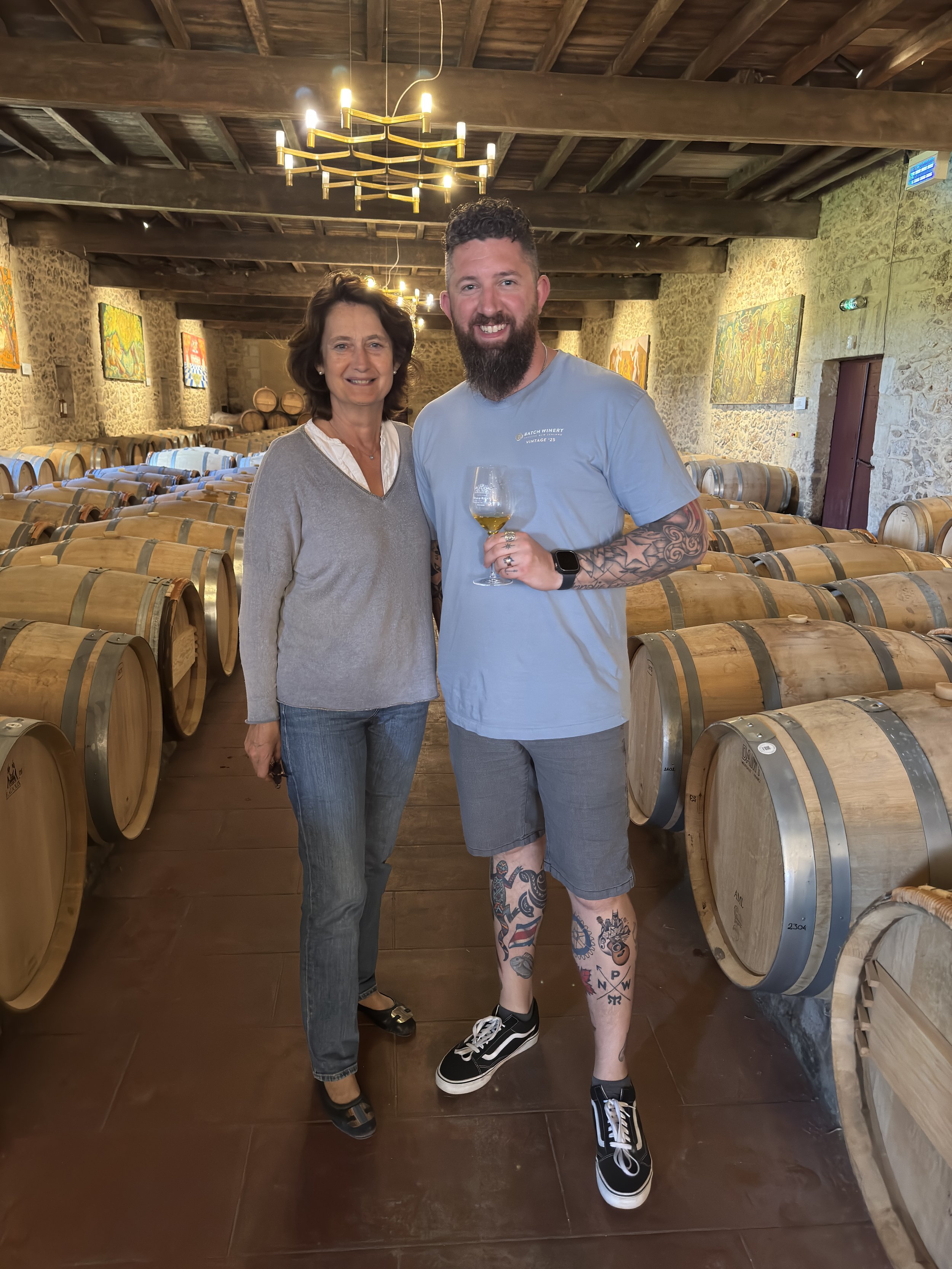
Laure, and the art of keeping a 350-year-old estate alive
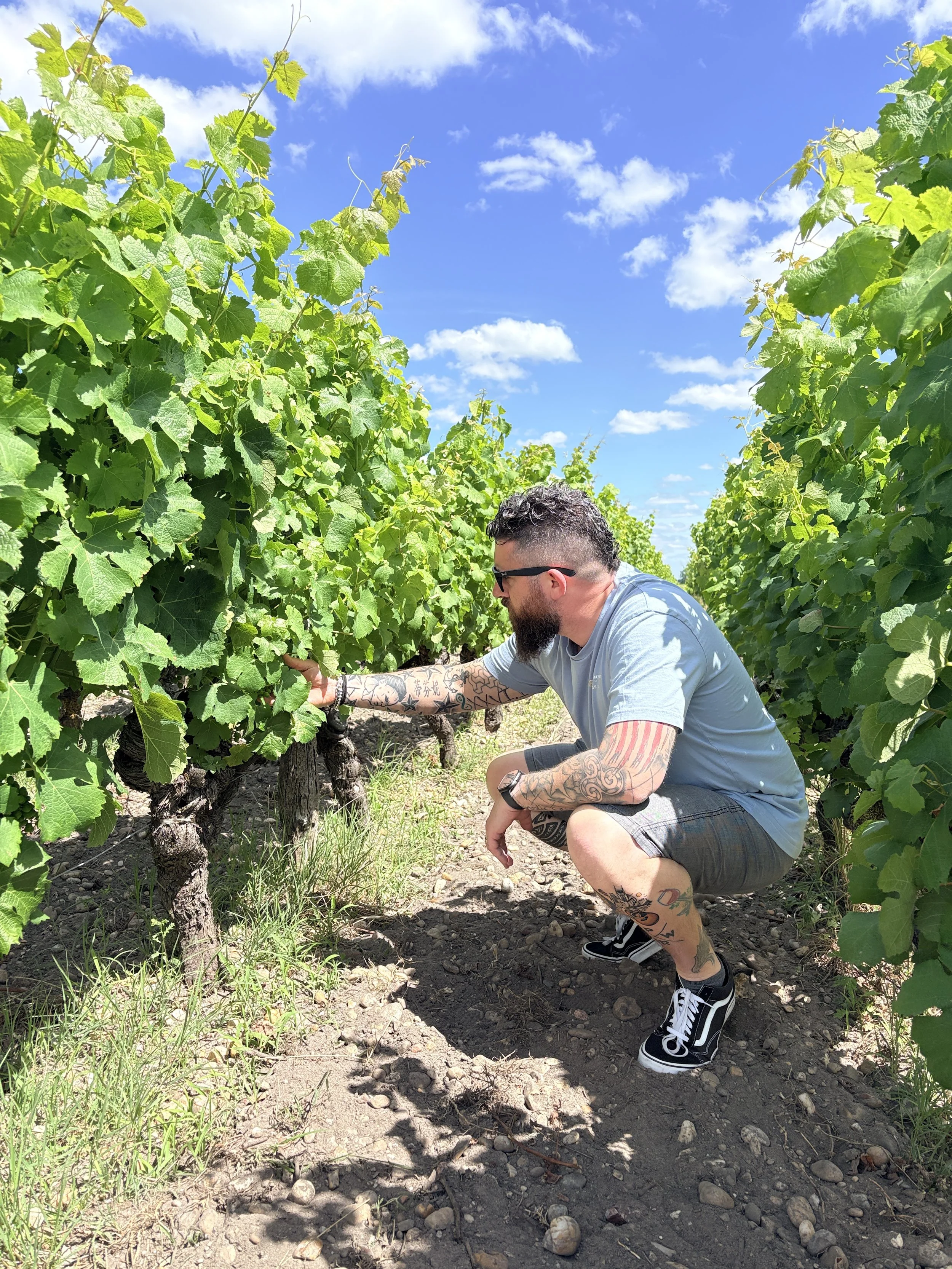
Which brings us to our host. Laure de Lambert Compeyrot — sixth generation since Henri de Sigalas — trained as a scientist at Montpellier SupAgro and Bordeaux's oenology faculty, has managed the estate since 2006, and runs it with an approach best summarized as: respect the jewel, question everything else. In the vineyard that has meant eliminating herbicides entirely and replacing fungicide treatments with pheromone-based pest confusion, work that earned the property France's highest environmental certification back in 2016, well before such things became marketing boilerplate.
But it's the portfolio where her thinking really shows, because Laure has confronted honestly the problem every Sauternes producer faces: the world drinks less sweet wine than it used to, and no amount of heritage changes that. Her answer has been to make the estate's Sémillon speak more languages. Dry whites arrived first — La Demoiselle de Sigalas in 2009, then La Sémillante de Sigalas, a nearly pure Sémillon, in 2013 — part of the quiet dry-white movement running through all of Sauternes. Then came a no-added-sulfur natural cuvée first labeled N°5 de Sigalas — until Chanel's lawyers introduced themselves, and it was diplomatically renamed. (Being sued by Chanel is, if nothing else, proof your little wine estate has entered the cultural conversation.) And this year the estate became the first Sauternes Premier Cru Classé to release a dealcoholized wine, a barrel-aged Sémillon made in partnership with the alcohol-free specialist Moderato. Purists will sniff. Purists aren't the ones who have to sell Sauternes in 2026. What we saw at Sigalas Rabaud — guest rooms in the chartreuse, food pairings, experimentation stacked on tradition — is what survival looks like when it's done with the family still in the building and the jewel still intact.
How to actually drink this stuff
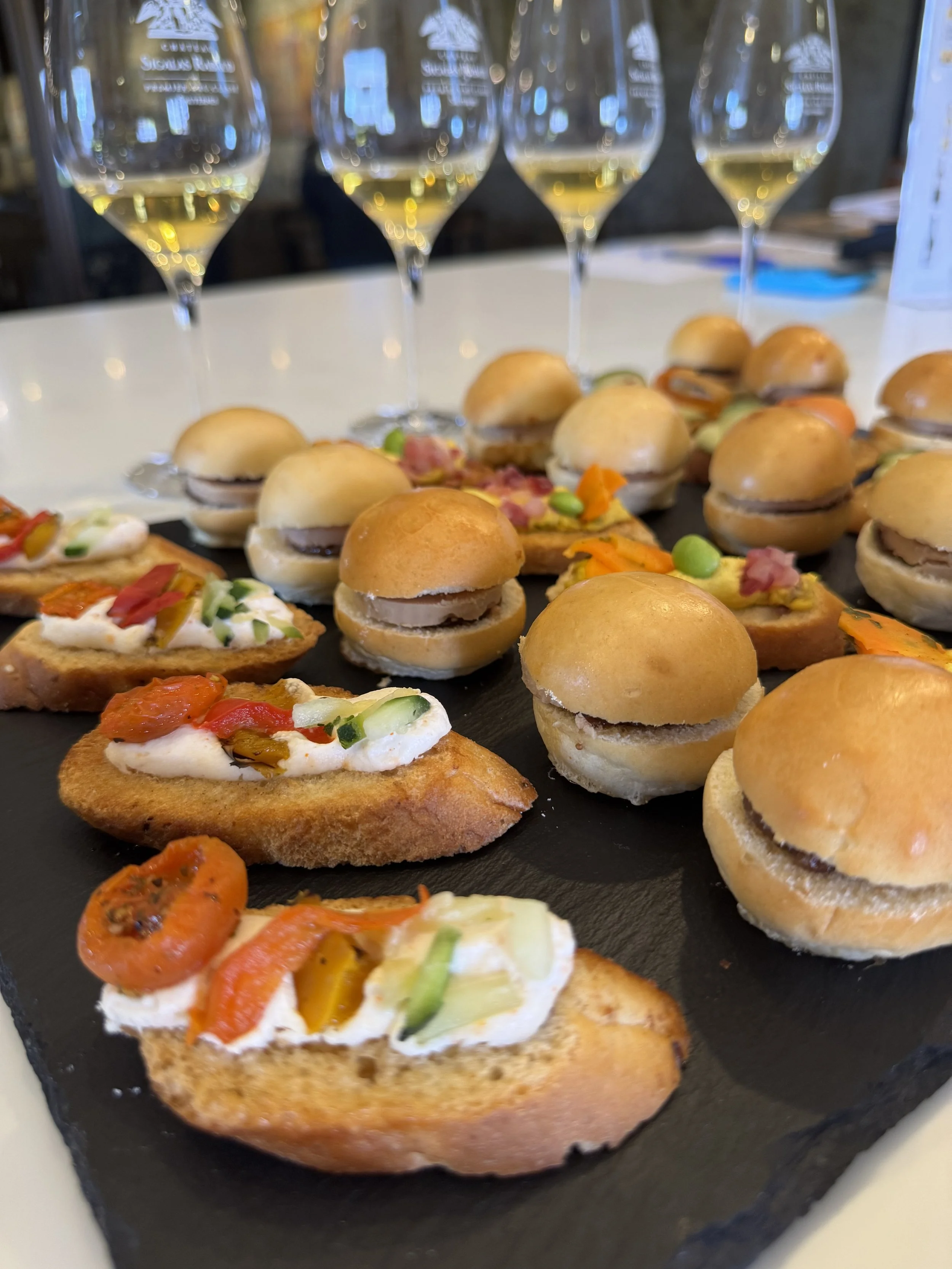
Which brings us to the standing tragedy of Sauternes: everyone files it under dessert, so nobody ever opens it. Time to fix that, because the locals treat it as a food wine with astonishing range. The classic pairing is foie gras; the revelation is oysters and shellfish, where the wine's acidity and salt-honey tension do something no dry white can. Roast chicken, spicy Asian dishes, blue cheese — all superb. Serve it properly cold, around 57°F, and let it warm slowly in the glass; with Sauternes, temperature matters far more than decanting. Young bottles deliver bright pineapple, apricot, and honey; with ten to thirty years they deepen into saffron, caramel, and candied orange — and the top wines age as long as nearly anything made in France.
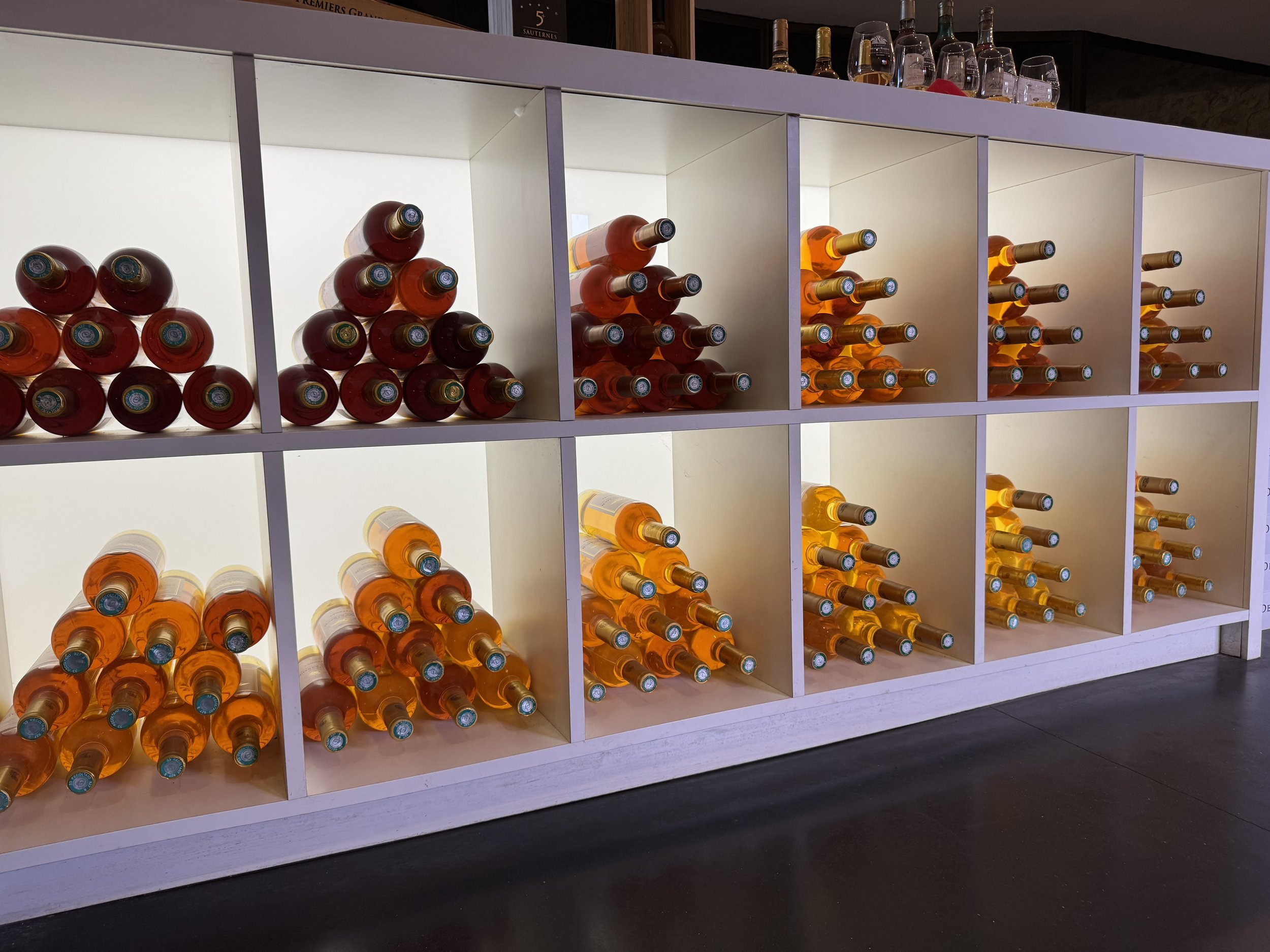
Two practical notes that remove the last excuses. First, the half-bottle isn't a compromise format here — it's the native one, the size the region itself pours, perfect for two people and a cheese course. Second, an opened bottle of Sauternes is nearly indestructible: recorked in the refrigerator, it drinks happily for two or three weeks, which means you don't need an occasion or a crowd. Pour two glasses on a Tuesday and put it back. The all-or-nothing pressure that kills most dessert-wine purchases simply doesn't apply.
And the buying math remains the most lopsided in Bordeaux, as this series keeps finding in unfashionable corners: classified-growth Sauternes from strong recent vintages sells for $30 to $60 a bottle — hand-harvested in multiple passes, glass-per-vine yields, Premier Cru pedigree — and half-bottles, the format the region itself loves, run even friendlier while aging beautifully. A wine this labor-intensive at these prices is not a market working properly. Be the inefficiency's beneficiary.
What stop four teaches
Sauternes closed the loop on something this series has been circling since part one: the least fashionable corners of Bordeaux are where both the value and the human warmth concentrate. Nobody makes this wine by accident or for easy money — you don't harvest the same row six times for a shrug. You make it because your family has been betting on fog for six generations and you've decided the bet still deserves taking. Meeting the person carrying that bet forward, in the house her family refused to sell with the vineyard, was the kind of reminder no tasting note captures: behind every strange old category still standing, there's usually somebody stubborn, smart, and entirely out of patience with being called a dessert.