Bordeaux Stop 5: Margaux — Saving the Prettiest Name for Last
Every wine trip needs a finale, and ours came with the loveliest name on the Bordeaux map: Margaux. It's the commune everyone can pronounce, the one non-wine friends recognize from the First Growth that shares its name, and — as our last full day of the cruise made clear — the one where knowing what you're doing matters more than anywhere else in the Médoc. We spent the day with two châteaux that could not frame the series' lessons better if I'd scripted them: a Fourth Growth from the 1855 list that Thomas Jefferson himself flagged two centuries ago, and an unclassified estate that a wine merchant rescued from literal ruin — and which now outperforms plenty of names above it on paper.
A word about how we did this day: Bacchus Tours
First, credit where it's due, because this day ran on wheels we didn't captain. For our Margaux explorations we booked Bacchus Tours, a small private outfit run by its co-owners Catherine and Hugo, specializing in tailor-made wine days around Bordeaux for groups of two to eight. Catherine herself was our guide and driver, and she was outstanding — the kind of guide who has actual relationships with the properties, reads the room on how much detail you want, and handles the unglamorous logistics (timing, tasting appointments, who's driving) so completely that your only job is to pay attention and enjoy.
And that last point deserves a paragraph of its own, because it's the single best piece of practical advice this series can offer anyone planning a wine trip: hire the guide. Bordeaux's great châteaux mostly require appointments, the D2 has no shoulder for indecision, and someone has to stay sober enough to drive it. A private guide solves all three problems at once and adds a fourth benefit you can't buy separately — context between stops, delivered by someone who lives here. The difference between a wine region seen from a tour bus window and one unlocked by a knowledgeable local in a comfortable van is roughly the difference between reading a menu and eating the meal. If your travels bring you to Bordeaux, Bacchus Tours earned this unsolicited endorsement.
Margaux: the perfumed one — with an asterisk
Now, the commune. Margaux is the southernmost of the Médoc's four famous villages and the largest, sprawling across five communes' worth of vineyard land with around 1,500 hectares of vines. It also holds more 1855-classified estates than any other commune — twenty-one of them, crowned by First Growth Château Margaux and the perennially worshipped Château Palmer. The gravel here is at its thinnest and most varied, scattered across low rises separated by streams and patches of heavier ground, and that geology produces the style the world associates with the name: the most aromatic, silky, floral wines of the Left Bank. Where Pauillac makes structure and Saint-Estèphe makes muscle, Margaux at its best makes perfume.
The old books call this style 'feminine,' a descriptor that manages to be simultaneously condescending to the wine and to women, given that Margaux's tannins can outlive most of the people who write such things. The honest version: Margaux trades a measure of raw power for aromatic complexity and texture, and when it's right there is nothing else like it in Bordeaux. The asterisk is that scattered geology. Margaux is the most heterogeneous of the great communes — thin gravel here, cool clay there — which means the gap between an inspired producer and a sleepy one is wider than anywhere else in the Médoc. In Saint-Julien you can buy the appellation almost blind. In Margaux, you buy the producer. Which is exactly why our two visits were chosen the way they were.
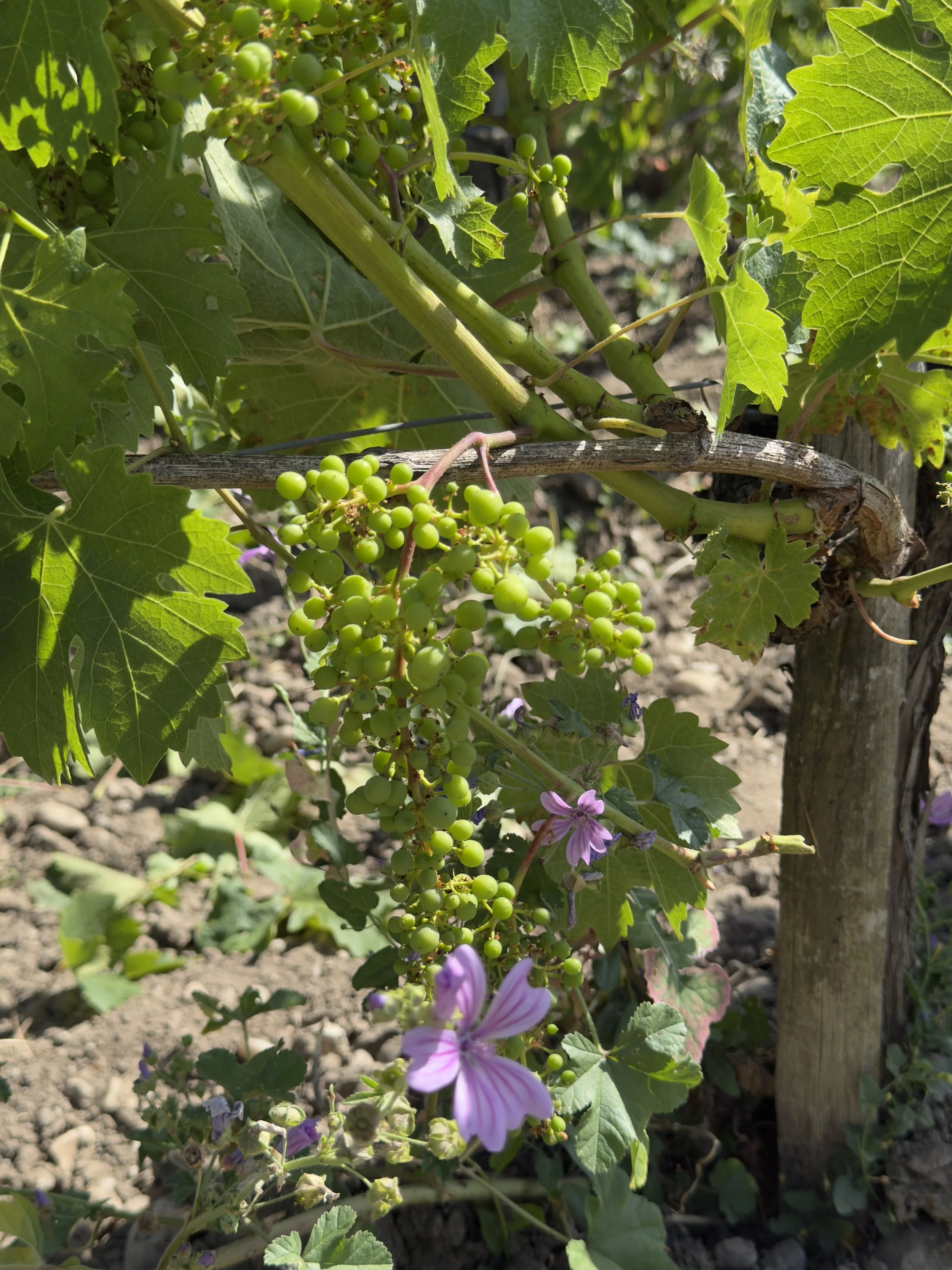
Driving the appellation with Catherine turned the map three-dimensional. The Margaux name actually spans five villages — Margaux itself, Cantenac, Soussans, Arsac, and Labarde — and the rises between them are subtle enough that only a local can point to where one famous gravel mound ends and lesser ground begins. We rolled past the First Growth's long tree-lined allée with its colonnaded facade at the end — the most photographed front door in Bordeaux — and past Château Palmer, the 1855 Third Growth that has spent decades selling at Second Growth prices and better, the commune's own long-running rebuttal to its own ranking. One more detail worth stealing for your own vineyard visits: the rose bushes planted at the ends of the vine rows aren't decoration. Roses catch powdery mildew before vines do, so for generations they served as the vineyard's early-warning system — a canary in a flowerbed. Most estates now have lab-grade monitoring, but the roses stay, because some traditions earn their keep twice.
Château Marquis de Terme: Jefferson's tip, still good
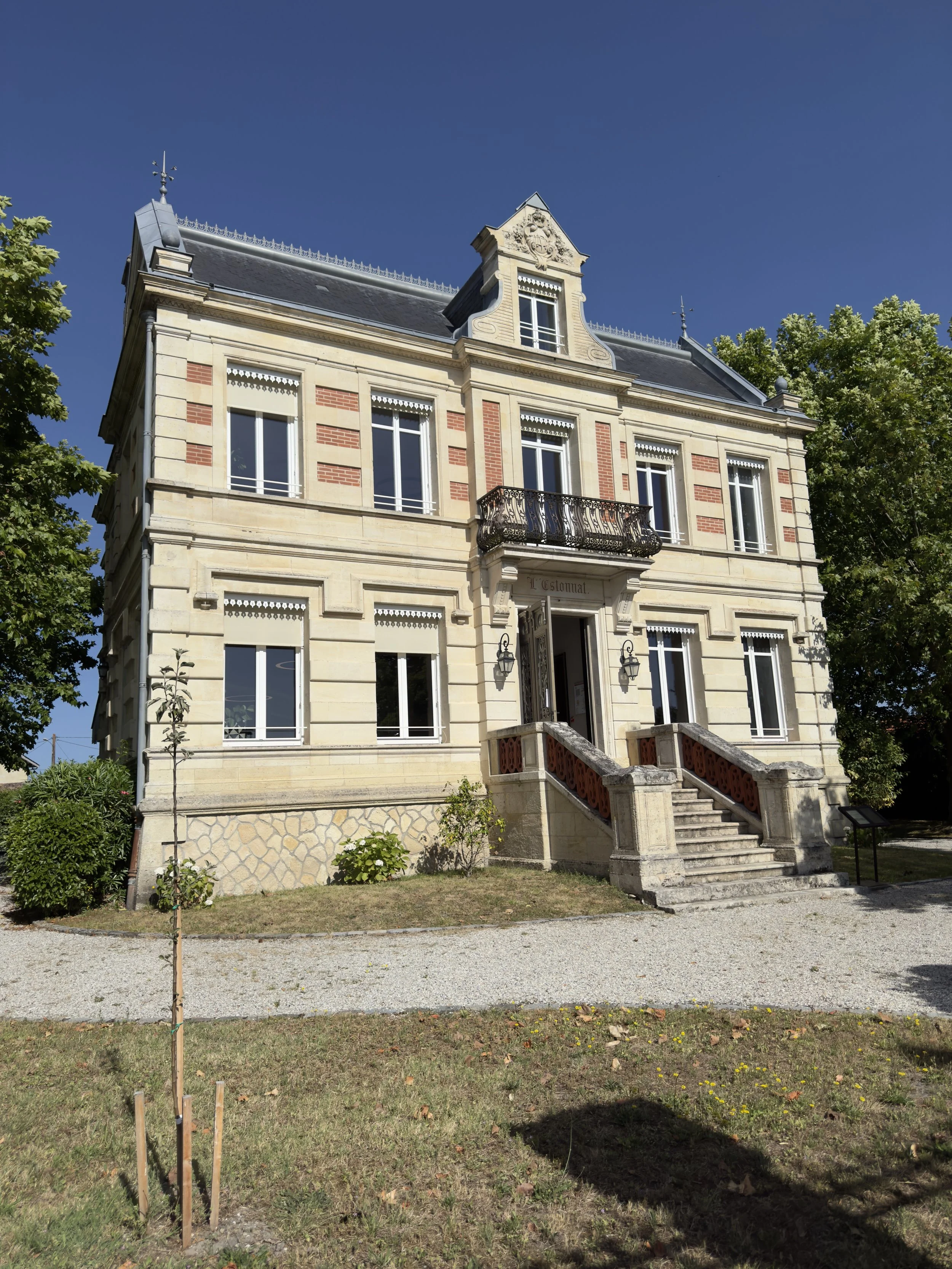
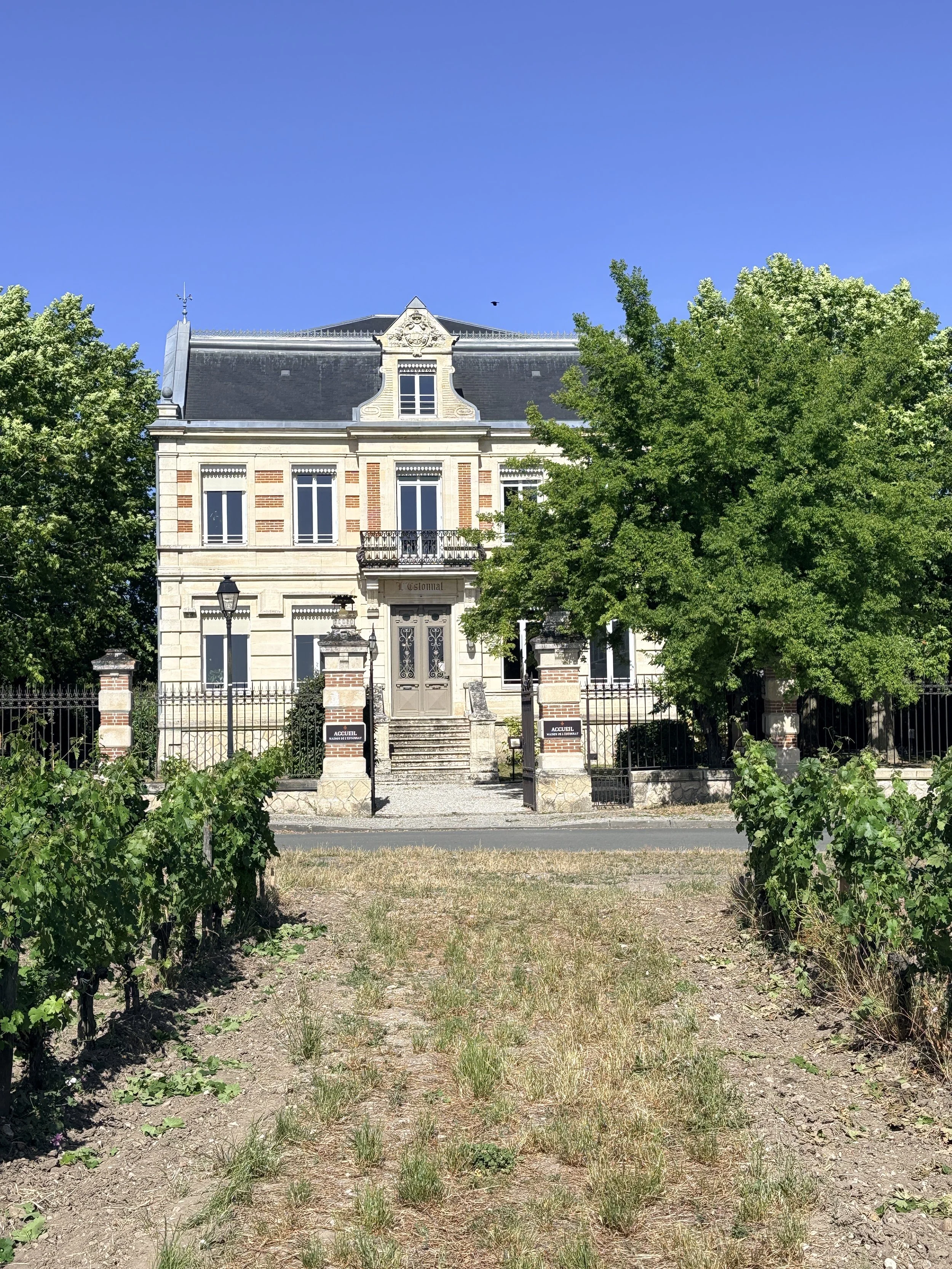
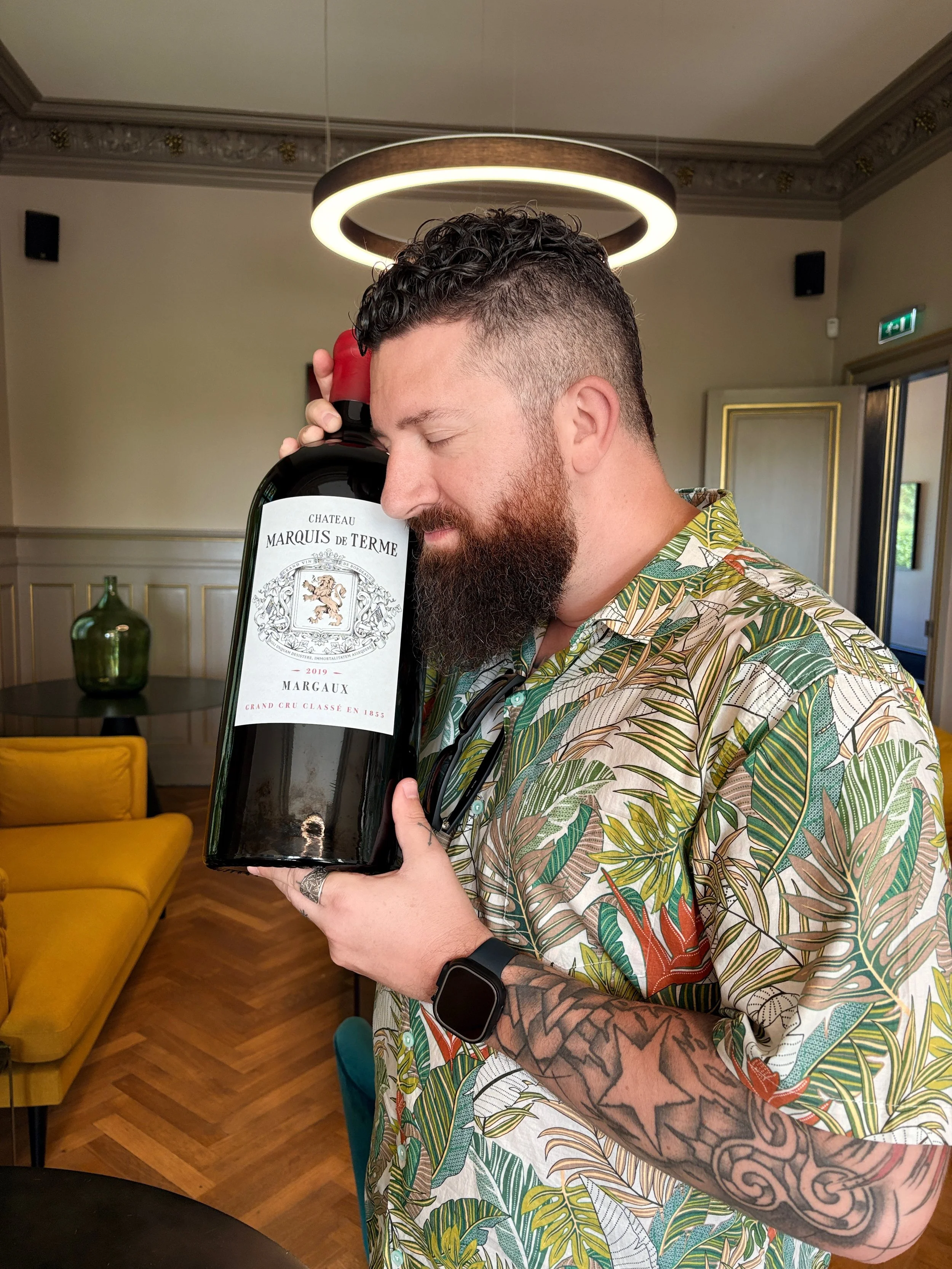
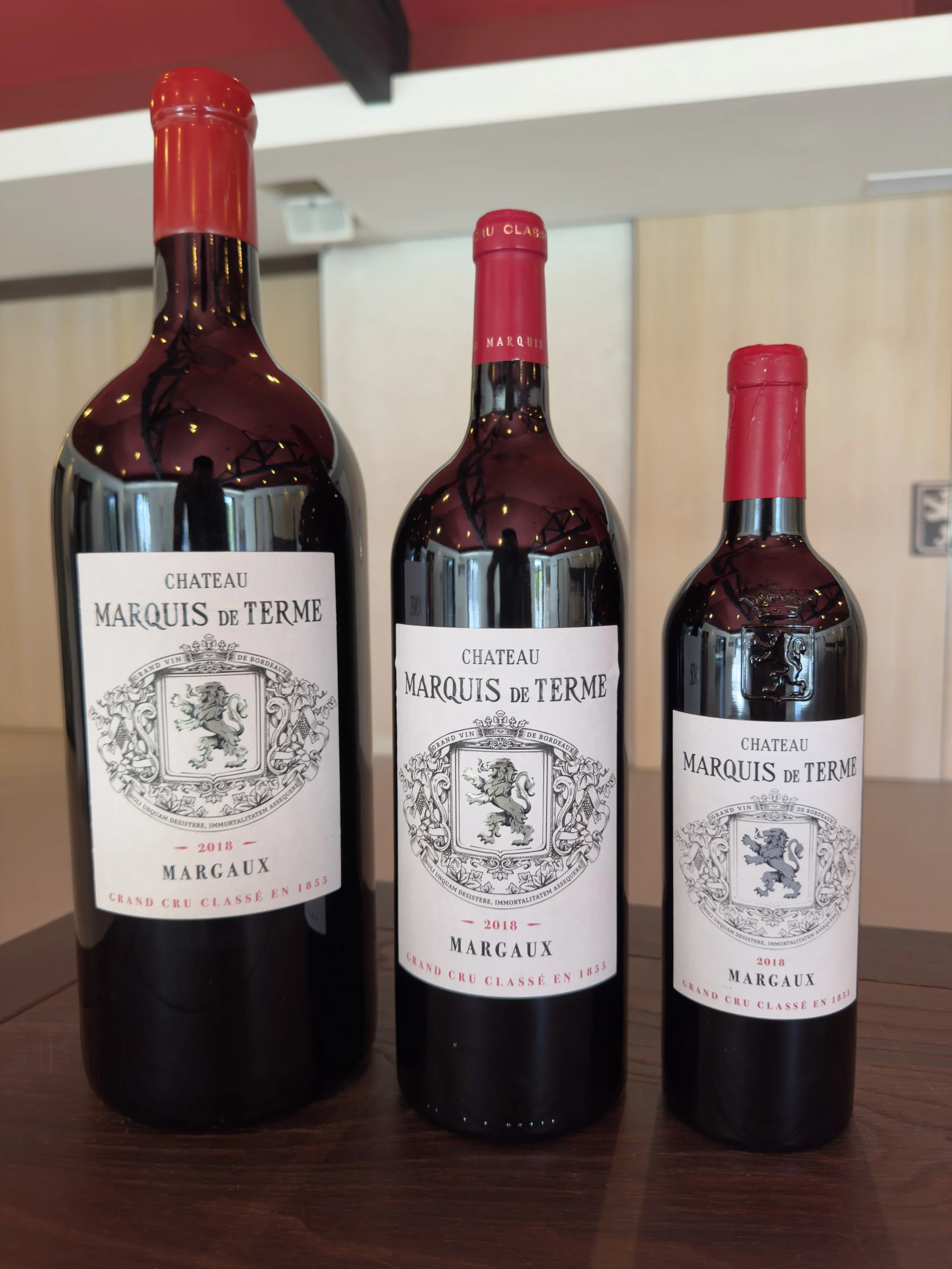
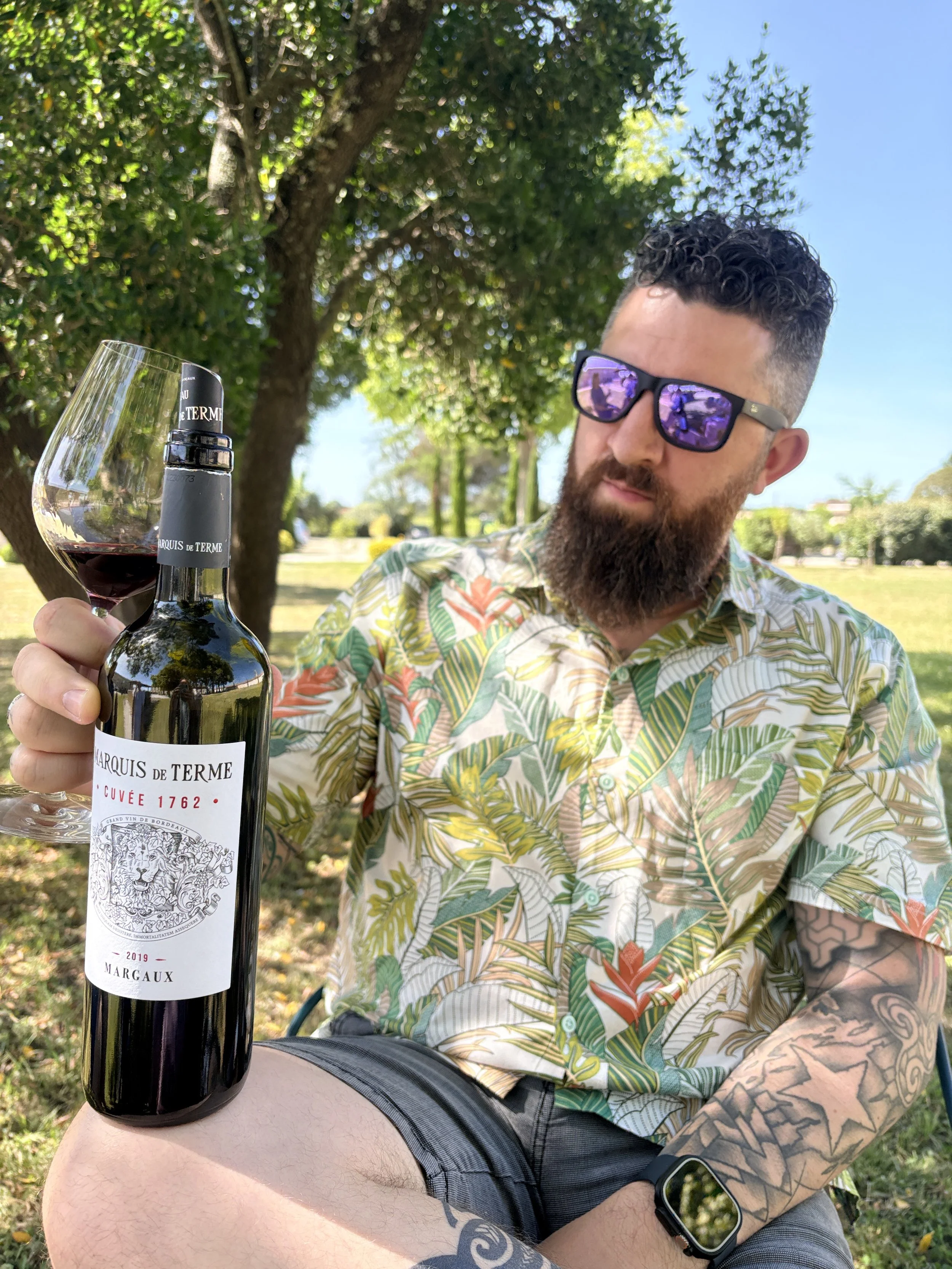
Château Marquis de Terme sits practically in the village of Margaux itself, and its paper trail is a tour through everything this series has covered. The land was once part of the enormous Rauzan estate — the seventeenth-century holding that also spawned Rauzan-Ségla, Rauzan-Gassies, and Desmirail, in the same carve-up tradition that gave us Branaire and the Léovilles. The name arrived in 1762, when the property came to François de Peguilhan, Marquis de Terme, as a marriage dowry — proof that in old Bordeaux, vineyards moved with weddings as often as with money. In 1787, a traveling American ambassador named Thomas Jefferson tasted through the region and put Marquis de Terme on his personal list of Bordeaux's sixteen best; the 1855 brokers filed it among the Fourth Growths; and remarkably, across the nineteenth and twentieth centuries the estate passed through just two families — the Feuillerats, then the Sénéclauzes, who have owned it since 1935 and run it still.
What you get in the glass is classic mid-tier Margaux arithmetic, the same equation this series found at Branaire-Ducru and Grand-Puy Ducasse: genuine 1855 pedigree, serious Cabernet-led wine from the commune's gravel, at $40 to $60 instead of the three and four figures commanded up the road. The estate has also leaned into hospitality in a way the Médoc historically resisted — open doors, proper tastings, food — which made it an ideal first stop: a classified growth that acts like it's happy you came.
Château Angludet: the ruin that outran its rank
Our second visit told the other half of the story. Château Angludet — formally d'Angludet — sits in Cantenac on land with vineyard history running back to the twelfth century, which makes it older than nearly everything with a higher ranking. But it missed the 1855 boat entirely, and by the late 1950s the property was in genuine ruin: when Peter Sichel first laid eyes on it in 1961 — the story goes, while out on an afternoon stroll — fewer than seven hectares of vines were still standing. He bought it and spent the rest of his life rebuilding it row by row.
The Sichel name matters here. The family has run one of Bordeaux's great négociant houses since 1883 and holds a significant share of Château Palmer — meaning the people restoring this unclassified farm were simultaneously part-owners of one of Margaux's most exalted names. They knew exactly what great Margaux terroir looked like, and they bet that Angludet had it. Under Benjamin Sichel, who took over management in 1989, the estate became a quiet innovator — among the first in the Médoc to practice green harvesting to naturally lower yields, and an early adopter of ecological pest control, years before environmental farming became a press release. Today its 32 hectares produce what insiders have known for decades: wine of classified-growth polish at $30 to $45, from a property whose only handicap is a list written before anyone alive was born.
One commune, both lessons
Put the two visits side by side and you get the entire series in miniature. Marquis de Terme is the classification working as intended — a 260-year-old name, ranked in 1855, still delivering the commune's signature at a fair price. Angludet is the classification's blind spot made flesh — twelfth-century terroir, six generations of wine expertise, real Margaux perfume, and no rank at all because of what a list said about a moment in 1855. Neither wine cares. The drinker who understands both — that the old list maps real terroir and that its edges leak value — is equipped for every wine shelf in the world, not just this one.
What the cruise taught us
And that's the trip. Five stops, a dozen appellations, and one estuary binding it all together. If I compress the whole series into what I'd tell a friend over a glass: Bordeaux is a map, and the map is learnable in a week. The Right Bank taught us that soil assigns the grapes and fame skips whole regions out of habit. Blaye and Bourg taught us that the oldest vines and warmest welcomes hide where the marketing never reached. The Médoc taught us that even the world's most famous wine list is a floor to build on, not a verdict to obey. Sauternes taught us that fashion abandons greatness long before greatness stops being great. And Margaux, with a classified pioneer and an unclassified overachiever twenty minutes apart, taught us the two lessons are really one: the label tells you where to start looking. It never tells you where to stop.
For anyone who wants to drink this series rather than just read it, here's the whole trip in six bottles, most of them under $50: a Fronsac or Castillon red for the Right Bank's clay-limestone lesson; a Côtes de Bourg with some Malbec in the blend for the estuary hills; a Saint-Émilion Grand Cru Classé from the appellation's edges for the limestone plateau; a Fourth or Fifth Growth Médoc — Branaire-Ducru, Grand-Puy Ducasse, Marquis de Terme all qualify — for the gravel and the rank-versus-reality gap; a half-bottle of classified Sauternes for the fog; and an Angludet for the proof that the list isn't the last word. Line them up over six dinners and you'll have tasted more of Bordeaux's actual logic than most people manage in a lifetime of drinking its famous names.
We sailed home with a suitcase of bottles, a signed book, a standing invitation, and a re-drawn mental map of the most famous wine region on Earth. The vines will still be there when we go back. Bordeaux has been patient for two thousand years — it can wait for us a little longer.