RVing with Cats: Everything We've Learned Traveling with Two Feline Co-Pilots
Can you really travel full-time in an RV with cats?
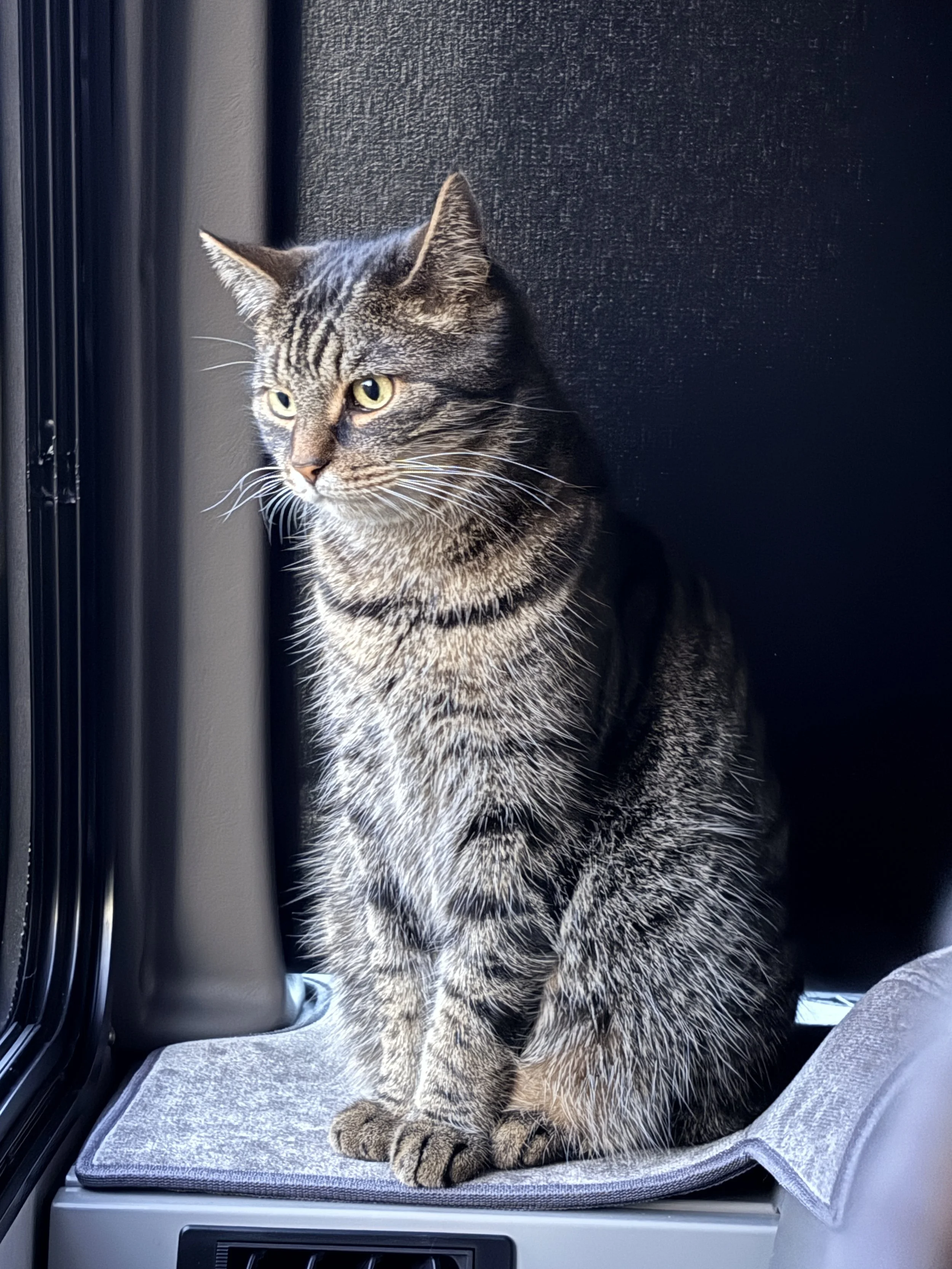
The short answer? Absolutely.
In fact, we'd argue that cats can make excellent RV companions—with a little planning.
Here are the questions we get asked most often.
Where do you put the litter box in an RV?
This is probably the #1 question every future cat-RVer asks.
The shower is the perfect litter box location. It's waterproof, easy to clean, and keeps litter contained in one area. Some campers have a place that they have modified to allow their cat to descend into one of the holds in the ‘basement’. That is genius! (And we’re jealous.) We mostly use the showers at the parks where we stay, so this is not an inconvenience for us.
Pointers for the litter box in the RV:
· Use a stainless-steel litter box. Unlike plastic, stainless steel doesn't absorb odors and is much easier to sanitize. Every once in a while, we simply hose it out, disinfect it, and it's as good as new.
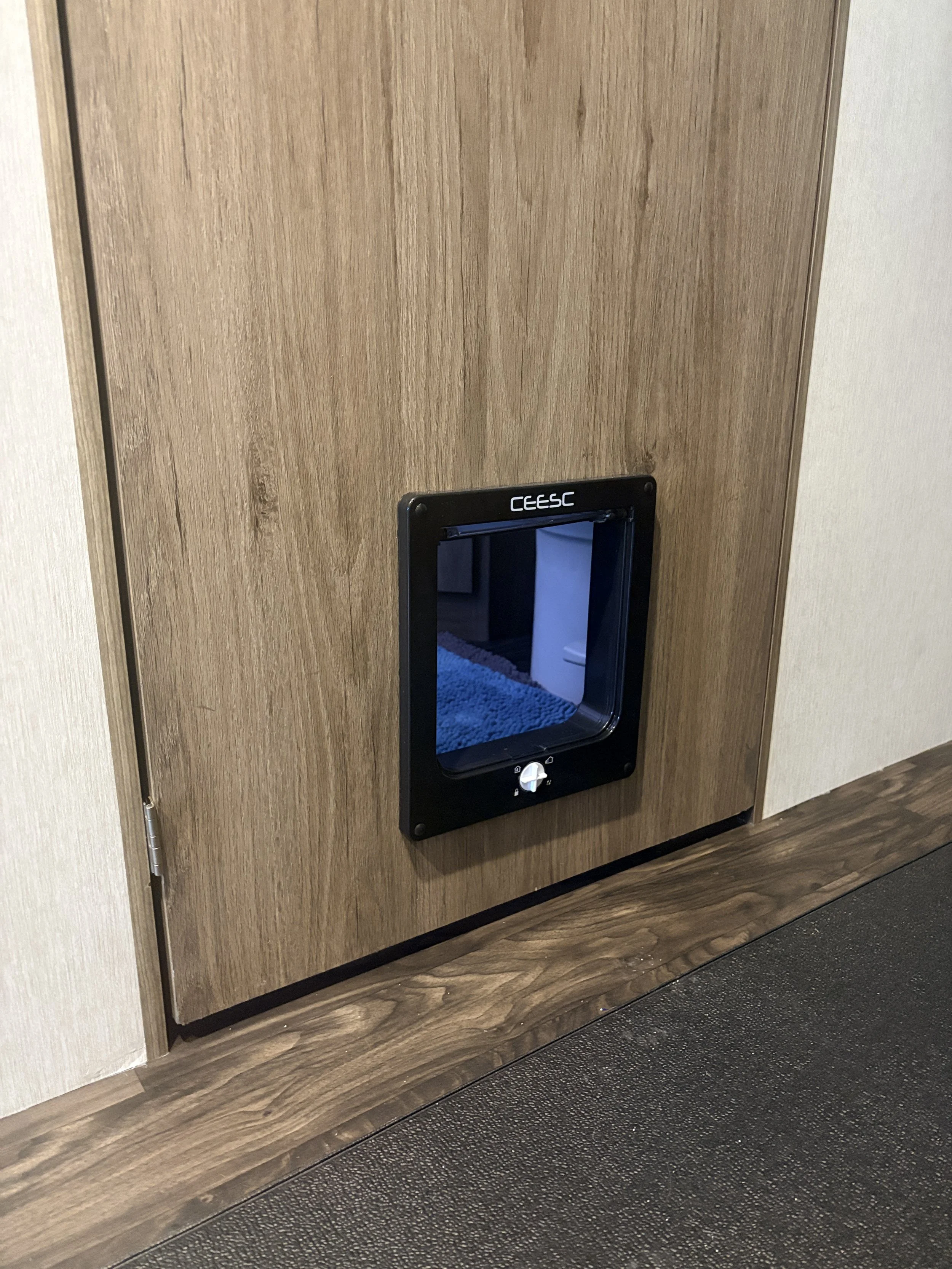
· Install a cat door. One of the best modifications we've made was cutting a small cat door into our bathroom door. Now the bathroom stays closed, but the boys can access their litter box whenever they want. There are a variety of fun options available at your favorite retailer, like these.
· Choose low-tracking litter. RV floors are small enough without turning them into a sandbox. We've had the best luck with: Crystal litter (like Pretty Litter) and larger-grain litter. Both dramatically reduce dust and tracking.
· Scoop often. With two cats, we scoop every morning and every evening. We use biodegradable dog waste bags and place them on the RV steps so they're impossible to forget during our next walk to the campground dumpster.
What do the cats do on travel days?
Do we allow them to roam freely? No. Safety comes first. Dinkelsbühl and Ærøskøbing ride together inside a medium-sized dog crate that fits perfectly into our dinette area. They're safe, secure, and we're not distracted while driving.
Do we sedate them? At first, yes. Our veterinarian recommended small doses of gabapentin while they adjusted to travel. Today? They've become seasoned travelers. Now we simply give them calming treats about an hour before departure, and they typically snooze through most of the drive.
Aren't you afraid they'll escape?
Absolutely. Every cat owner's nightmare is opening the RV door and watching their cat disappear into the woods.
What precautions do we take to make sure they don’t get lost? We compared and contrasted all the GPS and tracking devices and determined the newest ones from Tractive are best for our situation. Why did we go with Tractive instead of just an Apple Air Tag? Air tags only work when they are near Apple devices. If the cat escapes and runs into the woods or down the beach, there is no way to track it. Devices like Tractive and Fi use cellular technology so you can locate them anywhere.
We keep harnesses on them all the time. We were surprised at how easily they adapted to the harnesses. I think they may even like them – like a calming jacket some people put on dogs during storms. The harness serves multiple purposes: so we can grab them easier if we need to, they let people know the cat is not a stray if they get out, and they are designed to hold a tracker.
Do we allow them outside? We have seen people keep outdoor playpens or “catios” outside their RVs, and we often see cats on leashes. But we have opted to keep our boys inside. We have trained them to stay away from the stairs. They would be terrified to be outside in the wild, as they have been indoor cats for seven years.
What other tips would you give someone RVing with cats?
Make sure they are up to date on vaccines and have a rabies tag. Some parks will require seeing the tag or records.
Keep a paper copy of medical records in a file with you in case you need to stop at an emergency vet. It makes it easier if they can see your cat’s history and may save you money for tests or vaccines they may already have.
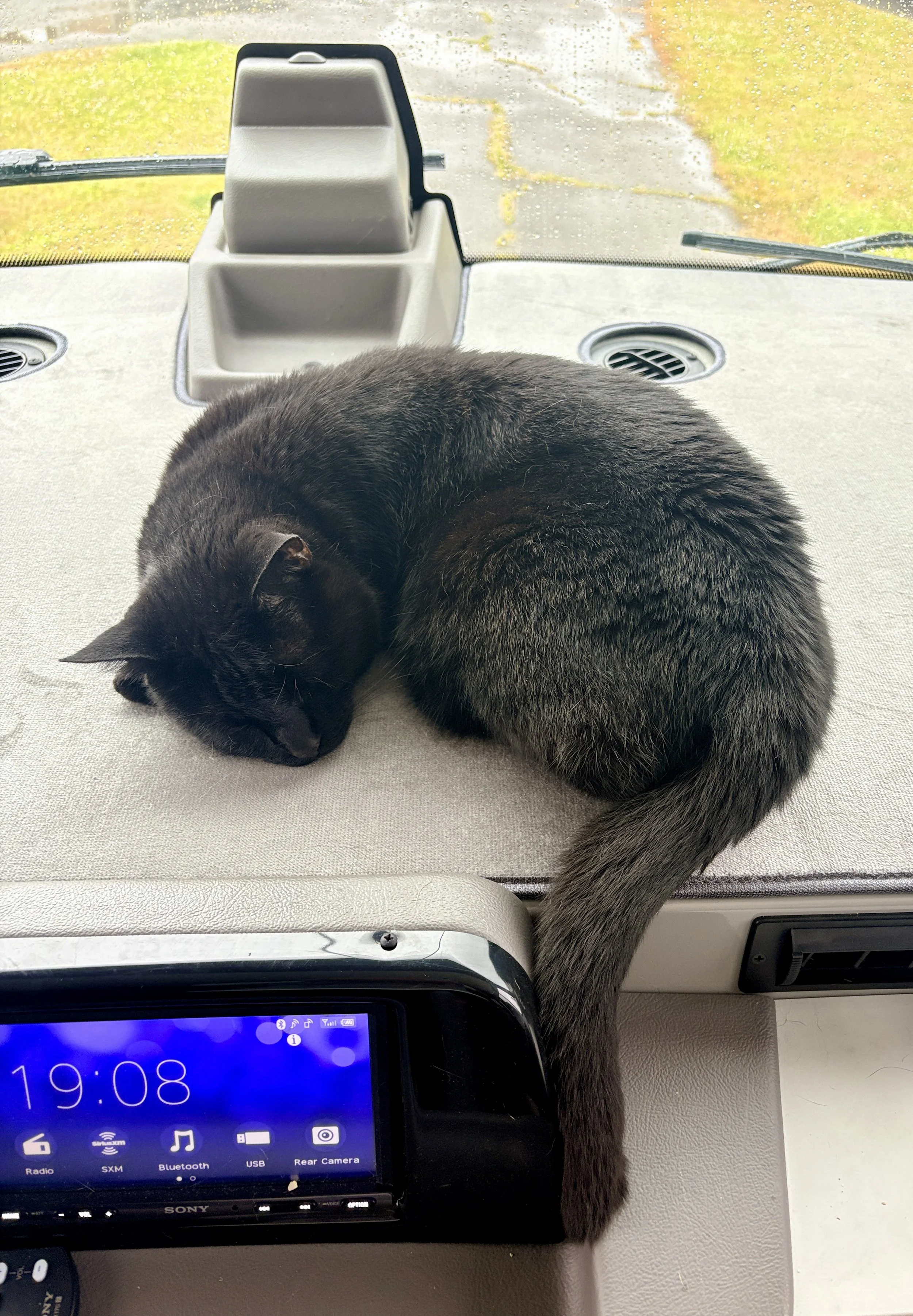
Create a safe space for them. They will want a place that they can run and hide. If you don’t create one for they’ll find the worst places.
Protect your dash and your furniture. We absolutely love our ShadePro dash cover. It fits our dash perfectly, arrived quickly, and provides a soft, cozy pad for them to lie on the vast dash.
Get on your belly and look under every cabinet, slide, chair, etc., and see where it leads. Trust us on this one. Our cat crawled way up under the passenger dash. We were able to coax him out eventually, but I often read about people needing to disassemble their dash. Or that somehow the cat works their way into the engine compartment from under the dash.
Key Lessons We Learned
🐾 Cats adapt much faster than we expected.
🐾 A bathroom cat door is one of the best RV modifications we've made.
🐾 Stainless-steel litter boxes are recommended.
🐾 GPS trackers provide incredible peace of mind.
🐾 Every RV has secret cat tunnels you don't know about...until your cat does.
Would We Recommend RVing with Cats?
Without hesitation—yes.
Watching Dinkelsbühl and Ærøskøbing curl up in the front windshield while overlooking an ocean, a forest, or a mountain lake has become one of our favorite parts of RV life.
They may never hike the National Parks with us, but they're absolutely part of the adventure – and part of our family.
Note: We have not received any benefits from any of the products linked in this blog. The links are provided solely for your convenience.