Cruise Stop 2: Blaye & Bourg — The Bordeaux That Time (and the Market) Forgot
Stop two of our cruise delivered the kind of day that reorders your assumptions about a famous region. Blaye and Bourg sit on the right side of the Gironde estuary, staring directly across the water at the Médoc — close enough that from Blaye's fortress walls you can see the land that produces some of the most expensive wine on the planet. On this side: no First Growths, no classification, no tour buses idling outside iron gates. Just hills, old stone, some of the oldest vineyard land in all of Bordeaux, and wine that costs a fifth of what's being poured on the opposite shore. If the first stop of this cruise was about fame, this one is about what fame overlooks.
Older than the Médoc — by a lot
Here's the historical joke hiding under Blaye and Bourg's underdog status: this is where Bordeaux wine began. The Romans planted vines on these hillsides nearly two thousand years ago, choosing them for the same reasons any farmer would — high ground, good drainage, a south-facing tilt toward the water. At that point the Médoc across the estuary was a mosquito-ridden marsh, and it stayed that way until Dutch engineers drained it in the seventeenth century. The celebrated gravel banks of Pauillac and Margaux are, geologically speaking, the new kids. Blaye and Bourg had a fifteen-century head start.
So why did the other bank win? Money and infrastructure, mostly. When Bordeaux's merchant class built the modern fine-wine machine — the négociant houses, the 1855 classification, the international brand-making — the capital concentrated on the Left Bank estates and the Libourne-side stars, and these hills got left out of the marketing budget. No classification meant no story to sell, and no story meant no pricing power. The vines never stopped being good. The press releases just stopped coming. Two centuries later, that accident of commercial history is the entire reason a curious drinker can raid these appellations for weeknight Bordeaux without wincing at the register.
The estuary in the glass
Before the towns, a word about the water, because from the deck it's impossible to ignore: the Gironde is the largest estuary in western Europe, a silver-brown expanse so wide in places that the far bank reads as a rumor. Its scale is not just scenery — it's climate equipment. That enormous mass of tidal water stores heat, takes the edge off spring frosts, and evens out temperature swings on the slopes that face it, which is why the oldest local vineyard wisdom on both banks says the best vines are the ones that can see the river. Blaye and Bourg's hillsides sit in the front row.
The estuary also explains the odd wooden structures you'll see along both shores — carrelets, the fishing huts on stilts with big square nets suspended over the water, as characteristic of the Gironde as the vine rows behind them. They're a useful mental image for this whole stretch of the region: modest, functional, older than fashion, and still quietly working. It's the estuary's aesthetic, and its wines share it.
Blaye: a fortress with a wine problem — or the other way around
Blaye's crown jewel isn't a château at all. It's the Citadelle, the massive star-shaped fortress that Vauban — Louis XIV's military engineer and the man who fortified seemingly half of France — completed in 1689 to control river access to Bordeaux. It worked as a system: the citadel on this bank, Fort Paté on an island mid-estuary, and Fort Médoc on the far shore formed a triple lock across the water, a cannon-range checkpoint no hostile fleet could slip past. UNESCO added the ensemble to the World Heritage list in 2008 as part of Vauban's fortification network, and today the citadel is Blaye's town-within-a-town — ramparts, tunnels, artisan shops, and one of the best sunset views over the estuary anywhere in the region.
The wine side requires one label decode, because Blaye's naming history is a bureaucratic layer cake. Since 2009, most of what you'll see is Blaye Côtes de Bordeaux, part of the umbrella that gathered several hillside appellations — Blaye, Castillon, Cadillac, Francs — under the shared Côtes de Bordeaux banner. It's the largest of those côtes, a Merlot-dominant sea of family estates producing exactly what the marketing never promised: honest, dark-fruited, medium-weight reds that drink well at three to six years old and mostly cost $12 to $20. There's also a small tradition of crisp white from Ugni Blanc and Colombard — a vestige of the region's brandy-adjacent past — worth grabbing cold on a hot day.
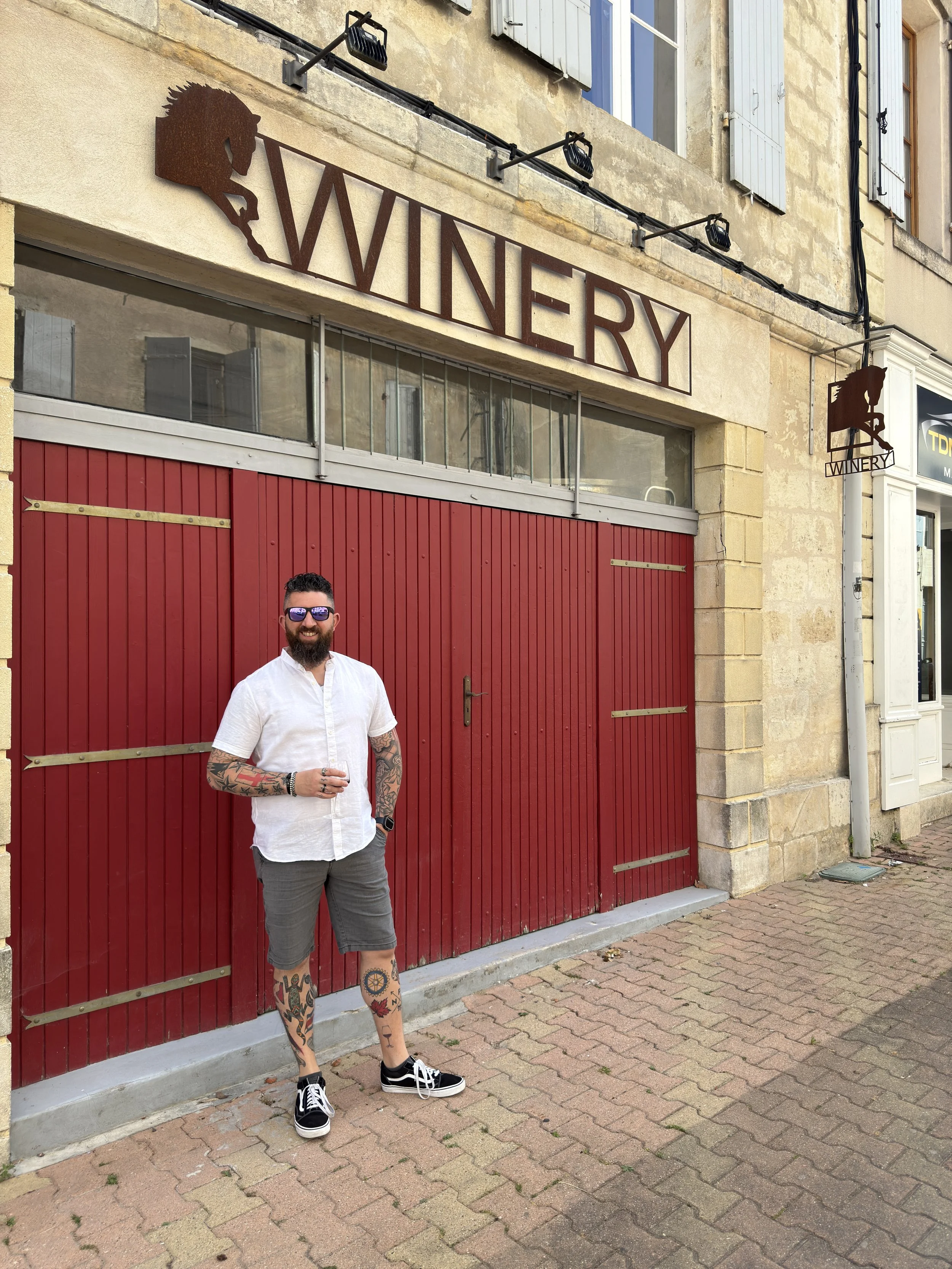
Étalon Rouge: the winery inside the walls
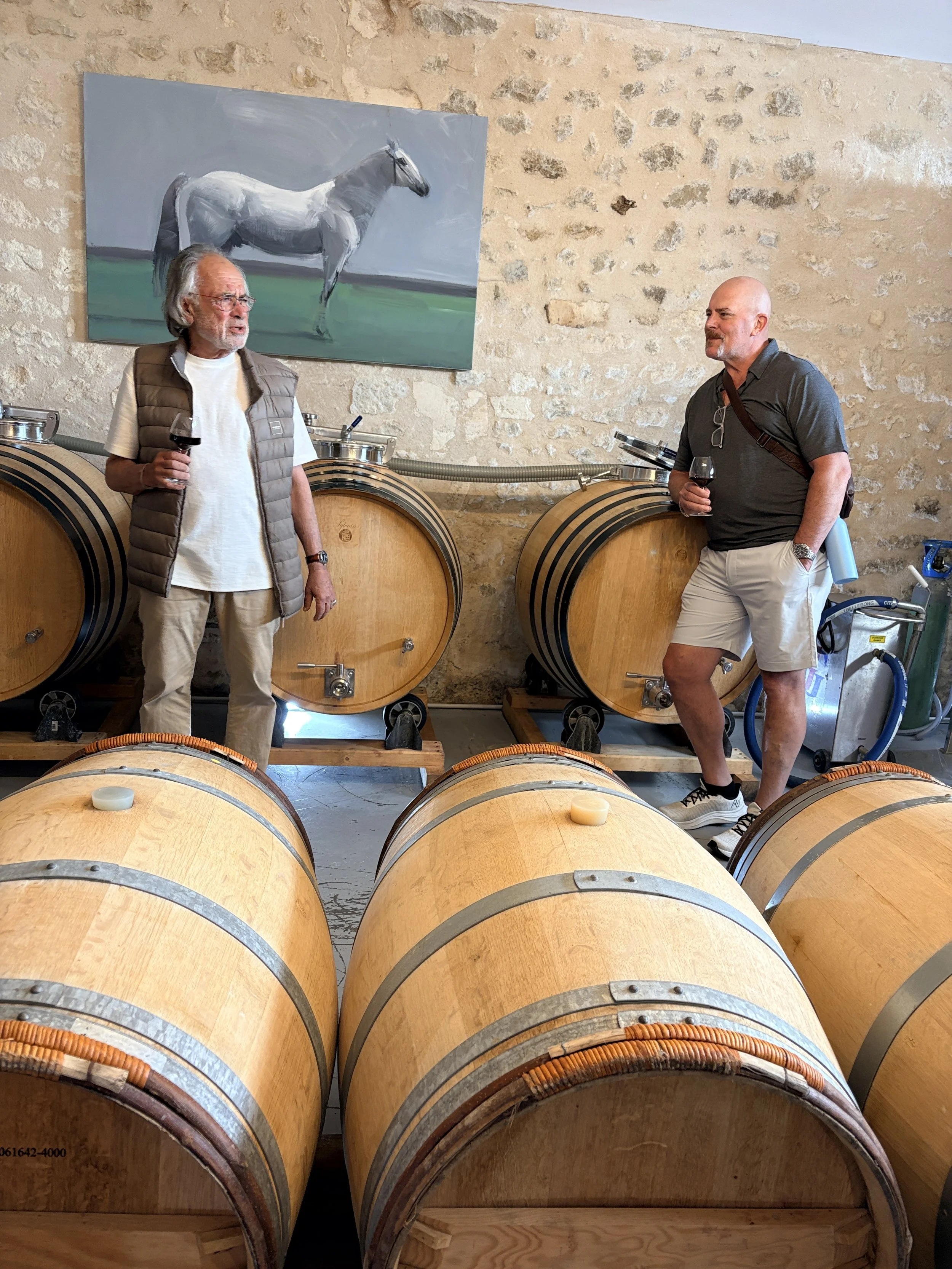
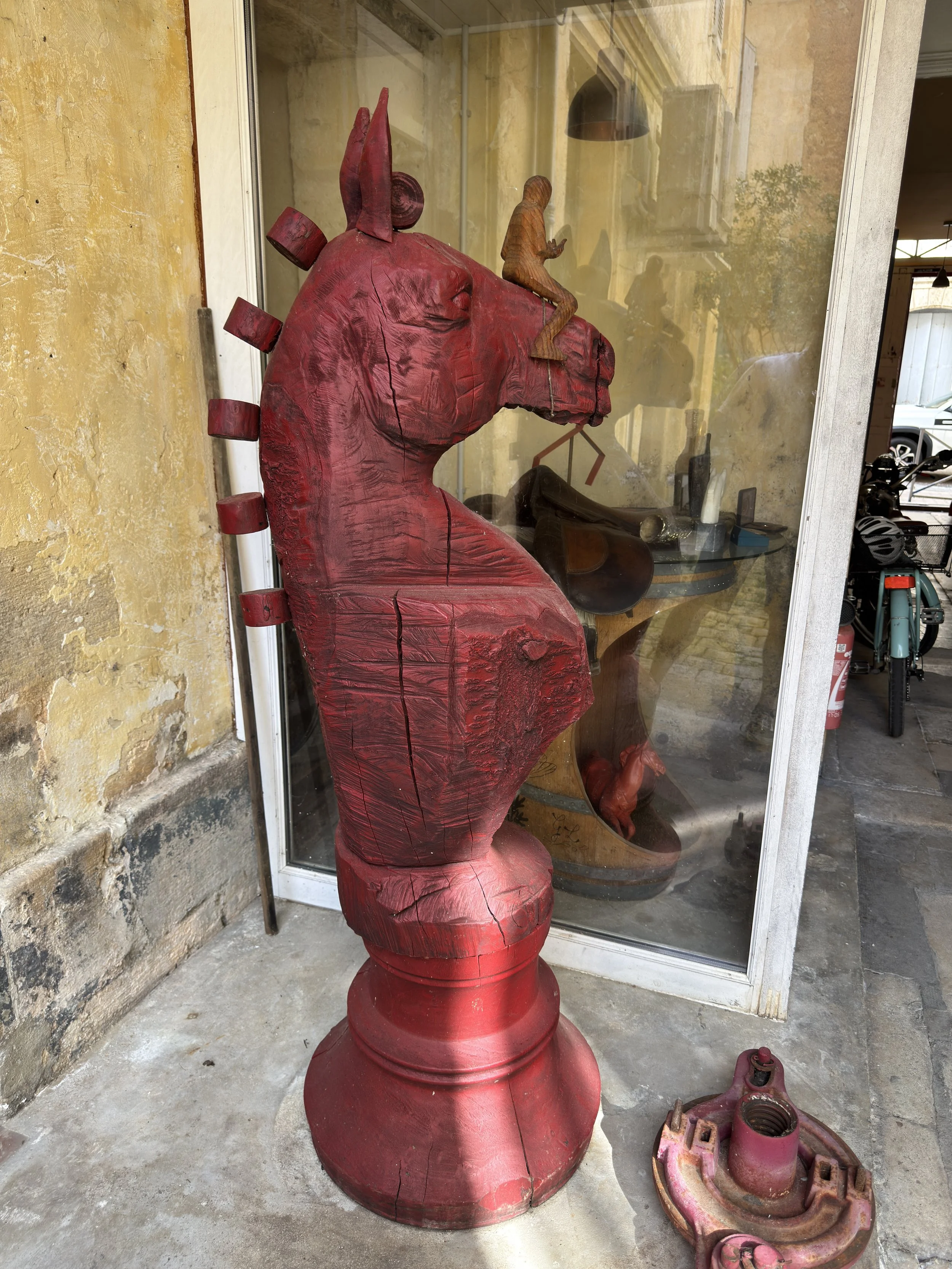
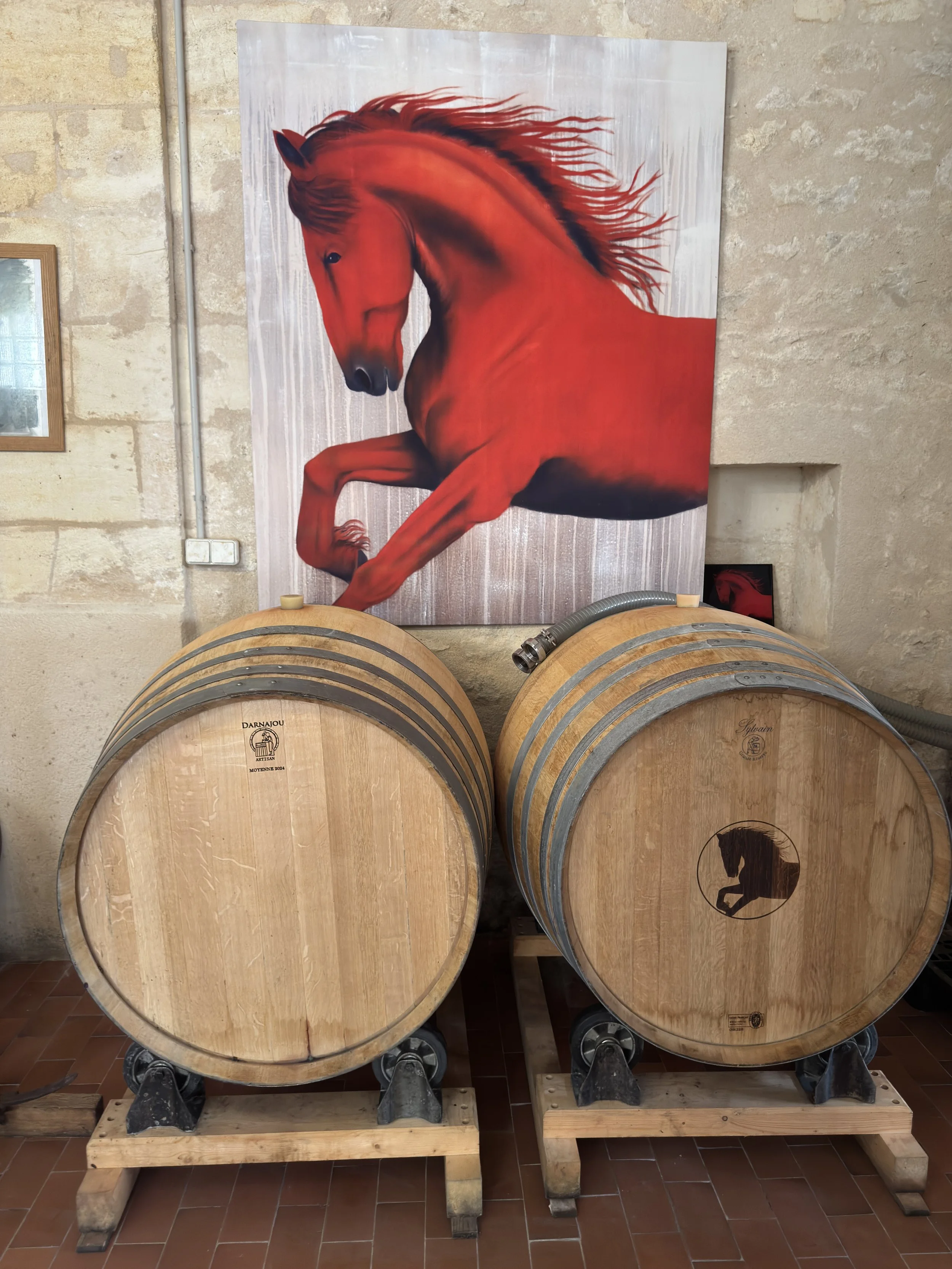
Our visit in Blaye wasn't to a country estate at all, but to something rarer: Étalon Rouge — the Red Stallion — the only working winery inside the old town itself, tucked along the Rue Saint Simon, the oldest trade road in Blaye. It comes with one of the more improbable ownership sagas in Bordeaux. The vineyard once belonged to the actor Gérard Depardieu, in partnership with wine magnate Bernard Magrez; it later passed to the French animal painter Thierry Bisch, and today it's owned by a consortium of ten wine lovers from around the world. For eight years the consulting oenologist was Denis Dubourdieu — the University of Bordeaux professor the French press called the pope of white wine — until his death in 2016, and the current consultant, Christian Prud'homme, formerly helped run one of Pauillac's First Growths. That is a staggering amount of pedigree for a micro-winery in a town most Bordeaux itineraries skip.
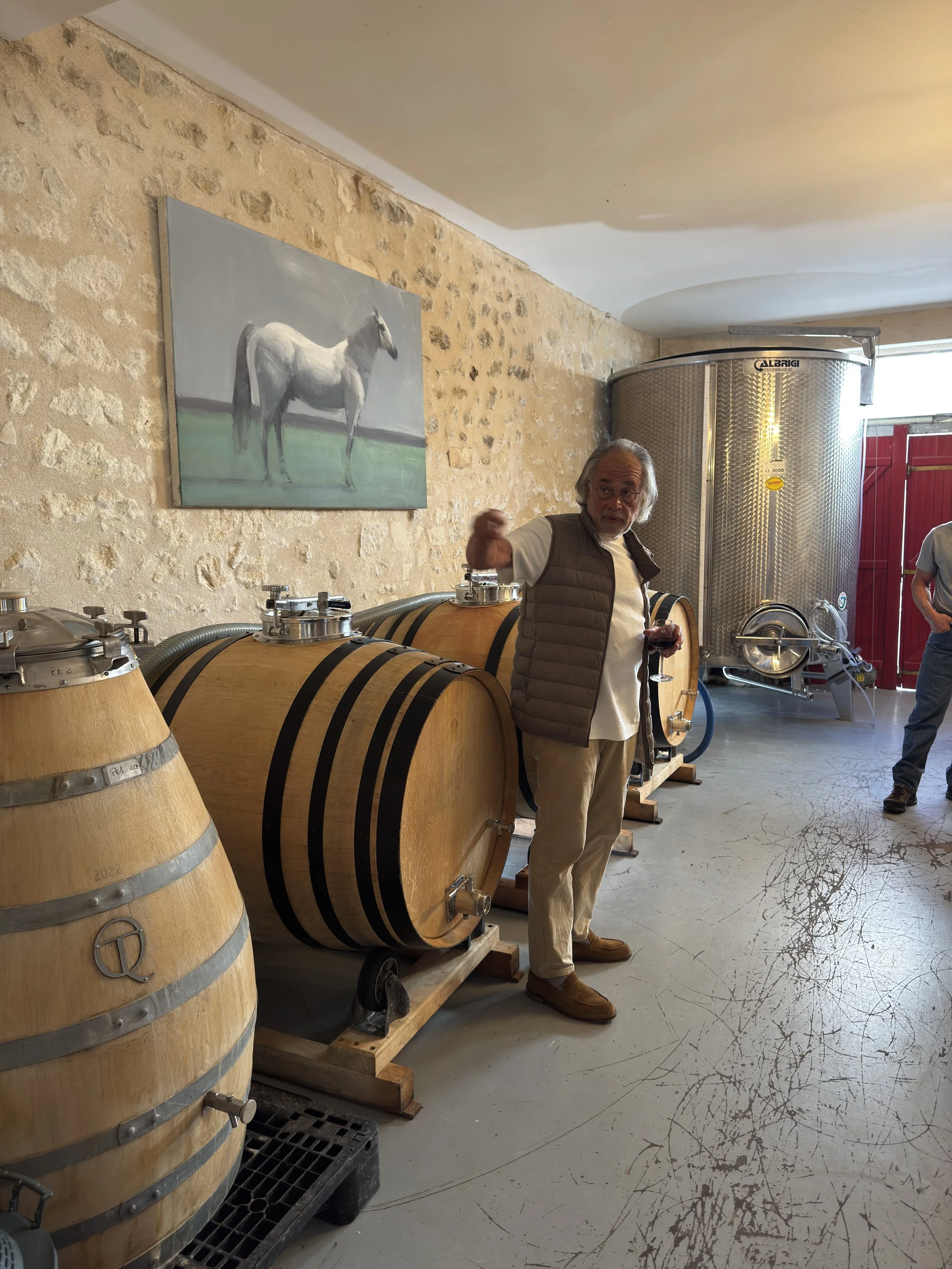
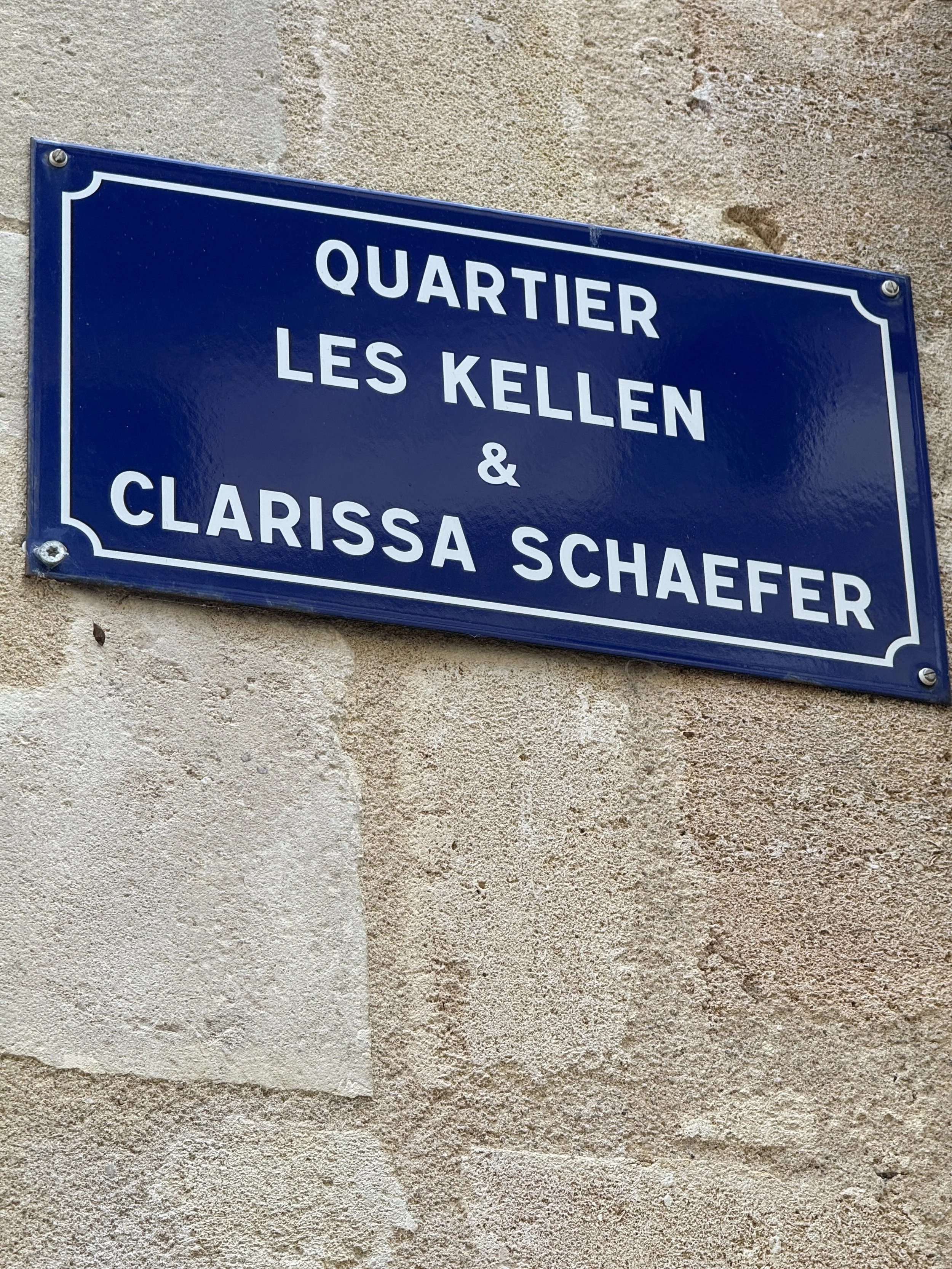
The human center of it all is Les Kellen, the South African-born proprietor who has spent more than four decades in wine, and his wife Clarissa Schaefer — artist, interior designer, and the estate's Maître de Chai, who has run the winemaking biodynamically since 2016. Les is also the author of the Kellen Classification, the first formal attempt to classify the wines of Blaye and Bourg — a project with a wonderful built-in irony: the region that history's classifications ignored finally got one, written from the inside. Between the winery, their wine bar La Petite Cave — which bills itself, with disarming confidence, as the world's favorite little wine store — and a row of restored historical buildings along the same street, the Kellens have effectively turned a corner of seventeenth-century Blaye into a one-family argument for the region's revival.
The wine itself carries a lesson you can take to any shelf. Étalon Rouge is a single-varietal Cabernet Sauvignon — a contrarian act on the Merlot-ruled right side of the river — and because the local appellation rules are written around blends, it can't be labeled Blaye Côtes de Bordeaux at all. It goes out as a humble Vin de Bordeaux instead. Read that twice: a biodynamic wine with First Growth-adjacent consulting history wears the most generic designation French law allows. It's the sharpest possible reminder that appellation text on a Bordeaux label describes conformity to rules, not quality in the glass — sometimes the most interesting bottle in the room is the one the system didn't know how to file.
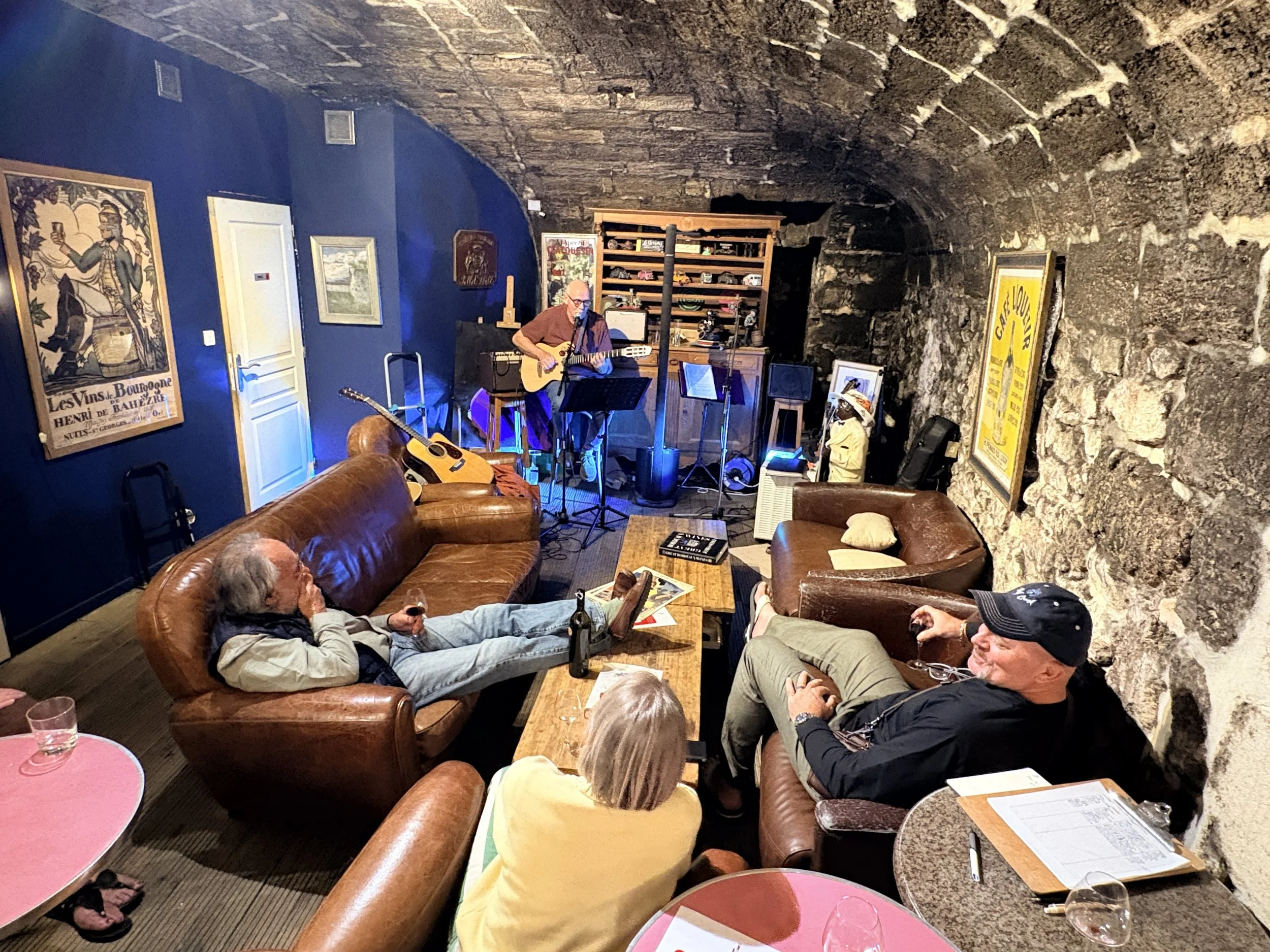
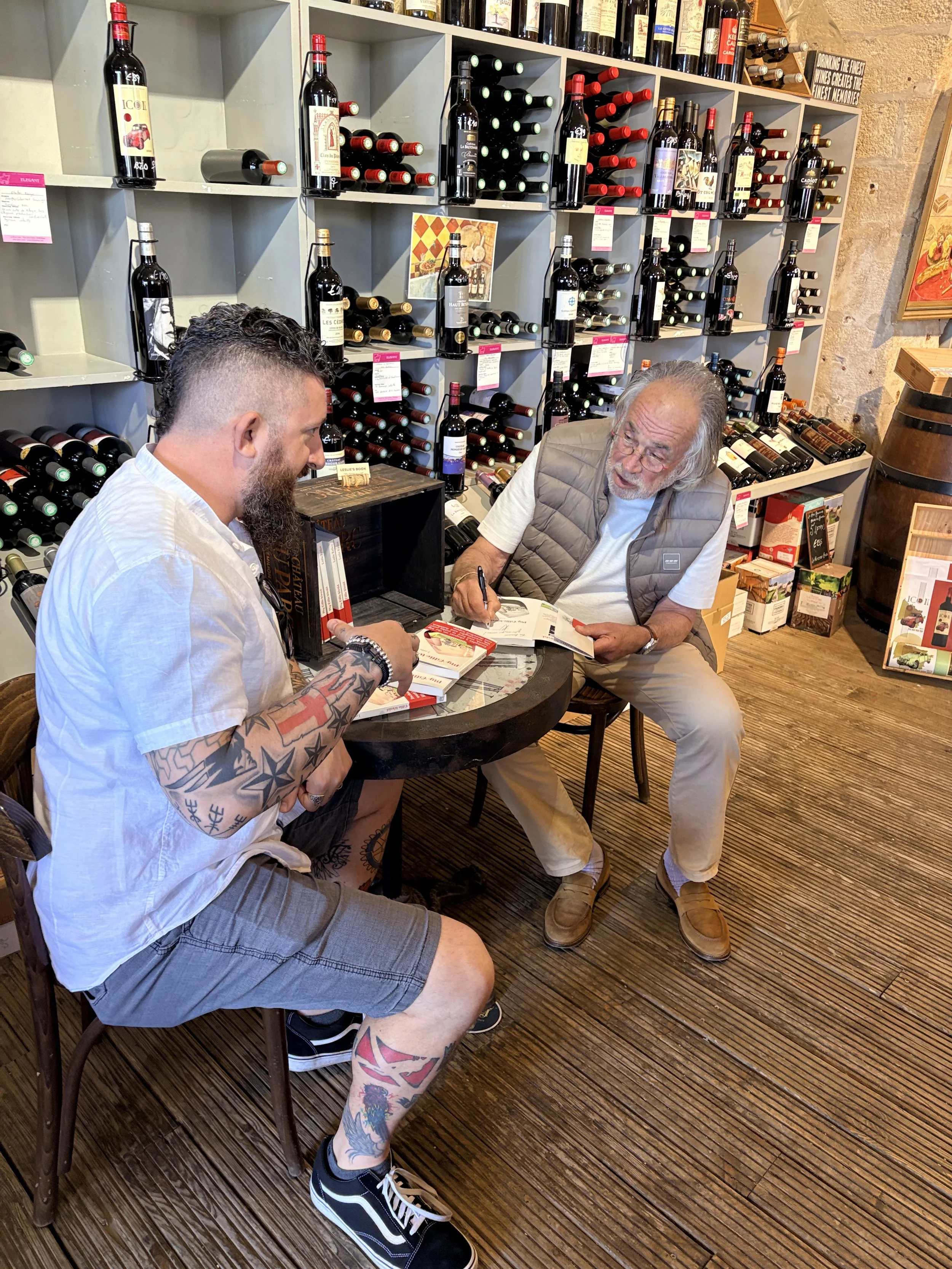
We wandered into La Petite Cave that evening for some local music and a nightcap, and found the proprietor himself on a couch in the music lounge, glass in hand — because of course the man who runs the world's favorite little wine store spends his evenings in it. We struck up a conversation with Les, and by the end of the night he'd invited our whole group back for a personal tour the next day. What followed was the kind of morning you can't book through any concierge: a walk through the city's history, a look inside the production space, time in the gallery, and a private tasting where Les poured not just the winery's own bottles but wines from his personal collection — his way of making sure we tasted the region whole, not just his corner of it. We ended the visit sitting with him as he signed a copy of his book for me. I told him my plan is to make wine myself in a few years. He told me to come find him when I'm back in Bordeaux. I intend to take him up on it.
Bourg: little Switzerland, big Malbec
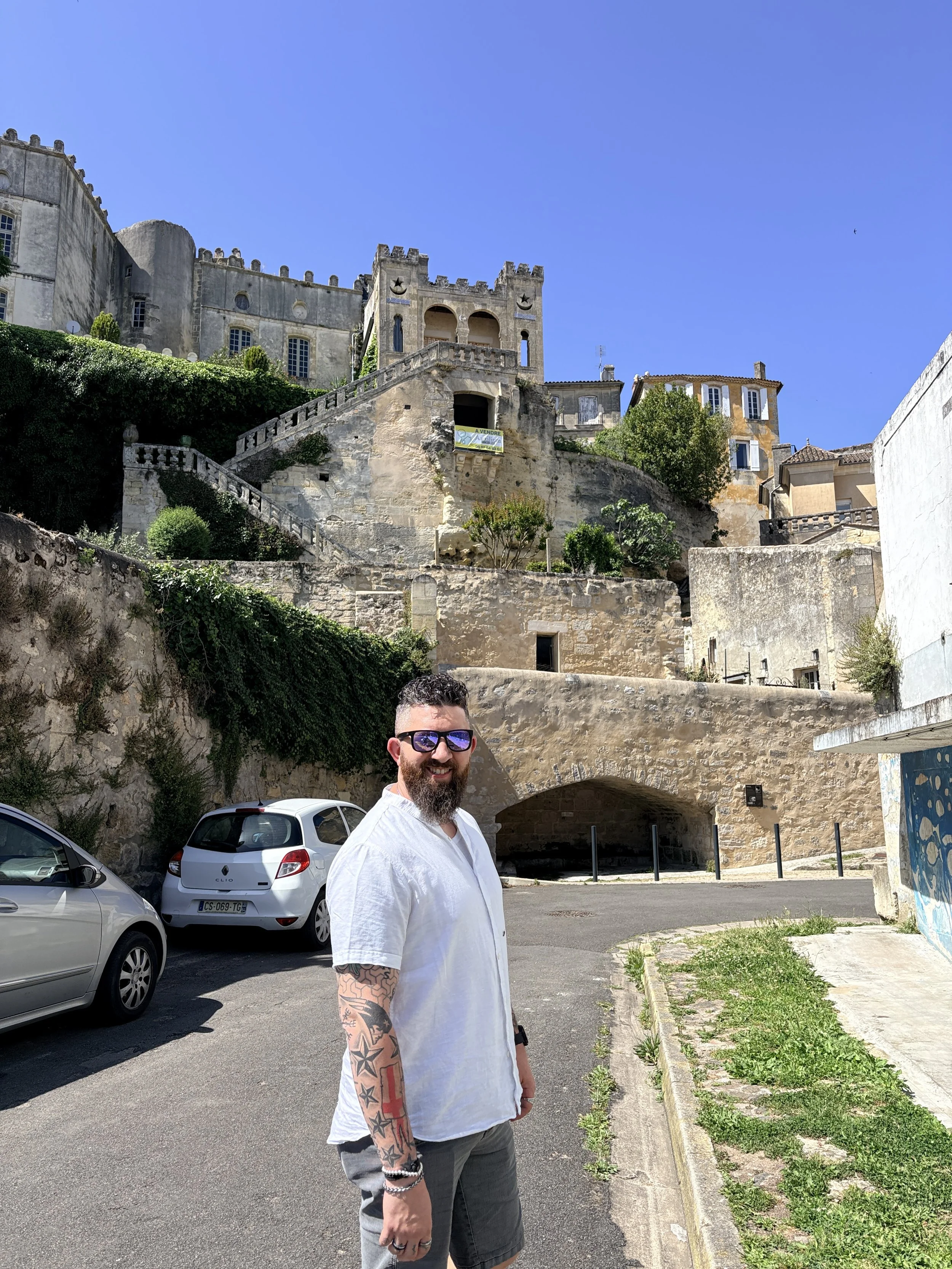
A short hop south, where the Dordogne finishes its run into the estuary, the land crumples into the steep green folds that earned Bourg its nickname: the little Switzerland of the Gironde. It's an old fortified town stacked in two levels above the water, with an upper village, a lower port, and vineyard hillsides pressing in from every direction. The Côtes de Bourg appellation is compact — under 4,000 hectares — and proudly red, built on Merlot like its neighbors but with a twist that makes it genuinely distinctive: this is Malbec's last real stronghold in Bordeaux. The grape the region largely abandoned after the 1956 frost kept its foothold on these slopes, and Côtes de Bourg maintains the highest proportion of Malbec plantings in the region, deployed in blends for exactly what it brings — color, dark plum, and a rustic backbone.
The resulting wines are Bordeaux with the collar unbuttoned: dark, sturdy, a little wild at the edges, made for grilled meat and casual tables rather than cellar ledgers. If the last stop of this series ended with advice to buy Fronsac by the case, consider Côtes de Bourg its estuary-side sibling — same unfashionable-equals-affordable math, different accent.
The town itself rewards the walk between pours. Bourg is built on two levels connected by steep stone stairways and even an old cliff-face passage — a fortified upper town with views across the water toward the Bec d'Ambès, the arrowhead of land where the Garonne and Dordogne officially become the Gironde, and a lower town that once loaded wine barrels straight onto river boats from the quay. That geography is the appellation's whole history in miniature: the wine grew on the heights, rolled downhill, and sailed. For centuries Bourg's port mattered more than most of the names people now memorize, and standing on the upper terrace looking over the confluence, you can still see why the Romans thought this was the obvious place to start.
The Maison des Vins: the whole appellation under one roof
Bourg is also where we had one of the best afternoons of the trip, at the Maison des Vins des Côtes de Bourg — the appellation's own headquarters, shop, and tasting room, set in a limestone mansion at the entrance to town with a garden looking out over the Dordogne. The concept deserves more attention from traveling wine drinkers than it gets: this is the appellation selling itself under one roof, with more than 170 wines from the surrounding hillsides offered at the same price you'd pay at each property's cellar door. Tastings happen in the vaulted stone cellar downstairs. No appointment negotiations, no single-estate sales pitch — just the region, poured side by side until the differences between hillsides start explaining themselves.
Our tasting there turned into a full-fledged party — an evening of French culture and hospitality with the kind of warmth that no travel brochure manages to promise credibly. I'll spare you the play-by-play, but it confirmed something worth writing down: the less famous the appellation, the better the welcome. Nobody at the top of the pyramid needs to charm you. Here, they still do — and it shows in everything from the pour sizes to how long they let the evening run.
The broader tip travels anywhere in France: nearly every appellation has a maison des vins, and they are reliably the highest-information, lowest-pressure stop a wine traveler can make. One roof, every producer, local prices. If you only have an afternoon in a region you don't know, spend it there.
Stop 2 Summary
Blaye and Bourg are what Bordeaux looks like with the fame subtracted: Roman-era vineyard land, working family estates, a fortress instead of a First Growth, and wine priced for dinner instead of for auction. The lesson from the first stop was that geology ignores appellation boundaries. The lesson here is blunter — prestige is a lagging indicator. These hills made wine before the Médoc existed and will be making it long after the market rediscovers them, and the drinkers who arrive before that rediscovery get the good years at the friendly prices.
The suitcase math: Blaye Côtes de Bordeaux for Merlot-led weeknight reds in the $12-20 range, Côtes de Bourg in the $15-25 range when you want more grip and that Malbec shadow in the blend, and a bottle of anything single-varietal and strange — like a certain Cabernet from inside a fortress town — for the story alone. Next stop, the cruise carries on; the estuary, as we learned at Blaye's ramparts, has a way of putting both banks in a single view.