BDX River Cruise Stop 1: Saint-Émilion, Pomerol & Fronsac — Merlot's Home Turf
The first stop on our Bordeaux River cruise put us squarely on the Right Bank — the clay-and-limestone side of the map from part one of this series, where Merlot does the heavy lifting and the châteaux are more working farmhouse than gilded palace. Within one short stretch of countryside you can stand in the region's most photographed medieval town, drive past its most expensive dirt, and taste its most overlooked bargain — Saint-Émilion, Pomerol, and Fronsac sit within roughly twenty minutes of one another. We visited three châteaux across the day, and between them they tell the Right Bank's story better than any textbook: one gave Malbec its original name, one farms a single grape on three hectares next door to Angélus, and one sits on top of the largest underground cellars in Bordeaux.
The Right Bank, briefly
A quick refresher from the series opener. North and east of the Dordogne River, the Left Bank's warm gravel gives way to cool clay and a limestone plateau — soils that suit early-ripening Merlot and Cabernet Franc rather than late-ripening Cabernet Sauvignon. The commercial center here isn't the city of Bordeaux but Libourne, the old river port that shipped these wines for centuries, and the estates run small and family-scale: where a Médoc classified growth might farm 80 hectares behind iron gates, a typical Saint-Émilion property is under ten, with the owner's dog supervising the courtyard. That difference in scale isn't trivia. It shapes everything from how the wines taste to how visitors are received — which, on this side of the river, is usually by the person whose name is on the bottle.
Saint-Émilion: the town the vines built — literally
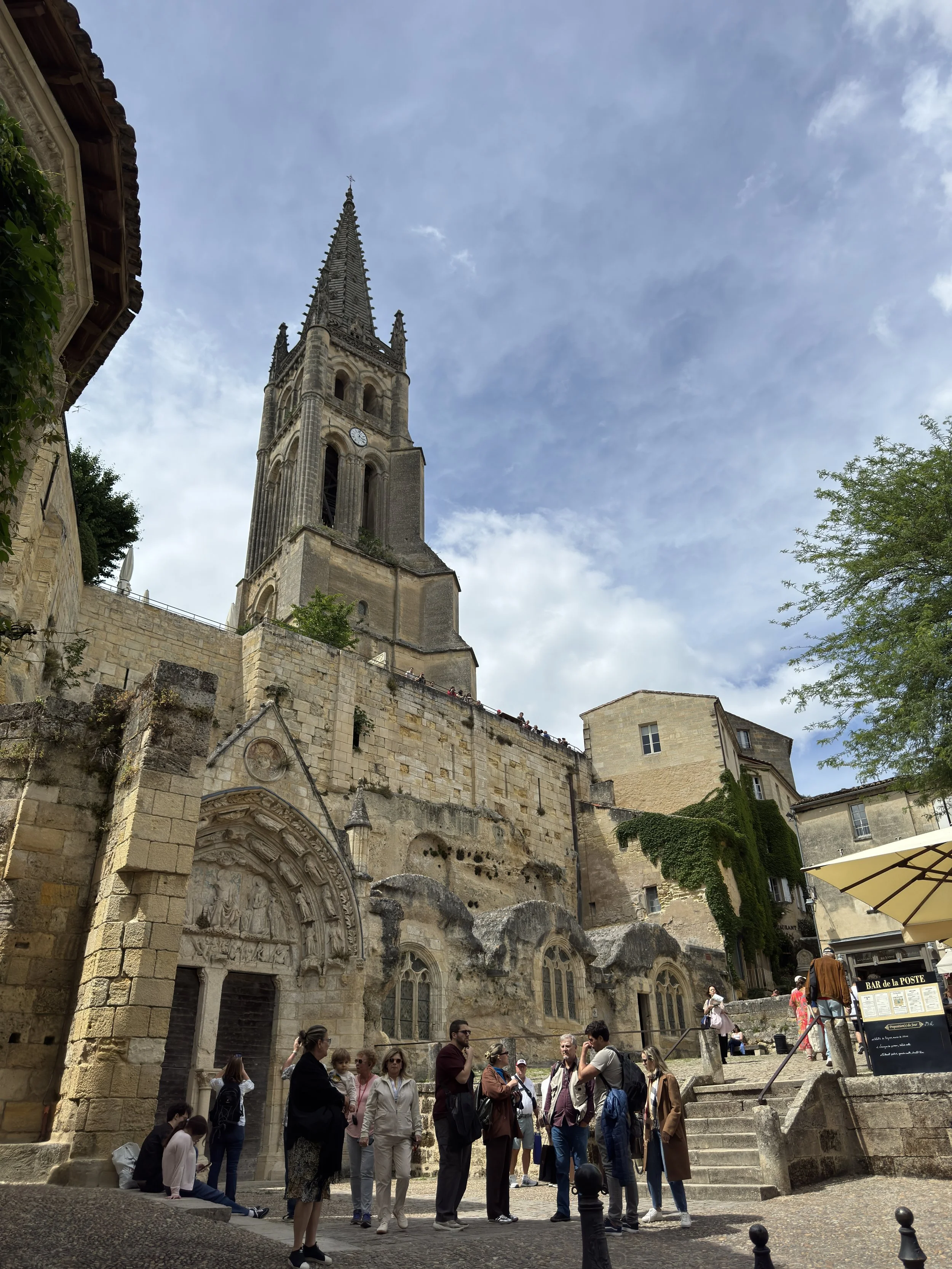
Saint-Émilion the town earns every photograph. It's a huddle of honey-colored stone on a limestone hill, steep cobbled lanes polished slick by eight centuries of foot traffic, vineyards lapping at the edges like a green tide. In 1999 UNESCO made it and its surrounding vineyards a World Heritage Site — the first vineyard landscape ever listed — and for once the bureaucrats and the tourists agree.
The town's showpiece is the Monolithic Church, hollowed straight down into the limestone in the early twelfth century — not built on the rock but carved out of it, one of the largest underground churches in Europe. And that detail is secretly a wine lesson. The same soft, porous limestone that medieval masons could excavate by hand is the rock the plateau's vines root into, holding winter rain like a sponge and metering it back to the vines through dry summers. The town, the church, and the wine are all made of the same stone. Quarrying it left galleries running under the vineyards that now serve as naturally cool cellars.
Saint-Émilion also does pageantry. The Jurade — a wine brotherhood chartered in 1199 under the English crown, back when Aquitaine answered to London — still parades through town in scarlet robes each autumn to proclaim the harvest from the top of the King's Tower. It's theater, obviously. It's also a working reminder that this town has organized its entire civic life around wine for over 800 years.
Reading a Saint-Émilion label without getting fooled
One piece of consumer decoding before the châteaux, because Saint-Émilion labels contain a genuine trap. “Saint-Émilion Grand Cru” is not a classification — it's a separate appellation with modestly stricter rules than plain Saint-Émilion, and hundreds of estates qualify. The actual rankings are “Grand Cru Classé” and, above it, “Premier Grand Cru Classé” — the word classé is doing all the work. A wine labeled simply “Grand Cru” can be very good, but you're not holding anything rare, whatever the gold lettering implies.
Geology sorts the quality tiers more honestly than the labels do. The limestone plateau and its slopes — the côtes — produce the structured, long-lived wines; a gravelly pocket in the northwest corner along the Pomerol border explains the Cabernet Franc-heavy outliers like Cheval Blanc and Figeac; and the sandy flats toward the river yield the simpler bottles that fill the base of the pyramid. In the glass, Saint-Émilion at its best runs to plum, black cherry, cocoa, and warm earth — fuller and rounder in youth than anything from the Médoc, but with a mineral spine from that limestone when the vineyard sits high enough.
Château de Pressac: where Malbec got its name — and a war ended
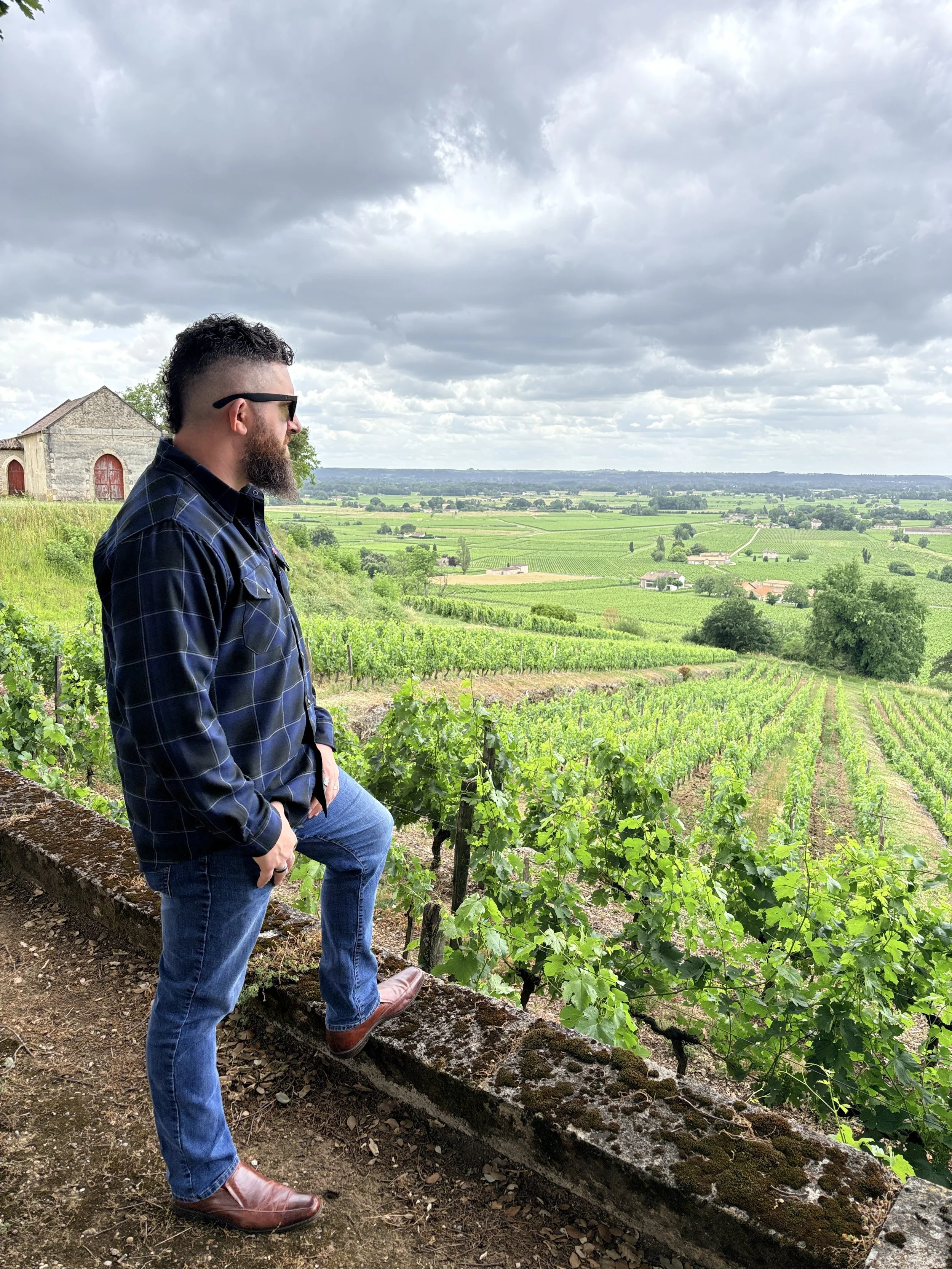
Our first visit of the day, Château de Pressac, occupies one of the most dramatic positions in the appellation: a natural amphitheater carved into the eastern edge of the limestone côte above the village of Saint-Étienne-de-Lisse, with vine terraces stepping down the slope and the plain of Castillon spread out below. That view comes with a footnote most wine regions would kill for. In July 1453, the Battle of Castillon — the closing battle of the Hundred Years' War — was fought on that plain, and the defeated English came up the hill to surrender at Pressac itself. The property watched Aquitaine become French again from its own terrace.
The wine history is nearly as good. In the 1730s the estate planted a grape then called Auxerrois, which locals took to calling noir de Pressac after the property where it thrived. As the vine spread across the Right Bank the name traveled with it, and when it eventually settled into its modern identity, the world knew it as Malbec. Argentina's flagship grape carries this hillside's old name in its family tree — and Pressac, fittingly, still grows a little of it, alongside Merlot, both Cabernets, and even a rare patch of Carménère, Bordeaux's nearly extinct sixth red grape.
The modern chapter belongs to the Quenin family, who bought a run-down Pressac in 1997 and spent two decades replanting the terraces and rebuilding the cellars — work that paid off in 2012, when the estate was promoted to Grand Cru Classé. The wines are Merlot-led, dark-fruited, and built with the structure the limestone gives them, and they sell in the $35 to $50 range — classified Saint-Émilion at a price the famous plateau names stopped charging years ago.
Château Bellevue: three hectares, one grape
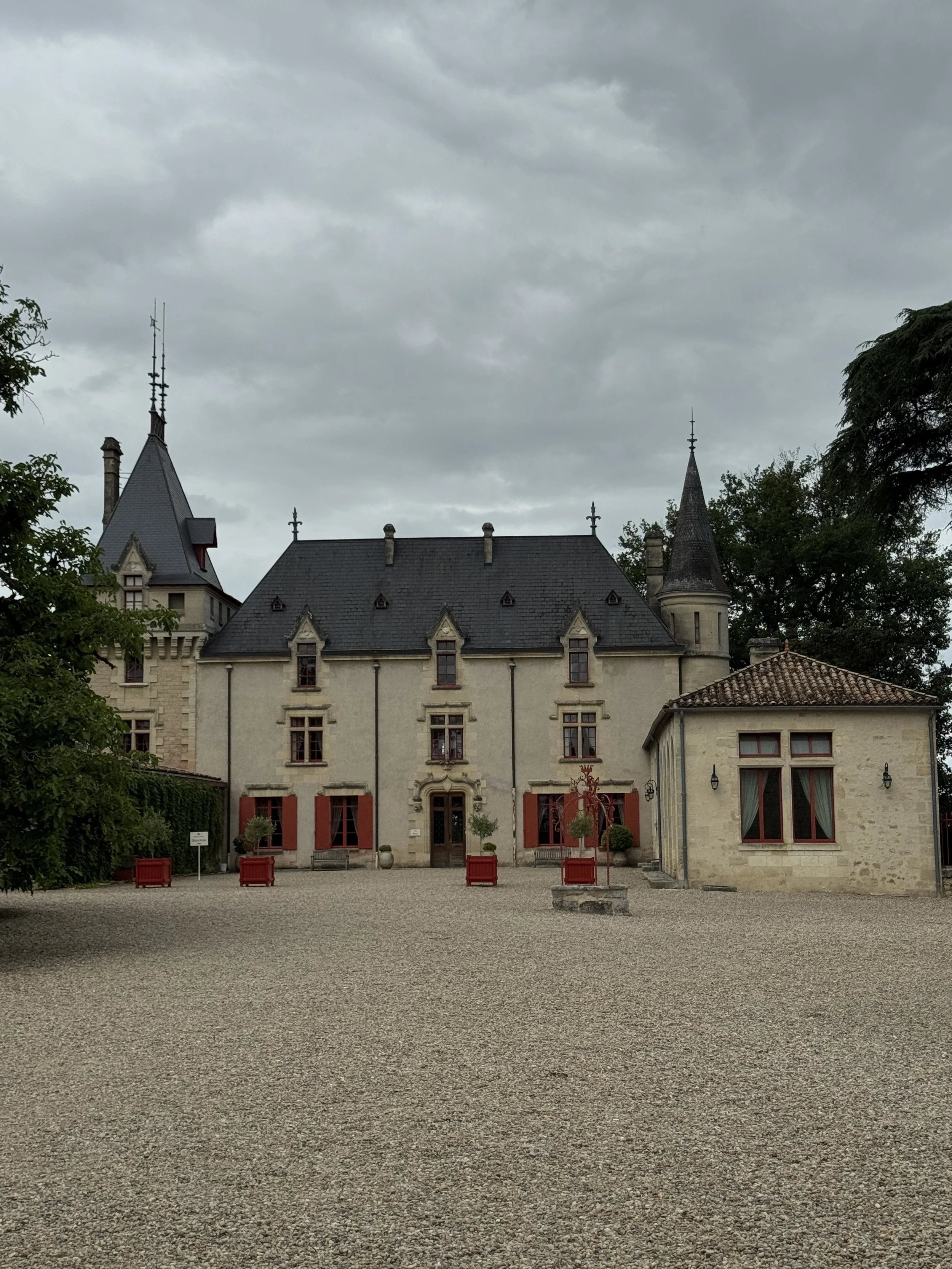
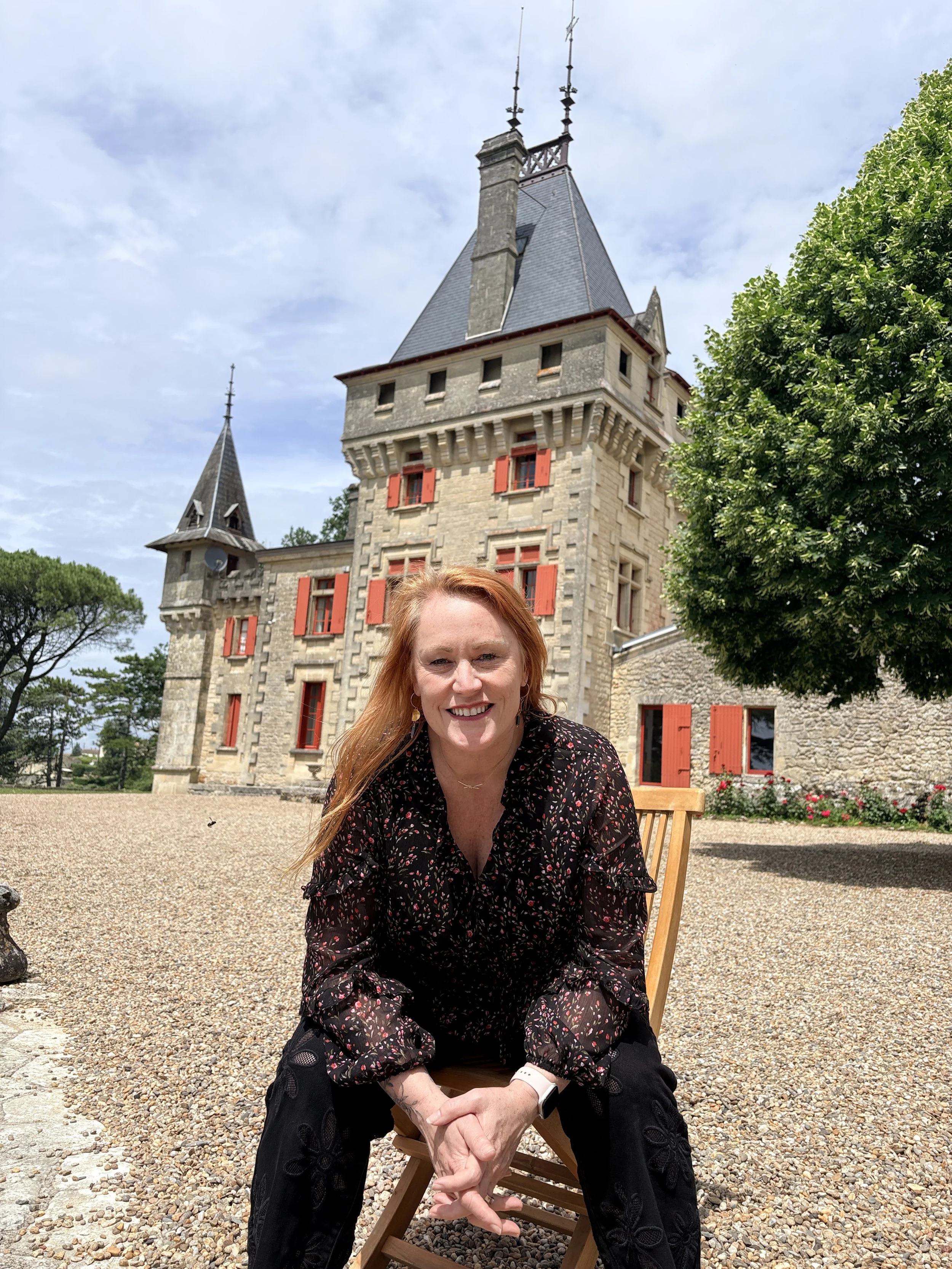
Château Bellevue, our second stop, is the opposite proposition: no amphitheater, no battlefield, just a quietly perfect position on the western limestone plateau with Angélus and Beau-Séjour Bécot for neighbors — and a vineyard planted to exactly one grape. Bellevue is 100% Merlot, roughly three hectares of it, which makes it something close to a controlled experiment: no blending partners, no place to hide, just Merlot on great limestone, vinified straight.
The history runs deep even by local standards — vines here trace back to Gallo-Roman plantings dug into the plateau, and the estate stayed in a single family's hands from 1642 until 1938, when the de Coninck and Pradel de Lavaux families bought it. The recent chapter is pure Saint-Émilion soap opera in miniature: the Angélus side of the ownership took an increasing role in the 2000s, and in 2022 the property was split down the middle — three hectares to Château Angélus, three retained by the Pradel de Lavaux family, who carry on under the Bellevue name and its Grand Cru Classé ranking.
Why it matters to a drinker: Merlot gets condescended to. It's the volume grape, the softener, the one a certain 2004 movie told everyone to sneer at. A property like Bellevue is the rebuttal — proof that on the right rock, with production small enough to count in the low thousands of cases, Merlot alone can make wine with the depth and longevity of far more celebrated blends. If part one of this series argued that the soil picks the grape, Bellevue is the argument taken to its logical end.
Pomerol: the appellation that never bothered
We didn't tour an estate in Pomerol — almost nobody does, and that's rather the point. Bordeaux's most expensive appellation is barely an appellation at all by the region's usual standards: around 800 hectares (smaller than many single California properties), no château architecture worth the name, no classification system — never had one, never wanted one — and no real town, just a modest church standing in a sea of vines. The average estate here farms about five hectares. There is nothing to see. There is only the dirt.
But what dirt. Pomerol's plateau is laced with iron-rich subsoil the locals call crasse de fer, and at its highest point sits a buttonhole of dense blue clay that Merlot loves beyond all reason — the clay under Petrus, which is why Petrus is nearly all Merlot and why it costs more than most cars. Around it, names like Lafleur, Trotanoy, and Le Pin trade on scarcity that makes the Médoc's classified growths look mass-market. The style is Merlot at maximum volume: plush, deep, black-fruited, drifting toward truffle and violets with age. Even here the ground is shifting, though — Lafleur announced in 2025 it was walking away from the appellation system entirely, preferring its own rules to the AOC's. Pomerol never needed the official structures; now its top estates are starting to say so out loud.
Fronsac: the one your wine shop forgot
Cross the little river Isle just west of Libourne and you're in Fronsac, the Right Bank's designated underdog — which is strange, because it held the top of this hierarchy once. Charlemagne put a fort on these bluffs in 769. In the eighteenth century, when the Duke of Richelieu threw his famous parties here, Fronsac was the fashionable name — its wines fetched more than Saint-Émilion's at the Versailles-adjacent tables that set prices. The fall from that height took two centuries of market consolidation, phylloxera-era retrenchment, and the simple bad luck of having no classification story to sell. The hills never got the memo. Fronsac and its inner enclave Canon-Fronsac sit on the same limestone family as the Saint-Émilion plateau, layered with a local clay-sandstone the geologists call molasse du Fronsadais, on some of the steepest, best-drained slopes on the entire Right Bank.
A note on the two names you'll see: Canon-Fronsac is the smaller inner appellation covering the highest limestone slopes closest to the rivers, historically considered the finer of the two — think of it as Fronsac's own plateau. In practice the quality overlap is substantial, and the wines share a family resemblance: darker and firmer than entry-level Saint-Émilion, with a cool mineral edge and enough tannic grip to reward a few years of patience or an hour in a decanter. These are wines built for dinner rather than for sipping contests, and they handle roasts, duck, and mushroom-heavy dishes with particular grace.
The consumer math writes itself: Merlot and Cabernet Franc on serious limestone slopes, made by growers who can't charge for a famous name, lands in shops at $15 to $25. Fronsac today is what Saint-Émilion satellites were twenty years ago — the value the market hasn't corrected yet.
Château de La Rivière: a castle, a quarry, and a second act
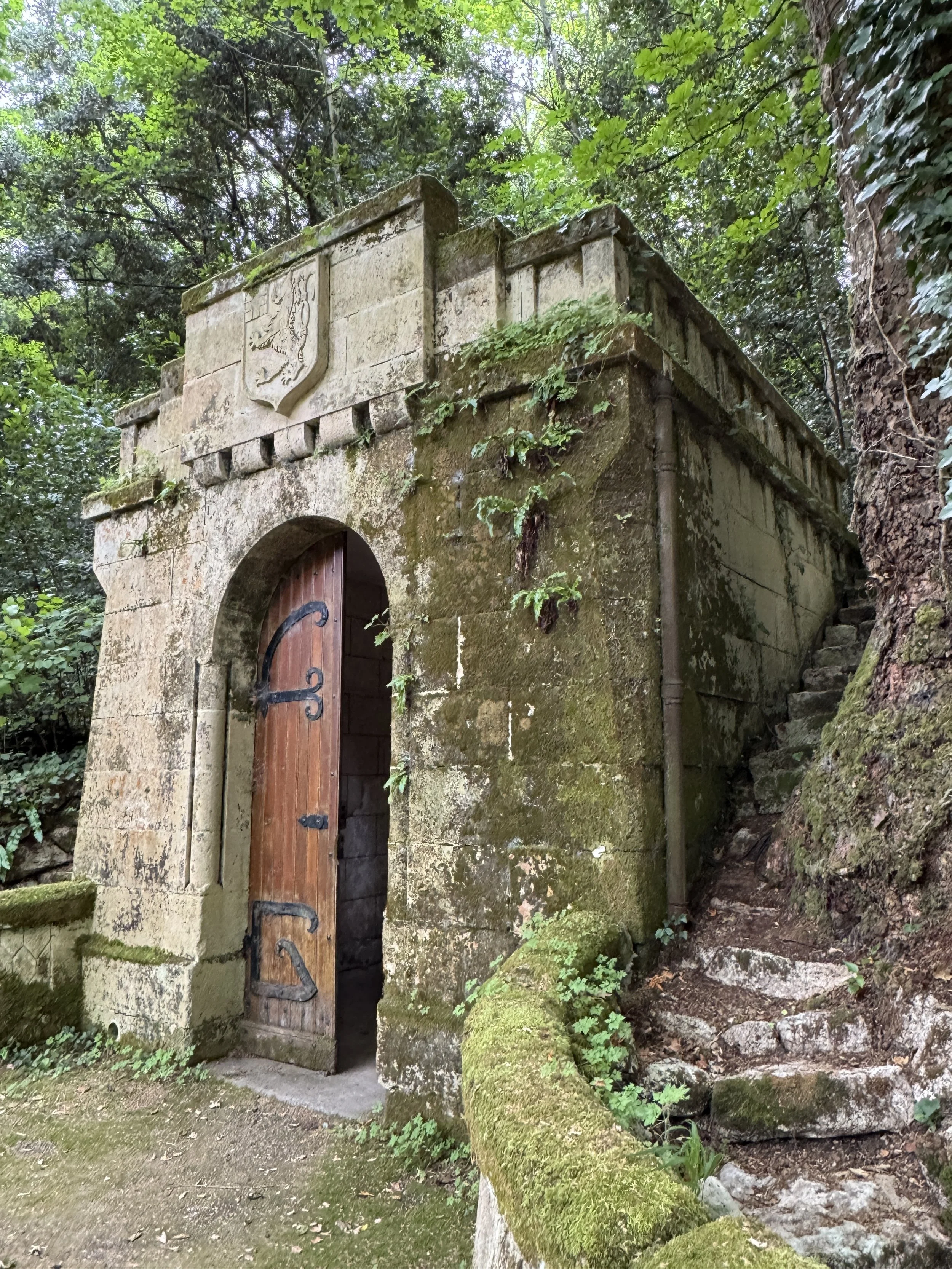
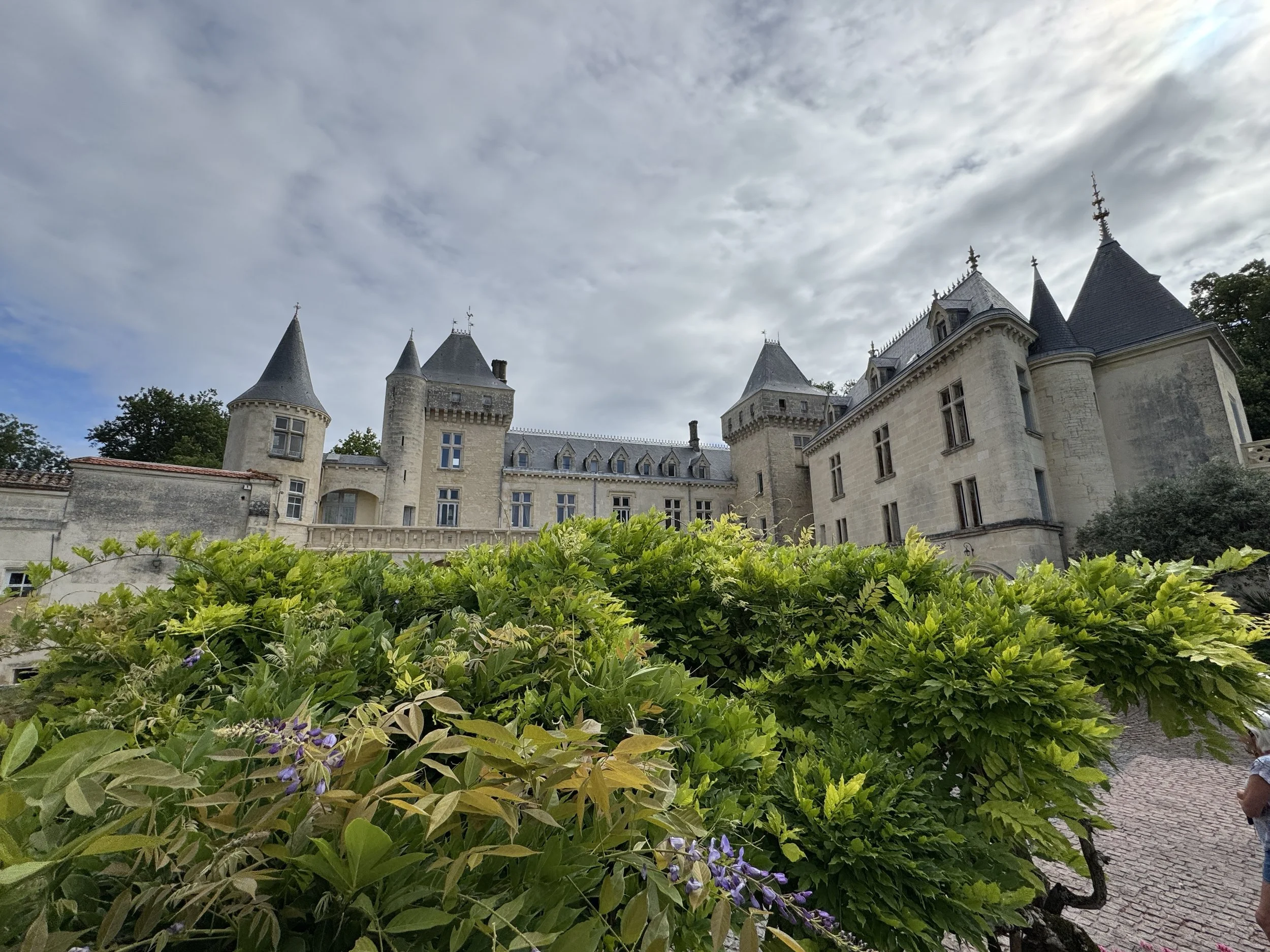
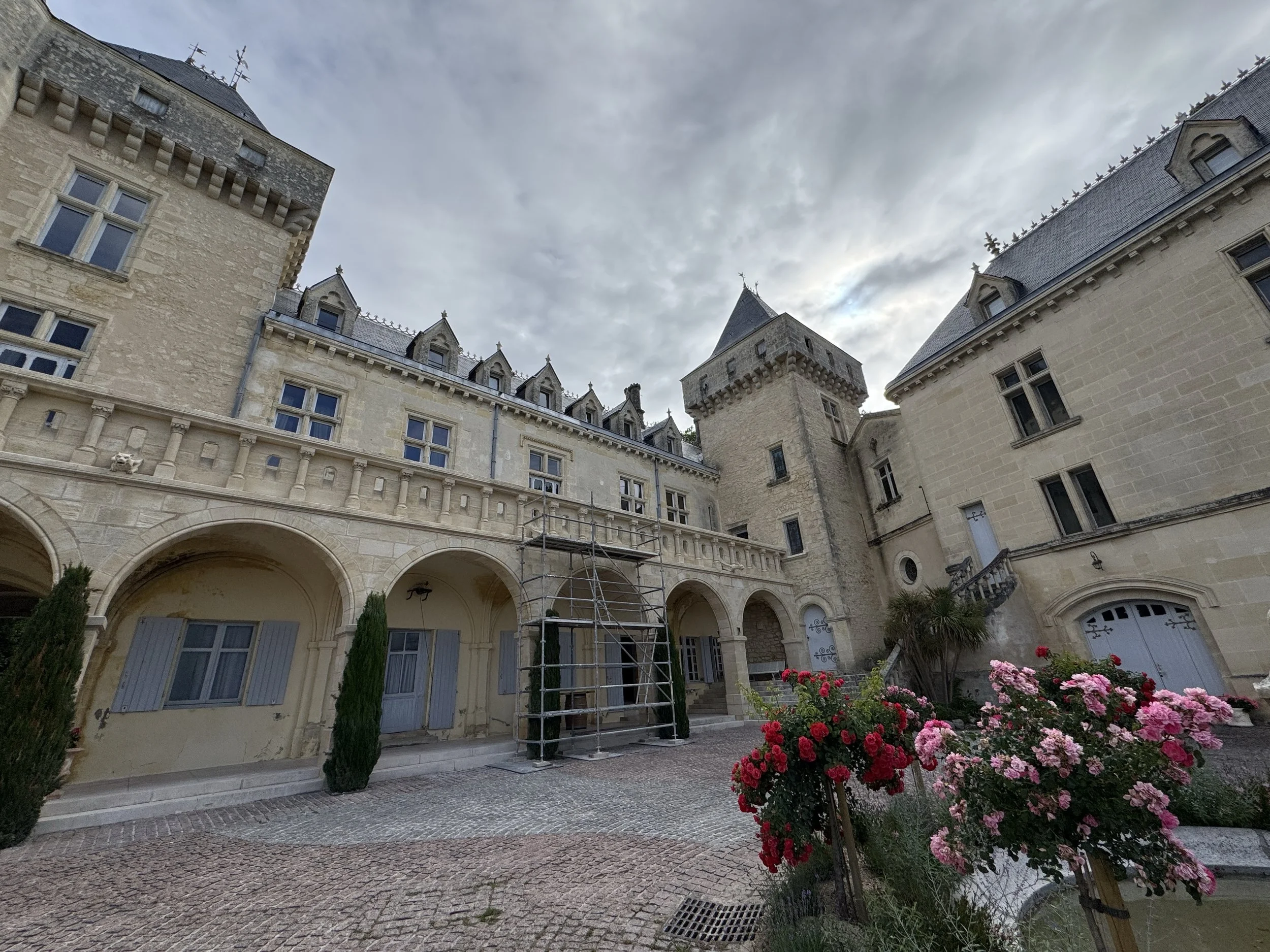
Fronsac's flagship — and our final visit — is Château de La Rivière, and it doesn't do subtle. This is the appellation's largest estate, about 59 hectares of vines on the slopes where Charlemagne's fort once stood, crowned by an actual storybook castle: built in 1577 for Gaston de L'Isle, a mayor of Bordeaux, and romantically over-restored in the nineteenth century by a student of Viollet-le-Duc, the architect who gave Notre-Dame its famous spire. Turrets, terraces, formal gardens, the works — a Left Bank silhouette on Right Bank soil.
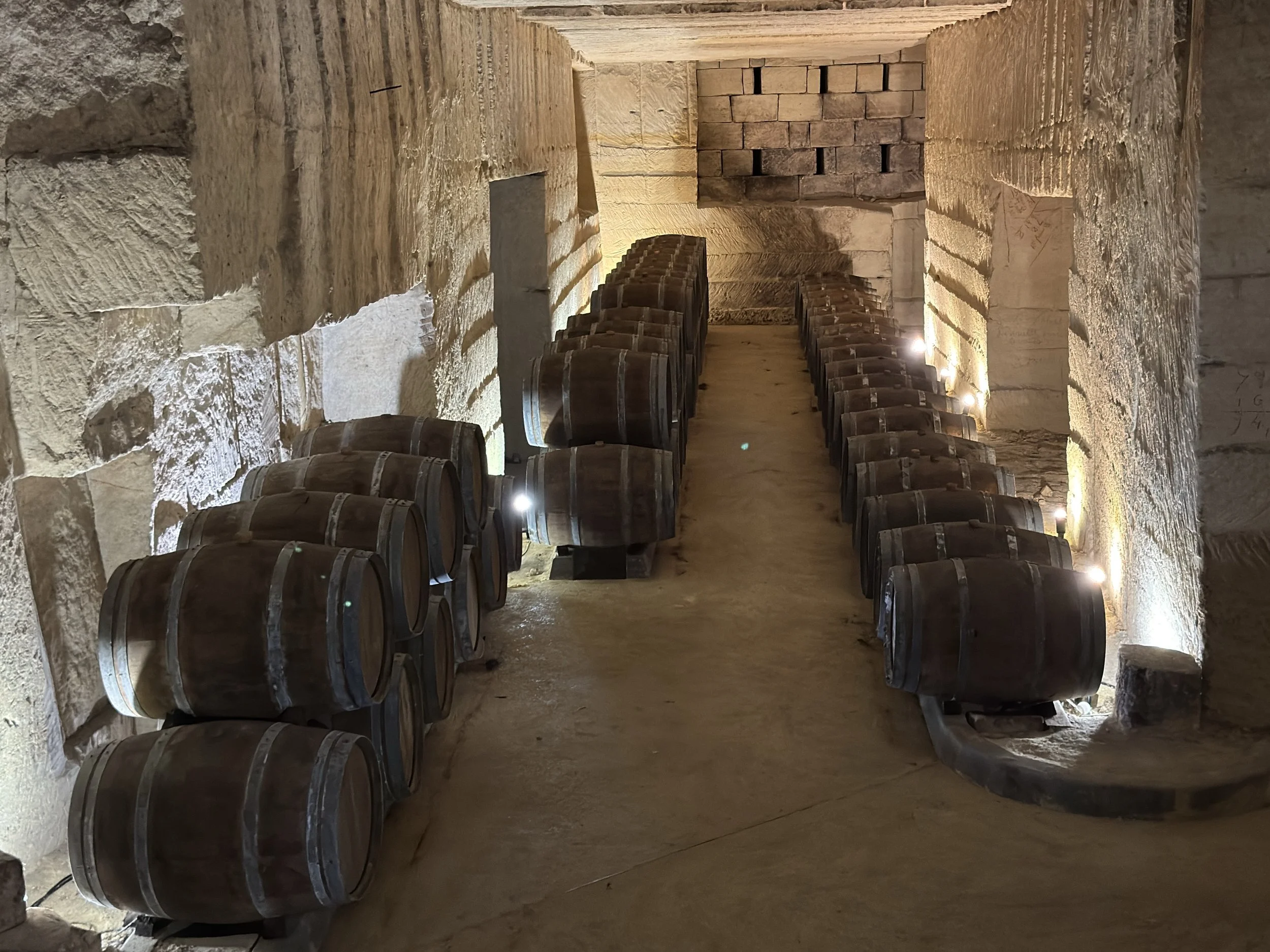
The real spectacle is underneath. Quarrying the stone that built the château hollowed out eight hectares of galleries in the hill — the largest underground cellars in Bordeaux, kilometers of naturally cool tunnels now aging hundreds of thousands of bottles where the limestone was cut away. Touring them rearranges your sense of the word “cellar”: this isn't a basement, it's an inverted monument, the negative space of the castle above. Reminded us of our tours in Champagne, with long cavernous tunnels, dimly lit spaces with bottles going back decades.
The estate's recent history has been eventful enough for a miniseries. Sold in late 2013 to a Chinese investor whose ownership began in tragedy — he and the outgoing proprietor died in a helicopter crash over the property days after the sale — La Rivière spent a decade under the Bolian group before being purchased in mid-2025 by a Luxembourg-based investment fund. New capital, same hillside. The wines remain the appellation's benchmark: Merlot-led, firm, dark, limestone-fresh, and generally available for around $20-25 — which, given what comparable geology costs twenty minutes east, remains one of the Right Bank's quietest good deals.
Stop 1 Summary
Line the day up and you get a lesson no tasting map spells out: Pomerol, Saint-Émilion, and Fronsac share one geology and one grape, and the price gaps between them are mostly about fame — Pomerol's scarcity, Saint-Émilion's polish and pageantry, Fronsac's long memory of better press.
The practical takeaways travel home in a suitcase: classified Saint-Émilion from the appellation's edges — Pressac territory — delivers the plateau experience in the $35-50 range; a single-variety curiosity like Bellevue is worth hunting when you want to understand what Merlot actually tastes like with nowhere to hide; Fronsac under $25 is the bottle to buy by the case rather than the bottle; and Pomerol is a special-occasion purchase best approached through its neighbor Lalande-de-Pomerol unless the occasion is very special indeed.