We Went to Bordeaux So You Can Drink It Better
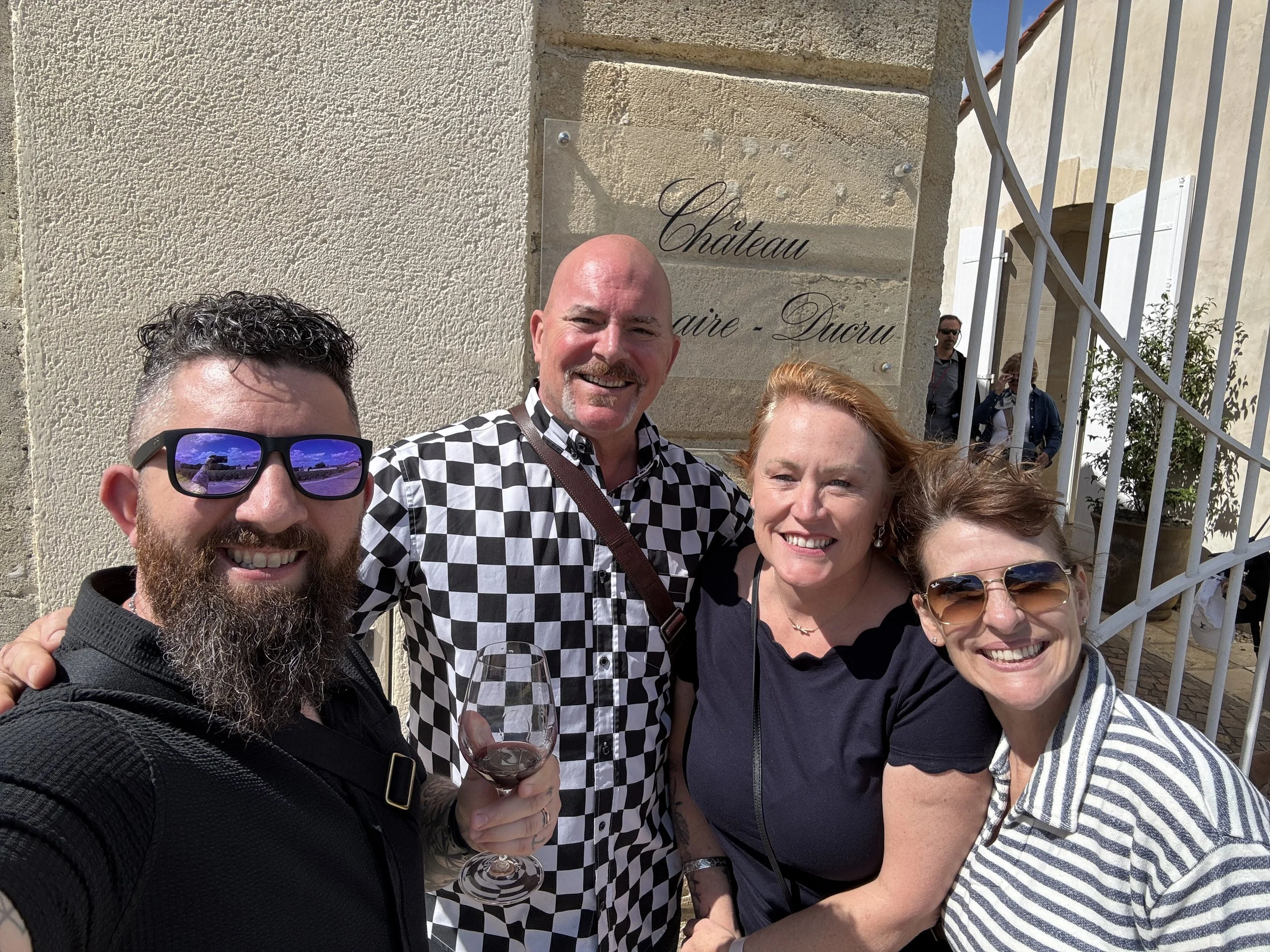
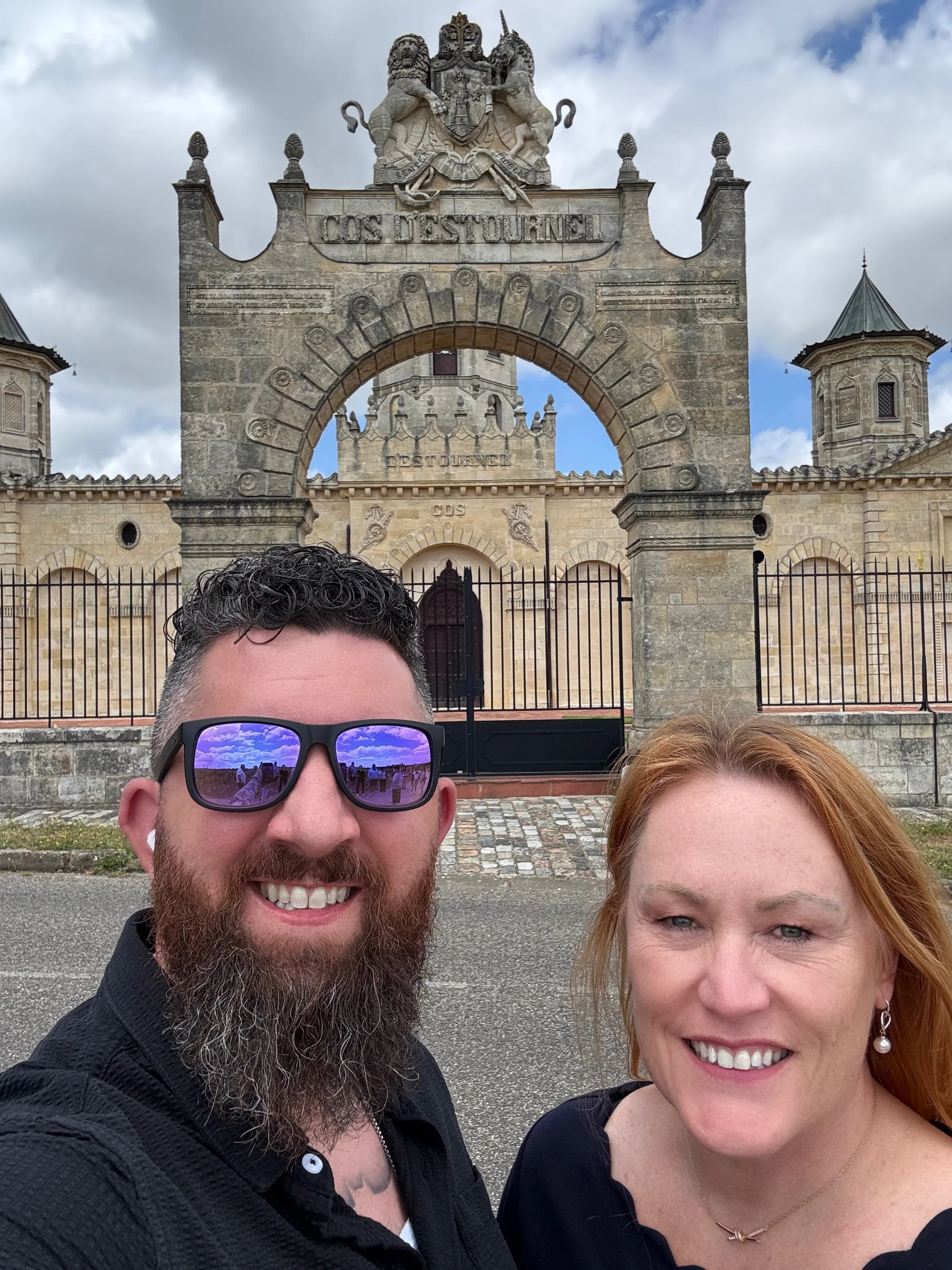
My wife and I lived in Belgium for five years — a comfortable train ride from the most famous wine region on Earth — and somehow never made it to Bordeaux. We had a plan, and it was a good one: run the Médoc Marathon in 2020, the race where aid stations pour Grand Cru instead of Gatorade. COVID had other ideas, and we moved back to the U.S. with Bordeaux still on the list. So when our friends at Page Cellars announced they were hosting a river cruise through the region, we didn't deliberate. This series covers the week we spent sailing from town to town — the major AOCs, the wineries we visited, and what we learned along the way. But first, this article: Bordeaux at large, and why the world's wine drinkers never stop arguing about it.
Bordeaux is the most famous wine name on the planet, and most of the people drinking it could not sketch the region on a napkin (myself included). That gap is worth closing, because Bordeaux is not a flavor and it is not a brand — it is a map. Learn one river junction and a handful of place names, and a wall of intimidating labels turns into a shelf you can shop with confidence.
Here is the geography that does most of the work. Two rivers, the Garonne and the Dordogne, flow northwest across southwestern France and merge into a broad tidal estuary called the Gironde. Everything west and south of that water is the Left Bank. Everything north and east is the Right Bank. The wedge of farmland between the rivers is Entre-Deux-Mers — “between two seas,” which is generous naming for land between two rivers, but Bordeaux has never been shy about selling itself. Nearly everything else — what gets planted where, how the wine tastes, what it costs — follows from which side of the water the vines sit on.
One name, five dozen appellations
Start with scale, because Bordeaux's is easy to underestimate. Even after several difficult years — more on that below — the region farms just under 100,000 hectares of vines, produces on the order of half a billion bottles annually, and contains roughly sixty appellations, from the catch-all Bordeaux AOC that blankets the entire region down to Pomerol, a village appellation smaller than some Napa estates. Burgundy gets the reputation for being complicated, but Bordeaux out-produces it several times over while wearing a single name.
Those appellations organize into a pyramid that is genuinely useful at the store. At the base: generic Bordeaux and Bordeaux Supérieur, drawn from anywhere in the region — the source of most of the volume and most of the bargains. In the middle: regional appellations like Médoc, Graves, and the Côtes de Bordeaux, which narrow the geography and raise the floor. At the top: communal appellations — Pauillac, Margaux, Saint-Émilion, Pomerol — where a village name on the label means the grapes came from that village's specific patch of dirt, and the price reflects it. The pyramid is not a guarantee of quality, but it is a reliable statement of specificity, and in Bordeaux specificity is what you are paying for.
Why Bordeaux blends
Bordeaux sits near the 45th parallel (much like Washington State), an hour from the Atlantic, with the Gulf Stream keeping winters mild and maritime weather keeping every growing season a negotiation. Rain during flowering, rain at harvest, the occasional spring frost — no two years cooperate the same way. Blending is the region's centuries-old answer to that uncertainty.
Six red grapes are traditionally permitted: Merlot, Cabernet Sauvignon, Cabernet Franc, Petit Verdot, Malbec, and Carménère. Each ripens on its own schedule and tolerates different soils and weather, so planting several is crop insurance as much as artistry. If rain wrecks the late-ripening Cabernet, the earlier Merlot may already be safely in the cellar. The blend smooths out what no single grape can promise.
And here is the fact that surprises most drinkers: Merlot — not Cabernet Sauvignon — is Bordeaux's most planted grape, covering roughly two-thirds of the red vineyard area. The Cabernet-first image comes from the famous Left Bank châteaux, which represent a sliver of total production. Statistically, a random bottle of red Bordeaux is a Merlot-led wine. The whites, a smaller but real presence, lean on Sauvignon Blanc for cut, Sémillon for texture and aging potential, and a supporting cast led by Muscadelle.
The Left Bank: gravel, Cabernet, and the 1855 pecking order
The Left Bank's defining feature is gravel — deep banks of stones deposited over millennia by rivers draining the Pyrenees and the Massif Central. Gravel drains fast, forcing vines to root deep, and it holds daytime heat into the evening. That last part matters enormously, because Cabernet Sauvignon is a late, slow ripener at this latitude, and those warm stones are what get it across the line. Where the gravel mounds rise — the locals call them croupes — you find the famous names.
The Médoc, the peninsula running north from the city of Bordeaux along the estuary, holds the densest concentration: Saint-Estèphe (sturdy and structured), Pauillac (the power center, home to three of the five First Growths), Saint-Julien (consistency's poster child), and Margaux (the perfumed one). These are Cabernet-led blends built for a decade or more in the cellar — tannic and reserved in youth, and the reason “give it time” became standard wine advice.
The 1855 classification deserves one honest paragraph. For the Paris Exposition, Napoleon III wanted Bordeaux's best wines ranked, so brokers sorted châteaux into five tiers based on the prices their wines had historically fetched. It was a market snapshot, not a tasting — and it has been modified exactly once in 170 years, when Mouton Rothschild ascended to First Growth in 1973 after decades of lobbying. The astonishing part is how well the snapshot has held up. The maddening part is that people treat it as scripture. It is a useful antique: respect it, don't worship it.
South of the city, Graves — gravel, literally — is Bordeaux's original vineyard, planted since Roman times. Its northern section, Pessac-Léognan, carved out as its own appellation in 1987, holds Haut-Brion, the one estate outside the Médoc ranked in 1855. Pessac-Léognan also makes the region's most serious dry whites, which almost nobody outside the trade talks about — precisely why they deserve your attention.
The Right Bank: clay, limestone, and Merlot
Cross the Dordogne and the ground changes. Gravel gives way to cool clay and a limestone plateau, and cool soils delay ripening — bad news for Cabernet Sauvignon, which would struggle to finish here, and fine news for Merlot and Cabernet Franc, which ripen earlier and don't need the stored warmth. Same logic as the Left Bank, opposite conclusion. This is the cleanest terroir lesson in France: nobody assigned these grapes out of taste or tradition. The soil made the call, and the tradition followed.
Saint-Émilion is the Right Bank's flagship — a medieval hilltop town surrounded by vines, producing wines that are rounder, fleshier, and friendlier in youth than their Médoc counterparts. Its classification, unlike 1855's, is redone roughly every decade, which sounds admirably modern until you learn that the revisions generate enough lawsuits and walkouts that several of its most famous estates — Ausone and Cheval Blanc among them — quit the rankings entirely in 2022. Refreshing self-correction or ongoing soap opera, depending on the week you ask.
Next door sits Pomerol, which took a different approach to classification: it never bothered. No ranking, no tiers — roughly 800 hectares of clay, including a famous pocket of iron-rich blue clay at its heart, and, in Petrus, one of the most expensive wines on Earth. Pomerol is the quiet argument that the dirt speaks for itself.
Around these two cluster the satellites — Lalande-de-Pomerol, Fronsac, Canon-Fronsac, Castillon and Francs Côtes de Bordeaux, Lussac-Saint-Émilion, Montagne-Saint-Émilion — sharing much of the same clay-limestone geology at a fraction of the price. Hold that thought for the buying guide.
Between the rivers, plus the sweet stuff
Entre-Deux-Mers, the wedge between the Garonne and the Dordogne, is Bordeaux's volume engine and the best-known source of its crisp, Sauvignon-led dry whites — the twelve-dollar oyster wine of the region. Much of the red grown here goes into generic Bordeaux bottlings, which is worth remembering when a basic Bordeaux over-delivers.
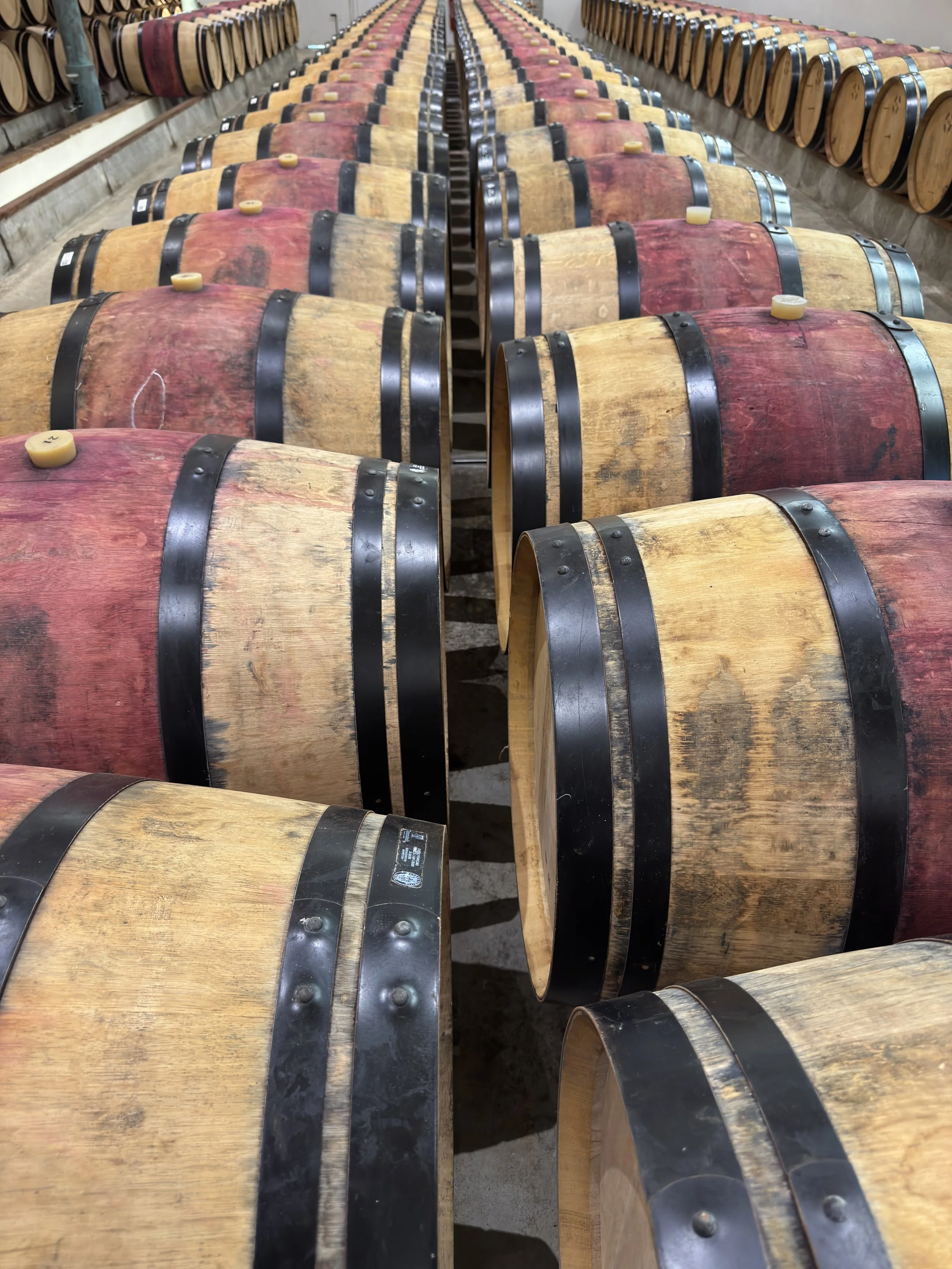
Then there is the misty corner. In the southern Graves, along a cold spring-fed tributary called the Ciron, autumn mornings produce fog that invites a fungus — Botrytis cinerea, the noble rot — to shrivel Sémillon grapes on the vine, concentrating them into something like liquid apricot and honey. This is Sauternes (with neighboring Barsac), home of Château d'Yquem and of the wine world's most under-drunk category. Making it is brutal: berries picked individually across multiple passes through the vineyard, at yields a fraction of normal. Which is why the sane consumer play is a half-bottle — routinely $20 to $40 for wine made with Grand Cru levels of effort.
Bordeaux today
An honest primer has to say this part out loud: Bordeaux in 2026 is two economies wearing one name. The classified estates are fine. The base of the pyramid is in genuine crisis — declining red-wine consumption, softening export markets, and years of oversupply have pushed the region into a state-funded program to pull up vines. The total vineyard has now dropped below 100,000 hectares for the first time in decades, with the reduction headed toward nearly 20% of the region's former area. That is real hardship for growers. It is also unusual leverage for you, the consumer, because pressure on the unglamorous end of Bordeaux has made it one of the most negotiable quality-wine categories anywhere.
The region is also quietly re-engineering itself for a hotter century. Since 2021, six new grape varieties — including Portugal's Touriga Nacional and the French crossing Marselan — have been permitted in generic Bordeaux specifically for their heat tolerance, capped at small percentages of the vineyard and the blend, and kept off the labels. Modest on paper. But when the most tradition-bound region in France amends its own recipe, pay attention.
Meanwhile the 2025 vintage, shown to the trade this spring, looks exceptional — an early, dry, healthy season that delivered fresh acidity and moderate alcohol — while also coming in as the smallest crop since 1991. Quality up, quantity down: expect the famous names to cost plenty, and the smart money to keep moving down the pyramid.
How to actually shop for a “Bordeaux”
Skip the trophy hunting and work the map instead:
• Under $20: Bordeaux Supérieur reds and Entre-Deux-Mers whites. The oversupply crisis means real wine at grocery-store prices — look for estate-bottled (mis en bouteille au château) over négociant brands.
• $20 to $35: Cru Bourgeois from the Médoc for the Cabernet-and-gravel experience, or Fronsac and Castillon Côtes de Bordeaux for Saint-Émilion geology at a third of Saint-Émilion prices. This tier is where Bordeaux value peaks.
• $35 to $60: Communal appellations (Saint-Julien and Saint-Estèphe tend to over-deliver relative to Pauillac and Margaux prices), satellite stars, Pessac-Léognan whites, and second wines of classified growths — same teams, same cellars, gentler selection, half the price.
• The splurge: Classified growths and top Pomerol from a strong vintage — and don't sleep on a half-bottle of Sauternes, which delivers more craftsmanship per dollar than almost anything else on a fine-wine list.
You don't need the châteaux memorized. You need the map: the gravel side means Cabernet, structure, and patience; the clay side means Merlot, flesh, and earlier pleasure; the middle means value whites; the misty corner means dessert. Every one of those places rewards a closer look — and each is a story big enough to tell on its own. I’ll dive deeper into each in the next few articles!