Sweethearts and Sangiovese, a weekend in The Gorge
Every year, my wife and I, along with some of our best friends, get together yearly around Veteran’s Day weekend (most of us are Veterans) and we make the trek to Walla Walla for a weekend of wine tasting and much needed family time. This year however, scheduling didn’t work out and we missed the trip in November, instead opting for President’s Day weekend which also contained Valentine’s Day. Instead of heading to Walla Walla, we chose a new destination in Hood River, Oregon, which is in the middle of the Columbia Gorge AVA. This quaint little town lies right on the Columbia River which separates Washington and Oregon with beautiful small-town charm and some amazing wineries spread throughout the area. While it’s not the most popular wine destination in either WA. or OR., it has arguably the prettiest landscape of all the AVAs and an interesting mix of Vineyards, all doing things outside the comfort zones of other Washington or Oregon AVAs.
Marchesi Vineyards (Hood River, OR)
On a hillside above Hood River, Oregon, where orchard country meets the wild sweep of the Columbia River Gorge and Mount Hood rises in snow-bright relief beyond the vineyards, sits one of the Pacific Northwest’s most quietly distinctive wineries.
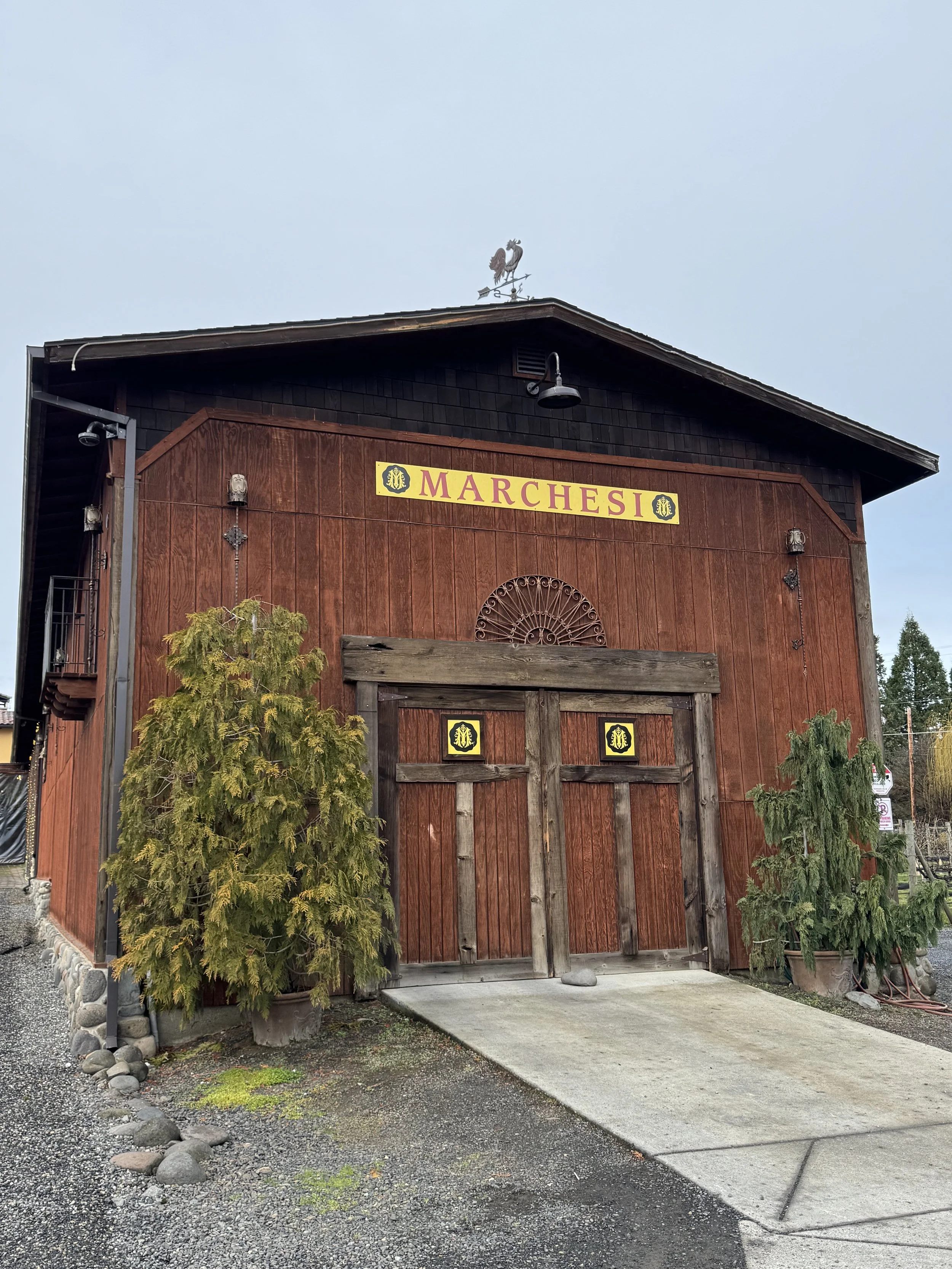
Marchesi Vineyards does not announce itself with grand architecture or sprawling corporate tasting halls. Instead, it welcomes visitors through vine-covered arbors, rose-lined pathways, and a courtyard designed less like an American winery than a rural Italian estate. The effect is intentional. This is not simply a winery built to produce wine. It is one built to recreate a sense of home. For founder Franco Marchesi, that home began in Piemonte, Italy — and the journey from northern Italy to the slopes of the Columbia Gorge is written into every bottle produced here. Franco Marchesi grew up in Borgosesia in Italy’s Piemonte region, an area steeped in agricultural tradition and centuries of winemaking culture. Like many Italians raised in wine country, his earliest exposure to viticulture came not through formal training, but through family, community, and daily life. Wine was not an occasional indulgence. It was a constant presence at the table, an agricultural craft tied inseparably to food, conversation, and identity.
After moving to the United States as a young man, Marchesi spent decades immersed in the wine industry, developing a deep understanding of both Old-World production and the evolving American market. He worked as a wine steward, later founded an Italian wine import business, and built relationships throughout the trade. Yet despite professional success, the desire to create something of his own — something rooted in the traditions of Piemonte — never faded. That opportunity appeared in the early 2000s when Marchesi encountered the Columbia River Gorge. The parallels struck him immediately. The Gorge’s latitude closely mirrors that of northern Italy. Its seasonal shifts, diverse soils, and hillside exposures suggested potential for the Italian grape varieties he knew intimately. In 2003, he purchased a former apple orchard above Hood River and began transforming it into what would become Marchesi Vineyards. It was not merely a vineyard project. It was an attempt to transplant a cultural philosophy of wine.
Oregon’s international wine reputation rests overwhelmingly on Pinot Noir. Most new vineyards entering the state’s market understandably follow that path. Marchesi chose otherwise. From the beginning, his vineyard emphasized Italian varietals — grapes rarely associated with the Pacific Northwest at the time.
Among them:
• Barbera, prized for its bright acidity and food-friendly structure
• Dolcetto, approachable yet capable of surprising depth
• Moscato, aromatic and expressive
• Pinot Grigio, crisp and versatile
• Sangiovese, savory and structured, the backbone of central Italian reds
Pinot Noir does appear in the portfolio, acknowledging regional demand, but it is the Italian wines that define the estate’s identity. This focus reflects a philosophical divide between Old-World and New-World wine approaches. Where many American wineries pursue concentration, power, and collectible prestige, Marchesi’s wines are intentionally built for the table. They favor balance over intensity, acidity over heaviness, and drinkability over cellar-driven status.
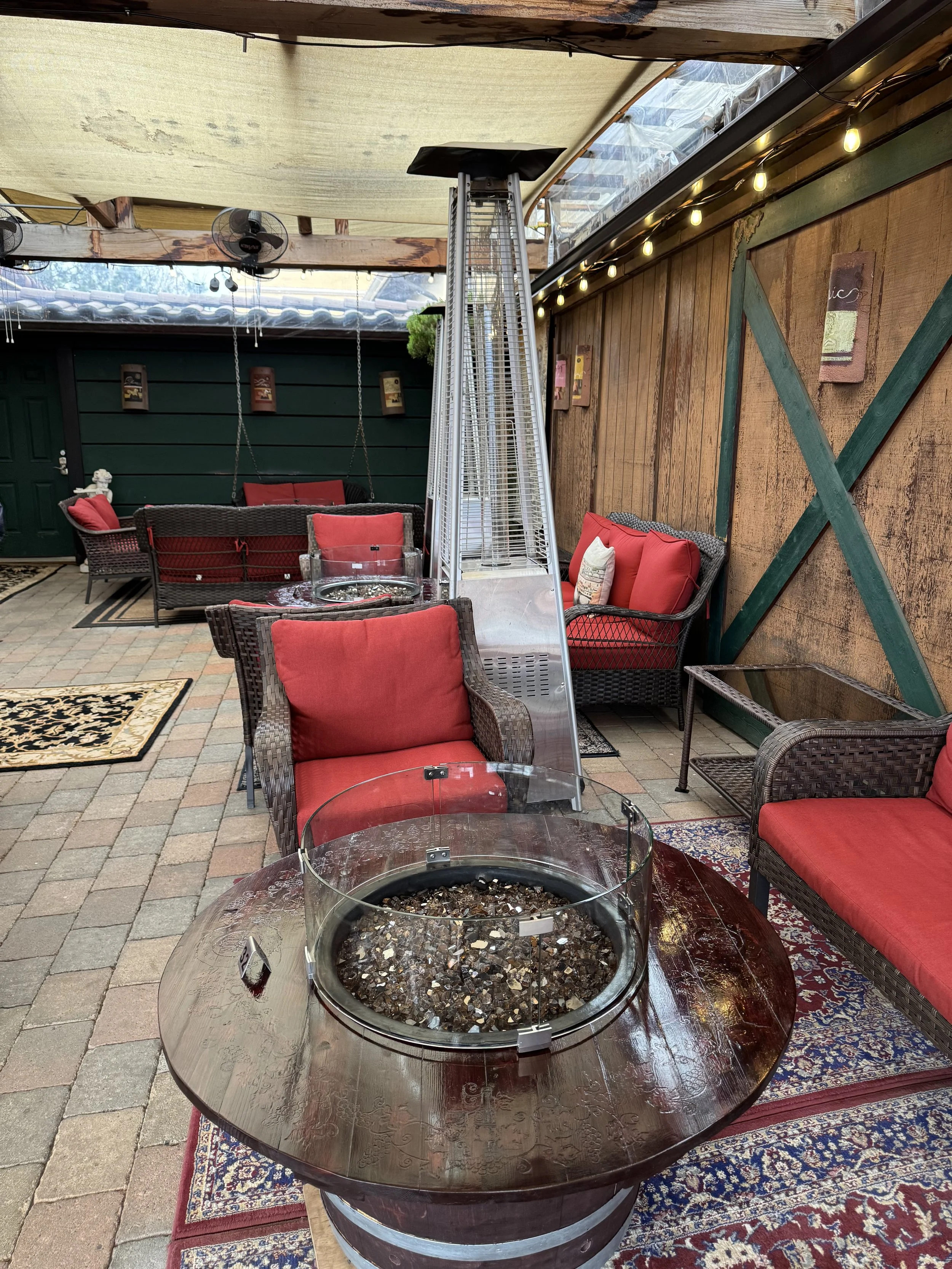
In the European tradition, wine is meant to accompany life — not dominate it. That ethos shapes everything from vineyard choices to pricing strategy. If the wine expresses Italian heritage, the physical layout of Marchesi Vineyards reinforces it. Rather than a single large tasting room, the property unfolds as a series of outdoor and courtyard spaces. Pergolas draped with climbing vines create shaded seating areas. Flower beds soften stone pathways. Murals, antique wine imagery, and shelves of books evoke both history and personal storytelling. In an industry increasingly shaped by hospitality management systems and timed reservation blocks, this level of personal presence has become rare. Marchesi Vineyards occupies a particularly scenic and strategically positioned section of this landscape. Southeast-facing slopes maximize sunlight exposure while hillside airflow helps regulate frost risk and vine health. The proximity to Mount Hood contributes to temperature moderation, while elevation shifts create microclimates that influence ripening patterns. For Italian varietals accustomed to hillside agriculture, the setting proves remarkably compatible. And for visitors, the view is equally compelling. From the vineyard patio, rows of vines descend toward the valley while distant cliffs frame the Columbia River’s broad sweep. Snow often lingers on Mount Hood’s summit well into late spring, creating a dramatic alpine backdrop rarely matched in American wine country.
Marchesi Vineyards remains intentionally small. In an era when many wineries expand production to meet distribution demand, Marchesi has maintained a boutique scale that prioritizes control, quality, and direct customer relationships. Limited production allows closer vineyard oversight and preserves the intimate character that defines the visitor experience. This decision also reinforces the European philosophy underpinning the winery’s identity. Rather than positioning itself as a luxury brand competing for national shelf space, Marchesi operates more like a neighborhood estate winery in rural Italy — one where local reputation, repeat visitors, and word-of-mouth loyalty matter more than aggressive expansion. The result is a winery that feels personal rather than manufactured.
The Wines 🍷
Barbera (Estate Signature)
Appearance: Bright ruby with youthful clarity
Nose: Red cherry, crushed raspberry, hint of dried herbs, subtle baking spice
Palate: Medium-bodied with vibrant acidity driving the structure. Juicy red-fruit core balanced by light earth tones and restrained oak influence.
Tannin: Low to moderate, very approachable
Finish: Fresh, food-driven, slightly savory
Best pairing: Tomato sauces, pizza, grilled sausage, roast chicken
Dolcetto
Appearance: Deep ruby-purple
Nose: Blackberry, plum skin, violet, light almond note
Palate: Softer acidity than Barbera, rounder mouthfeel, dark berry fruit with gentle complexity.
Tannin: Moderate but smooth
Finish: Clean, slightly earthy, everyday drinkable
Best pairing: Pasta with meat sauce, antipasti, burgers, mushroom dishes
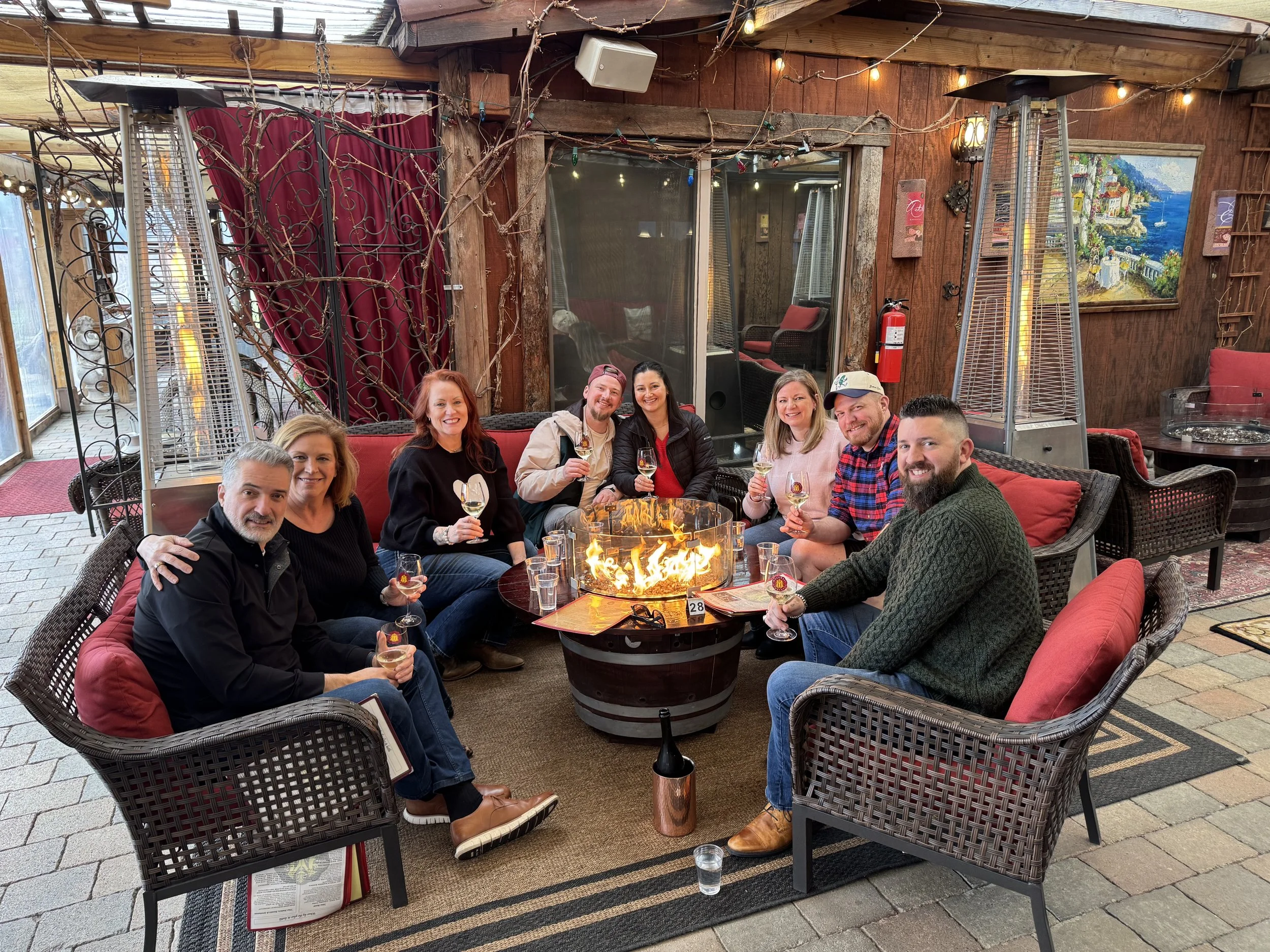
Nebbiolo
Appearance: Garnet-leaning ruby, often slightly translucent
Nose: Rose petal, dried cherry, leather, tar, faint orange peel
Palate: Structured and linear with firm acidity and noticeable tannic backbone. Red fruit shifts toward dried cranberry and savory spice.
Tannin: Firm (most structured wine in lineup)
Finish: Long, dry, Old-World serious
Best pairing: Braised beef, lamb, truffle dishes, aged cheeses
Sangiovese
Appearance: Medium ruby
Nose: Sour cherry, dried oregano, leather, sun-warmed earth
Palate: Bright acidity defines the entry, followed by tart cherry fruit, savory herbs, and light tobacco notes.
Tannin: Medium, structured but not aggressive
Finish: Dry, savory, distinctly Italian in tone
Best pairing: Lasagna, roasted pork, tomato-based dishes, grilled vegetables
Pinot Grigio (Estate White)
Appearance: Pale straw
Nose: Green apple, lemon peel, alpine herbs, faint pear
Palate: Crisp and linear with refreshing citrus backbone and clean mineral edge.
Acidity: High and refreshing
Finish: Dry, bright, palate-cleansing
Best pairing: Shellfish, grilled fish, salads, light pasta
Moscato
Appearance: Pale gold
Nose: Orange blossom, peach, honeysuckle, fresh grape
Palate: Light body with expressive fruit and floral sweetness
Acidity: Balanced to keep it lively
Finish: Soft, aromatic, crowd-friendly
Best pairing: Fruit desserts, brunch, spicy food, cheese boards
Stave & Stone (Hood River, OR)
Long before vineyards crept across the hills above Hood River, Oregon, the land that now holds Stave & Stone Winery was known for something else entirely: apples. The Columbia River Gorge has always been orchard country first. For more than a century, Hood River’s slopes produced some of the Northwest’s most celebrated fruit, with family farms shaping both the economy and identity of the valley. Stave & Stone’s story begins squarely inside that tradition — not as a winery built from scratch on empty ground, but as the next chapter in a multigenerational agricultural legacy. Today, that legacy is visible the moment visitors arrive. Rows of vines share the hillside with the remaining orchard blocks, Mount Hood rising snow-bright behind them. The setting feels less like a manufactured wine destination and more like a working piece of the valley’s agricultural past evolving in real time.
Stave & Stone, started in 2012, is owned and operated by Jill House, 4th generation of longtime Hood River growers whose roots in the region stretch back generations. Jill actually greeted us when we arrived and gave us our first glass of delicious rosé. I noticed a beautiful photo of her and her father on the wall in the entryway which prompted a wonderful story of her dad and the impact he had on her and the winery today. The family spent decades cultivating apples and pears before gradually expanding into viticulture as the Columbia Gorge wine scene began gaining national attention. Rather than abandoning their orchard heritage, started in 1919, they integrated it. That decision shapes the winery’s identity today. The property still reflects the rhythm of a family farm: practical, land-focused, and grounded in seasonal cycles rather than luxury branding. Wine here isn’t presented as an escape from agriculture — it’s presented as an extension of it.
Unlike estates devoted to a single flagship grape, Stave & Stone embraces the Columbia Gorge’s defining strength: diversity. The Gorge’s geography creates a climatic transition zone. Western sections receive maritime influence and higher rainfall, while eastern areas trend drier and warmer. Elevation shifts add further complexity. This allows growers to successfully cultivate both cool-climate and warmer-climate varieties within relatively short distances.
Stave & Stone leans into this flexibility with a portfolio that typically includes:
• Pinot Noir
• Chardonnay
• Pinot Gris
• Syrah
• Merlot
• Cabernet Sauvignon
• Rosé and seasonal blends
The result is a tasting list designed less around a single signature grape and more around accessibility. Visitors rarely struggle to find a style they enjoy, whether they prefer bright whites, structured reds, or easy summer rosés.
If Marchesi Vineyards evokes an Italian courtyard, Stave & Stone feels distinctly Pacific Northwest. The tasting area overlooks rolling orchard land descending toward the valley floor, with Mount Hood commanding the skyline beyond. Outdoor seating areas invite long, relaxed visits, particularly in late afternoon when the mountain glows pink in the fading light, phenomenon locals simply call “alpenglow.” Stave & Stone operates with the ease of a family-run farm rather than the formality of a luxury wine resort. Guests arrive in hiking boots as often as wine-tour attire.
Stylistically, Stave & Stone’s wines lean toward balanced New-World expressions rather than extreme or heavily manipulated styles. Their Pinot Noir typically emphasizes red-fruit brightness and moderate oak influence, reflecting the cooler climate sections of the Gorge. Chardonnay often balances orchard fruit with restrained creaminess rather than overt buttery heaviness. Syrah and Bordeaux-style reds bring darker fruit tones and structure but usually remain approachable rather than aggressively tannic.
Across the lineup, the throughline is drinkability. These are wines built with meals in mind — salmon from the Columbia, orchard fruit salads, grilled meats, or the region’s increasingly strong farm-to-table restaurant scene. In that sense, the winery mirrors the valley itself: agricultural, seasonal, and food driven.
The Columbia River Gorge wine region remains younger and less internationally defined than Oregon’s Willamette Valley. That relative youth gives wineries here unusual freedom. There is less pressure to conform to a single varietal identity, and more room to experiment with styles suited to specific microclimates. Stave & Stone represents this next phase of Gorge winemaking particularly well. In an age when many wineries are designed first as destination venues and only second as agricultural operations, Stave & Stone quietly reverses the formula. Here, the farm came first. The land dictated the wine. The tasting experience grew naturally from both.
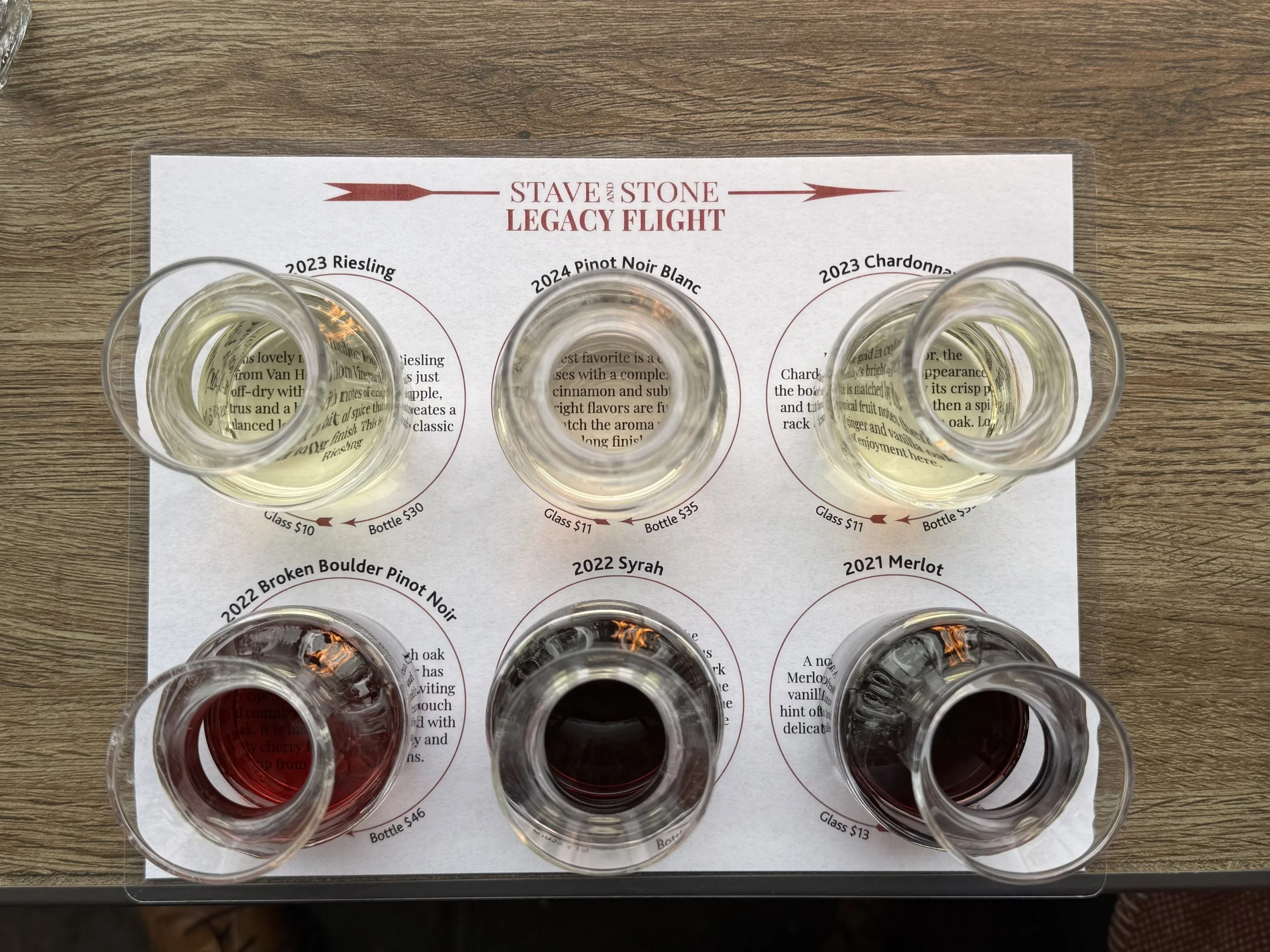
The Wines 🍷
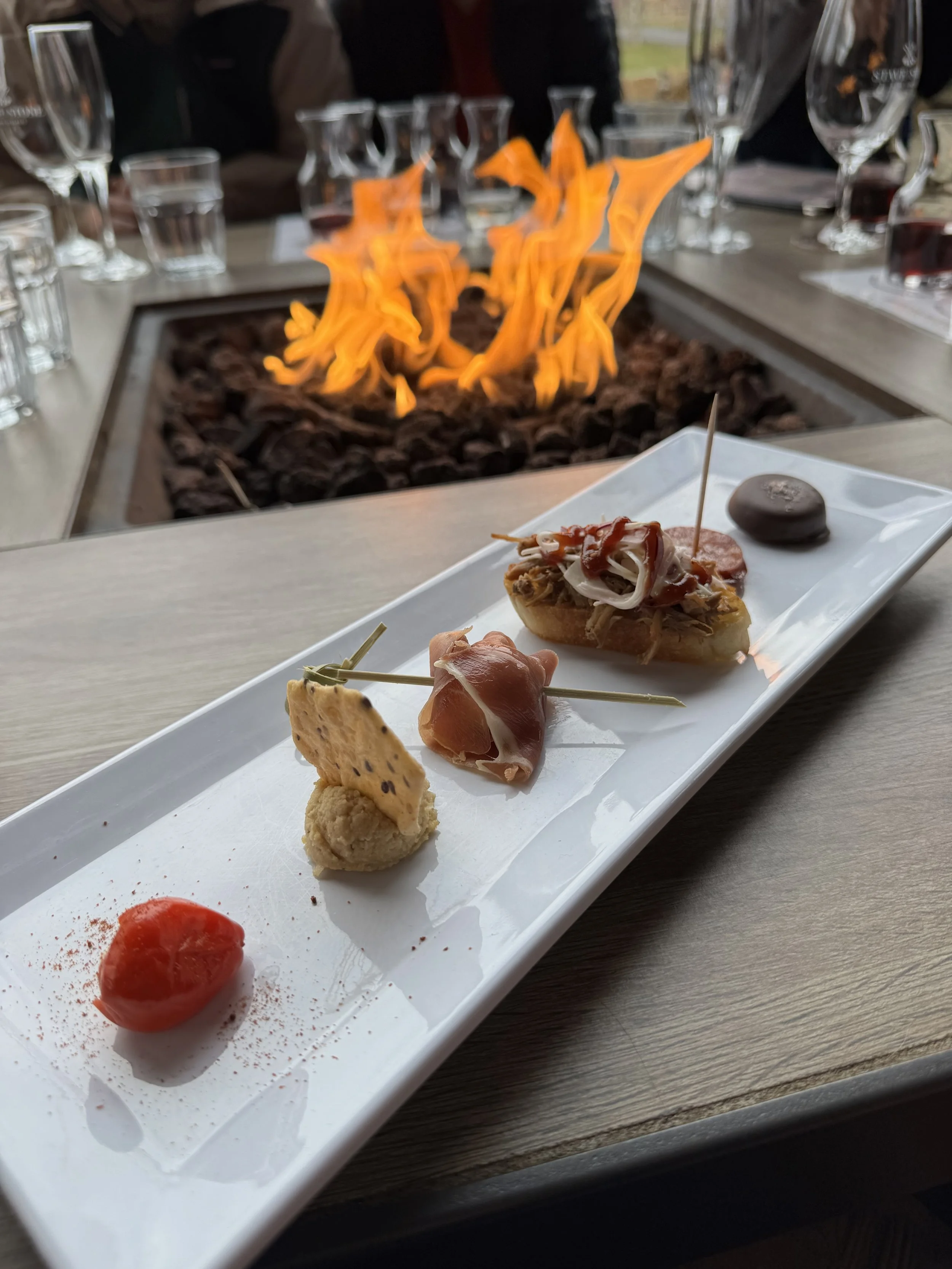
While Stave & Stone offers a large selection of options for flights, glasses, or bottles, I chose the “Legacy Flight” because it came with a Reisling (my Kryptonite) and a plate of incredible small bites meant to pair perfectly.
Reisling (2023)
The 2023 Riesling opens with an immediately expressive aromatic lift, signaling the Columbia Gorge’s cool-climate influence before the first sip. Fresh lime zest and green apple lead the nose, followed by white peach, jasmine blossom, and a faint wet-stone minerality that gives the wine a distinctly alpine character. On the palate, the wine balances vibrant acidity with a gentle fruit roundness that keeps it from feeling austere. Citrus tones dominate the entry — lime, lemon, and crisp pear — before the mid-palate softens into stone fruit and a subtle honeyed nuance. Any residual sweetness present is carefully measured, serving to cushion the acidity rather than define the wine’s profile. The structure remains linear and energetic, with the Gorge’s temperature swings clearly preserving freshness. The finish is long, clean, and mineral-tinged, leaving behind lingering citrus oil, faint peach skin, and a refreshing saline edge that invites another sip almost immediately.
Body: Light to medium
Acidity: High, bright, mouthwatering
Sweetness: Dry to off-dry (balanced, not overt)
Finish: Crisp, mineral, sustained citrus lift
Pinot Noir Blanc (2024)
The 2024 Pinot Noir Blanc presents with a pale straw hue and brilliant clarity, immediately signaling its cool-climate precision. Aromatically, the wine opens with delicate orchard fruit — fresh pear, white peach, and crisp apple — layered with lemon blossom and a faint almond note that hints at its red-grape origin handled in white-wine form. On the palate, the entry is clean and gently textured rather than sharply linear. Bright citrus and green apple lead, followed by subtle stone fruit and a lightly creamy mid-palate that suggests careful lees contact or controlled fermentation technique. The wine maintains a fine balance between freshness and softness, avoiding both excessive austerity and overt richness. Acidity remains lively but polished, carrying the fruit forward into a dry, mineral-tinged finish marked by citrus peel, soft orchard fruit, and a faint saline note typical of Columbia Gorge whites. The overall impression is elegant and quietly complex — a wine that rewards attention but remains effortlessly drinkable.
Body: Light to medium
Acidity: Bright but rounded
Sweetness: Dry
Texture: Silky entry with crisp structure
Finish: Clean, mineral, subtly persistent
Chardonnay (2023)
The 2023 Chardonnay pours a clear pale gold, with a brightness that reflects its cool Columbia Gorge origins. The nose opens with fresh orchard fruit — ripe apple, pear, and lemon zest — followed by subtle notes of white peach and a gentle hint of toasted almond. Any oak influence is measured and supportive, offering light vanilla and faint baking spice without overwhelming the fruit. On the palate, the wine strikes a careful balance between freshness and texture. The entry is clean and citrus-driven, with lemon curd and green apple leading before the mid-palate broadens into soft stone fruit and a restrained creamy note suggesting partial barrel fermentation or lees contact. Acidity remains lively, giving the wine lift and preventing the richer elements from feeling heavy. The finish is long and polished, carrying citrus peel, subtle minerality, and a whisper of brioche that lingers just enough to add depth while preserving the wine’s overall precision.
Body: Medium
Acidity: Bright, well-integrated
Sweetness: Dry
Oak: Subtle, textural rather than dominant
Finish: Clean, citrus-mineral with light toast
Broken Boulder Pinot Noir (2022)
The 2022 Broken Boulder Pinot Noir pours a translucent ruby, immediately signaling a cooler-climate expression rather than a dense, extraction-driven style. The aromatics open with layered red fruit — wild strawberry, red cherry, and cranberry — followed by forest floor, dried rose petal, and a gentle thread of baking spice and cedar from restrained oak aging. On the palate, the wine is precise and structured, with bright acidity forming the backbone. Fresh red fruit carries the entry before deeper notes of raspberry, subtle earth, and faint clove emerge through the mid-palate. The texture is silky but purposeful, with fine-grained tannins that tighten slightly toward the finish, suggesting both food compatibility and short-to-mid-term cellar potential. The finish lingers with dried cherry, soft woodland notes, and a delicate mineral lift that reflects the Columbia Gorge’s cooling influences.
Body: Medium
Acidity: Bright and structured
Tannin: Fine, polished, supportive
Oak: Subtle, integrated
Finish: Long, red-fruit-driven with earthy nuance
Syrah (2022)
The 2022 Syrah is a deep garnet-purple with a slightly inky core, immediately suggesting concentration while still retaining the lifted clarity typical of Columbia Gorge reds. The nose opens with layered dark fruit — blackberry, black plum, and cassis — followed by cracked black pepper, smoked herbs, and a faint cured-meat savory note that nods toward classic Rhône styling rather than overtly sweet New-World ripeness. On the palate, the wine shows medium-plus body with a structured yet balanced frame. Dark berry fruit leads the entry before unfolding into notes of black cherry, cocoa powder, and subtle graphite. A persistent pepper spice runs through the mid-palate, supported by polished tannins that provide grip without harshness. The Gorge’s cooler evenings preserve acidity, keeping the wine energetic rather than heavy. The finish is long and warming, carrying dark fruit, soft smoke, and lingering spice, with a touch of dark chocolate and savory mineral tone appearing at the very end.
Body: Medium-plus
Acidity: Balanced, lifting the fruit
Tannin: Firm but polished
Oak: Present but integrated, contributing spice and texture
Finish: Long, pepper-spiced with dark fruit and savory depth
Merlot (2021)
The 2021 Merlot pours a deep ruby with garnet reflections at the rim, offering immediate aromatic warmth and depth. The nose opens with ripe black cherry, plum, and blackberry, followed by cocoa, dried herbs, and a subtle cedar note from well-integrated oak. As the wine breathes, hints of graphite, baking spice, and a faint earthy tone begin to emerge, suggesting both structure and maturity. On the palate, the wine shows medium-to-full body with a rounded, supple entry that quickly develops into layered dark fruit. Black plum and cherry dominate the mid-palate, supported by soft mocha, clove, and a touch of vanilla. The tannins are smooth and polished rather than aggressive, giving the wine an approachable texture while still providing enough backbone for pairing with richer dishes. Balanced acidity keeps the fruit from becoming heavy, allowing the wine to maintain lift through the finish. The close is long and velvety, leaving impressions of dark fruit, cocoa, and subtle toasted oak lingering alongside a faint mineral note characteristic of the Columbia Gorge’s cooler nights.
Body: Medium to full
Acidity: Balanced, supportive
Tannin: Smooth, rounded, approachable
Oak: Integrated, adding cocoa and spice rather than dominance
Finish: Long, plush, dark-fruited with soft mocha tones
Syncline (Lyle, WA)
On the Washington side of the Columbia River Gorge, where cliffs rise abruptly from the river and the wind rarely seems to stop moving, Syncline Winery sits in a landscape that feels more geological than pastoral. Hawks circle above basalt walls. Dry grass slopes toward the water. Mountains close in from both sides. It’s the sort of terrain that makes sense only when you understand the winery’s name. A “syncline” is a folded rock formation — and just beyond the property lies the dramatic Coyote Wall Syncline, a 300-foot cliff rising directly from the Columbia River. The winery’s founders didn’t just borrow the name. They built their philosophy around the idea that wine should reflect this kind of rugged structure — layered, dynamic, and shaped by forces larger than the vineyard itself.
Syncline was founded in 1999 by James and Poppie Mantone, a couple whose shared love of Pinot Noir originally brought them west to work harvests in Oregon. Their first vintage was tiny — just 76 cases of Pinot Noir sourced from Celilo Vineyard — but it marked the beginning of what would become one of the defining wineries of the Columbia Gorge region. At the time, the Gorge was still an emerging wine frontier. Syncline helped change that. The winery was among the early producers involved in establishing the Columbia Gorge AVA in 2004, helping formalize the region’s identity. From the beginning, production remained intentionally small — today typically under about 5,000 cases annually — allowing close attention to each vineyard block and barrel. That boutique scale wasn’t accidental. It reflected the founders’ belief that wine should come from a sustainable family farm rather than a mass-production facility.
To understand Syncline, you first have to understand the Gorge itself. Few American wine regions are as geographically complex. The Columbia Gorge forms a transition zone between the cool marine climate of western Oregon and the hotter continental interior of eastern Washington. Rainfall drops dramatically from west to east, sometimes changing by inches per mile. Summer days can climb into the 90s while nights fall into the 50s, creating dramatic temperature swings that preserve acidity in grapes. Wind is nearly constant — so defining, in fact, that the Gorge is considered one of the world’s premier windsurfing destinations. The soils tell an equally chaotic story: volcanic ash from Mount Mazama, Missoula flood deposits, gravel outwash, and sandy cobble layers stacked through millennia of geological upheaval. Winemaker James Mantone has described the region as “one of the most tortured and broken up AVAs out there.” For Syncline, that unpredictability isn’t a challenge. It’s the point. Unlike many Washington wineries built around Cabernet Sauvignon or Merlot, Syncline has long focused heavily on Rhône-style varieties and European-inspired winemaking. The estate vineyard at Steep Creek Ranch includes plantings such as:
• Syrah
• Viognier
• Grüner Veltliner
• Gamay
• Mondeuse Noire
• Furmint
Beyond the estate, the winery also works with respected vineyard partners in regions like Yakima Valley, Red Mountain, and Horse Heaven Hills, allowing broader stylistic exploration while maintaining quality sourcing. Stylistically, Syncline wines tend to emphasize purity rather than maximal ripeness. Mantone has often favored earlier picking and minimal new oak to preserve energy and structure in the wines. The result is a portfolio known for tension, acidity, and expressive fruit rather than sheer weight.
In modern wine language, these are often described as “crunchy red fruit” wines — vivid, lively, and site-driven. Sustainability isn’t a marketing slogan at Syncline — it’s operational design. The winery maintains biodynamic practices across its vineyards, emphasizing living soils, ecological balance, and long-term farm health. Mantone’s reasoning is straightforward: vibrant soils create vibrant wines. Rather than following rigid dogma, however, Syncline takes a practical approach, allowing vineyard partners flexibility while maintaining a shared commitment to quality and environmental stewardship. The physical winery itself reflects this ethos, incorporating reclaimed wood and locally salvaged materials throughout its construction.
Visitors arriving at Syncline encounter something closer to a working farm than a polished wine resort. The property in Lyle, Washington includes the production facility, vineyard blocks, gardens, and the family’s home — reinforcing the sense that this is a lived-in agricultural estate rather than a commercial tourism project. Tastings typically take place in the cellar or gardens, often described as intimate and relaxed rather than high-volume. This smaller scale reinforces the winery’s long-standing identity as an autonomous, family-driven operation focused on craftsmanship rather than expansion. Over time, Syncline has developed a strong reputation among Northwest wine critics and enthusiasts. In early 2026, it was named Northwest Winery of the Year, recognition of both its vineyard work and the distinctiveness of its wines. The award reflects something longtime visitors already understood: Syncline doesn’t simply produce Columbia Gorge wine; it helps define what Columbia Gorge wine can be.
Washington wine often gets summarized through a single lens: powerful reds from the Columbia Valley, but Syncline complicates that narrative. It demonstrates that the state can also produce high-acid, cool-climate reds, structured Rhône-style blends, experimental European varietals, and biodymamic estate wines shaped by extreme geography.
The Wines 🍷
2024 Grüner Veltliner
The 2024 Grüner Veltliner is pale straw in color with bright clarity, showcasing Syncline’s Columbia Gorge style. Aromas include green melon, orchard blossom, lemon balm, cut hay, and a subtle herbal note reflecting its mountain origin. On the palate, it’s dry, focused, and driven by vivid acidity, featuring crisp orchard fruit, citrus, floral tones, and a touch of savoriness. Classic peppery hints and minerality reinforce both grape and site character. The texture is energetic and fresh rather than heavy, finishing long with notes of citrus peel, melon rind, and gentle spice. The estate’s Grüner is known for its purity, clarity, and lively acidity, qualities seen in this vintage.
Body: Light to medium
Acidity: High, bright, driving the wine
Sweetness: Dry
Texture: Linear, energetic, mineral-leaning
Finish: Crisp citrus, floral lift, subtle pepper
2022 Gamay Noir
The 2022 Gamay Noir presents a luminous ruby hue accentuated by violet highlights, indicating a wine focused on freshness and vibrancy rather than concentration. The aromatic profile features vivid red fruit notes—wild strawberry, raspberry, and red cherry—complemented by rose petal, crushed herbs, and a subtle stony minerality reflective of the Columbia Gorge’s unique rocky terrain. On the palate, this wine demonstrates brightness and energy, with lively acidity and a supple, medium-light body. Juicy red berry flavors introduce the tasting experience, gradually developing into cranberry, pomegranate, and nuanced savory spice. Underlying earthy tones and a hint of black tea lend complexity while maintaining the wine's elegance and drinkability. The tannins are fine-grained and silky, offering sufficient structure without overpowering the wine's character. The finish is clean, elevated, and persistent, leaving lingering notes of fresh red fruit, dried flowers, and a delicate mineral quality that encourages continued enjoyment.
Body: Light to medium
Acidity: Bright, mouthwatering
Tannin: Fine, soft, polished
Oak: Minimal, fruit-forward emphasis
Finish: Fresh, floral, red-fruited with mineral lift
2023 Cuvée Elena (the Flagship blend)
The 2023 Cuvée Elena pours a vibrant ruby color with hints of violet at its center, reflecting its freshness and depth. On the nose, you'll find layers of dark red fruits like black cherry, ripe raspberry, and plum, along with floral notes, dried herbs typical of Provence, and subtle aromas of cracked pepper and sun-warmed stone, pointing to its Rhône-style roots. Tasting the wine, it's medium to full-bodied and feels both structured and smooth. Flavors of dark cherry and red plum lead at first, joined by savory spice, black tea, and a touch of smoky mineral on the mid-palate. The lively acidity keeps everything crisp and focused, while the fine tannins offer support without weighing the wine down. The oak is subtle and well blended, adding texture and gentle baking spice instead of strong toastiness. The finish is extended and savory, with dark fruit skins, dried herbs, and a soft peppery warmth that continues to develop as you let the wine breathe.
Body: Medium to medium-plus
Acidity: Bright, structural
Tannin: Fine, supportive, Rhône-leaning texture
Oak: Subtle, integrated
Finish: Long, herbal-savory with layered dark fruit
2023 Grenache
The 2023 Grenache has a clear, vibrant ruby color that highlights its focus on aromatic brightness over heaviness. Its aroma bursts with ripe red fruits like strawberry, raspberry, and cherry, joined by dried rose petals, warm spices, a touch of sun-soaked stone, and hints of Provençal herbs, echoing Syncline’s Rhône-inspired style. On tasting, this Grenache feels lively and supple, with medium body and well-balanced acidity that ensures both freshness and structure. The initial juicy red berry flavors make way for cranberry, pomegranate, and a hint of white pepper across the middle palate. Subtle savory notes and gentle mineral nuances add depth without sacrificing its easy-drinking nature. Soft, silky tannins keep the fruit flavors at the forefront, while providing enough structure for food pairing. Oak is present but subtle, adding only delicate spice and texture. The finish lingers gracefully with bright red fruit skins, hints of dried herbs, and a gentle peppery spice, leaving a warm impression without feeling heavy.
Body: Medium
Acidity: Fresh, balanced
Tannin: Soft, silky, supportive
Oak: Minimal, integrated
Finish: Bright red-fruited with savory Rhône-style spice
2022 Boushey Syrah
The 2022 Boushey Vineyard Syrah boasts a deep garnet color with hints of violet at its core, reflecting both intensity and cool-climate character. Its aroma unfolds in layers: blackberry, black cherry, and plum skin lead, followed by cracked black pepper, smoked herbs, and a savory olive note that places it firmly within a classic Northern Rhône style. As the wine breathes, nuances of cocoa, graphite, and warm stone appear, highlighting its unique Boushey vineyard origins. On the palate, it displays a medium-plus body and a structured entry that favors clarity rather than heaviness. Dark berry flavors dominate initially, then transition to savory spices, black tea, and subtle cured-meat notes through the mid-palate. The vivid acidity gives the wine a lively tension, balancing its depth. Fine, tightly knit tannins offer a polished structure, indicating suitability for immediate food pairings and short- to mid-term cellaring. Oak presence is understated and seamlessly integrated, contributing a gentle texture and subtle baking spice without overshadowing with toast or sweetness. The wine finishes long and savory, with mineral undertones. Dark fruit skins, pepper warmth, and a faint smoky earth linger, evolving well after the last sip.
Body: Medium-plus
Acidity: Bright, structural, lifting the wine
Tannin: Fine-grained, firm but polished
Oak: Subtle, textural
Finish: Long, savory, Rhône-leaning with pepper and mineral depth
AniChe Cellars (Underwood, WA)
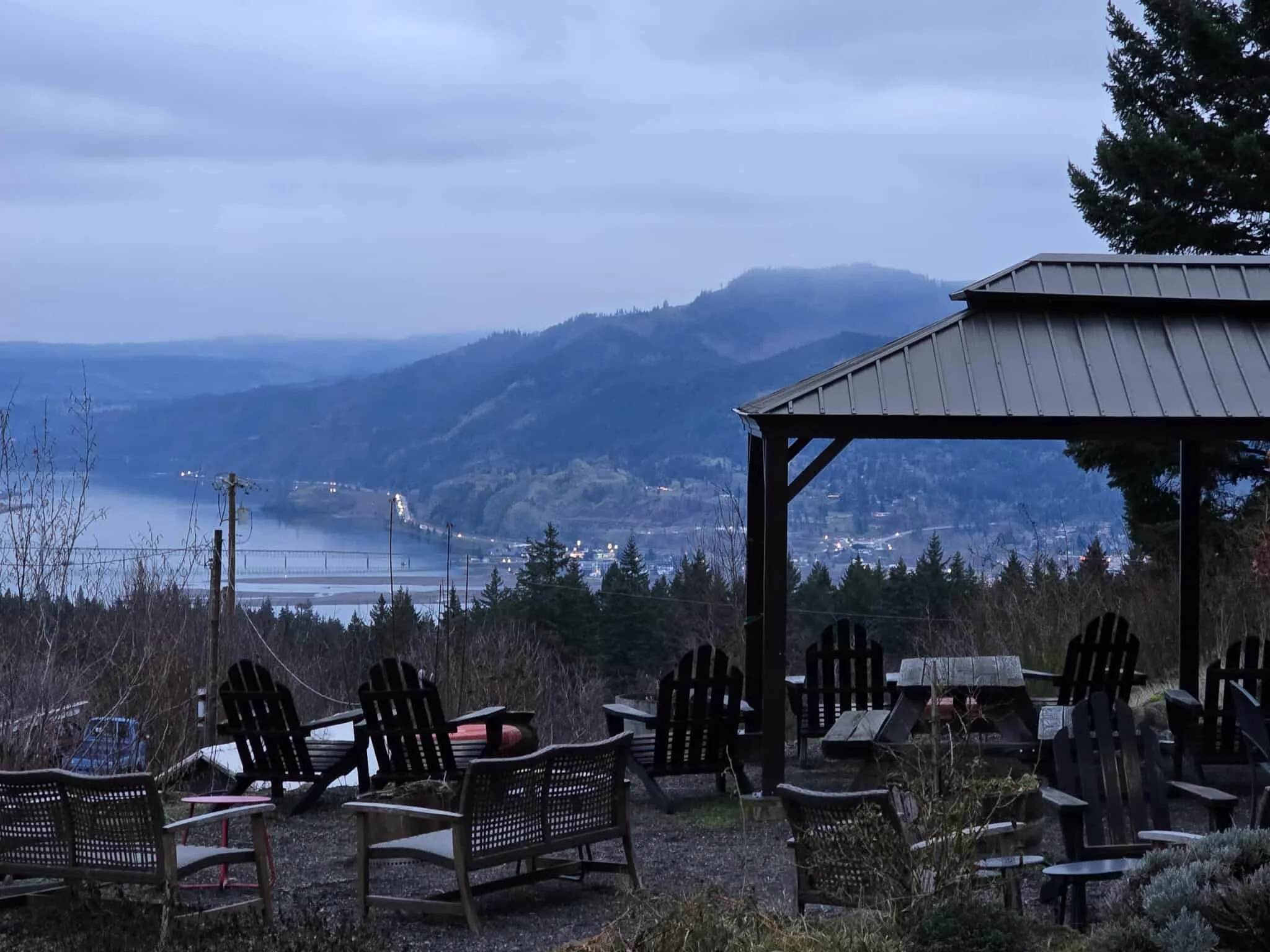
High on the Washington bluffs overlooking the Columbia River, where the wind rarely settles and the river cuts a silver path between sheer basalt cliffs, Aniche Cellars occupies one of the most visually commanding positions in the Columbia River Gorge wine region. From the terrace, the view stretches across the water to Oregon’s orchards and up toward the snow-bright rise of Mount Hood — a landscape so dramatic it almost threatens to overshadow the wine itself. Almost. Because what has quietly made Aniche Cellars one of the Gorge’s most important modern wineries is not simply its location, but the way it bridges two different eras of Northwest wine: the old agricultural traditions of the valley and the newer, more experimental generation of producers redefining what Washington wine can be. Unlike some wineries born from multi-generational vineyard inheritance, Aniche Cellars began with something simpler and, in many ways, more modern: a deep personal fascination with wine and a belief in the potential of the Pacific Northwest.
Founded in the mid-2000s and named after sister & brother Anaïs & Che, the winery emerged during a period when the Columbia River Gorge wine region was still forming its identity. The Willamette Valley had already cemented Oregon’s reputation through Pinot Noir, while eastern Washington’s Columbia Valley dominated with powerful Cabernet-driven reds. The Gorge, by contrast, existed in between — geographically, climatically, and stylistically. Rather than committing exclusively to estate-grown fruit or single-varietal production, the winery adopted a hybrid sourcing model from the beginning. Grapes came from carefully selected vineyards across Washington’s established growing regions — Yakima Valley, Horse Heaven Hills, Red Mountain, and beyond — while estate plantings in the Underwood Mountain area gradually developed alongside them. This allowed Aniche to focus on quality and consistency from day one while still building a vineyard identity rooted in the Gorge itself.
Few American wine regions show this level of environmental variability over such short distances. For winemakers, this complexity creates both challenge and opportunity. Certain slopes favor cool-climate whites. Others produce structured Rhône varieties. Some inland sites develop the concentrated fruit typical of Washington’s warmer vineyards. Aniche’s approach has been to treat the region not as a limitation, but as a toolkit. By blending fruit from multiple vineyard zones, the winery often achieves a balance that combines Washington’s dark-fruited depth with the Gorge’s natural acidity and aromatic lift. The resulting wines frequently feel structured yet approachable — substantial enough for serious meals but rarely overbearing.
While many wineries seek recognition through a flagship varietal, Aniche Cellars has become particularly known for its blends. This emphasis reflects both philosophy and practicality. Blending allows the winemaking team to shape wines that express balance rather than singular intensity, combining structure from one vineyard with brightness from another, or fruit richness with cooler-climate spice. Rhône-style combinations featuring Syrah, Grenache, and Mourvèdre appear regularly in the lineup, alongside Bordeaux-inspired blends built from Cabernet Sauvignon, Merlot, and related varieties. Whites often incorporate Viognier or Rhône-style aromatic components to add texture and floral complexity. One of the winery’s best-known releases, Chaos Theory, exemplifies this approach: a layered red blend that changes composition vintage by vintage, emphasizing harmony rather than rigid formula. This flexible strategy aligns naturally with the Gorge’s unpredictable growing conditions. In a region where weather and microclimates vary dramatically from year to year, blending becomes not just an artistic choice, but a practical safeguard.
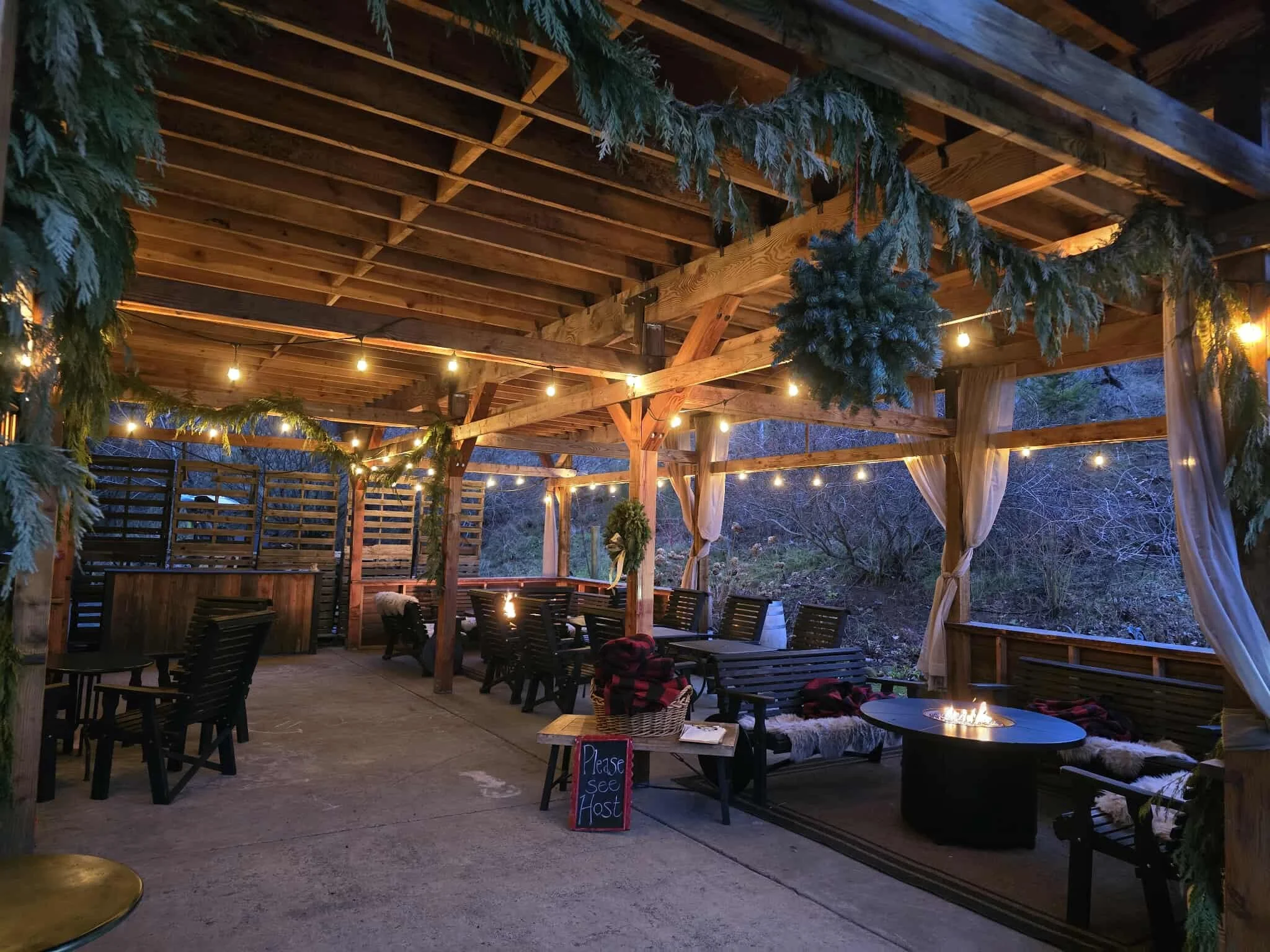
The estate vineyards surrounding the winery benefit from the Underwood Mountain area’s elevated slopes, where volcanic soils and strong airflow create excellent drainage and natural disease resistance. Constant wind — a defining feature of the Gorge — reduces moisture buildup on vines while helping moderate temperature extremes. The elevation also contributes to significant diurnal shifts, preserving acidity even as grapes achieve full ripeness. These conditions help explain why wines from the property often show both freshness and structure, an increasingly prized combination in contemporary winemaking. Yet despite the technical advantages of the site, Aniche’s identity remains as much social as agricultural. Visitors arriving at Aniche often notice something immediately: the winery feels welcoming rather than imposing. Where some destinations design tasting rooms around architectural spectacle, Aniche’s layout encourages lingering and above all, inclusiveness. Pride flags adorn the walls as this Women owned/operated winery looks to shout from the literal mountain top that everyone is welcome here! The patio seating faces directly toward the Gorge’s sweeping corridor with the best view on this side of the river for sure. Part of the fun atmosphere comes from the winery’s founding philosophy that wine should be joyful rather than intimidating. Staff interactions tend to emphasize conversation over instruction, exploration over rigid tasting scripts.
This was the group favorite of the weekend, mostly due to our time with Anaïs who personally poured for us on Sunday afternoon and kept us laughing throughout. Along with her faithful vineyard kitty sidekick, she singlehandedly took care of the entire tasting room and made sure each guest felt seen and taken care of. 🥰
The Wines 🍷
Serafina (2024)
The 2024 Serafina Riesling exhibits a pale straw hue with clear, crystalline brilliance, reflecting its origins in cool Columbia Gorge estate vineyards. The aroma features prominent notes of white peach and citrus blossom, complemented by characteristic petrol hints, lemon zest, and an understated floral element, contributing to both freshness and classical Riesling attributes. On the palate, the wine is distinctly dry and precisely structured, anchored by lively acidity that supports the fruit without adding unnecessary weight. Initial flavors showcase bright citrus and orchard fruit, progressing into a textured mid-palate marked by crushed-seashell minerality, which underscores the wine's regional identity. The mouthfeel demonstrates balanced tension and depth, providing sufficient texture for roundness while maintaining focus and energy. The finish is extended, clean, and subtly saline, with lingering impressions of citrus peel, stone fruit, and mineral nuances that encourage continued enjoyment.
Body: Light to medium
Acidity: High, vivid, structural
Sweetness: Dry
Texture: Nervy, mineral-driven with layered mouthfeel
Finish: Long, citrus-mineral with floral lift
Persephone (2022)
The 2022 Persephone displays a rich garnet color with hints of violet at its core, giving an impression of depth and structure. Its aroma features layers of dark fruits like blackberry, black cherry, and plum, accompanied by notes of dried lavender, cracked pepper, and a subtle smoky minerality, all pointing to its Rhône-inspired style. As the wine breathes, undertones of cocoa, leather, and warm baking spices add further complexity. On tasting, it reveals a medium-plus body and a smooth yet structured entrance. The initial burst of dark berry flavors evolves into savory herbs, black tea, as well as touches of olive and graphite. Defined acidity brings freshness, keeping the wine lively rather than dense, while refined tannins offer a polished structure ideal for pairing with food. Oak is present but restrained, adding hints of clove, toasted spice, and texture without overpowering the fruit. Its finish is persistent and gently warming, leaving lingering flavors of fruit skin, pepper spice, and a subtle earthy mineral quality that grows as the wine continues to open up.
Body: Medium-plus
Acidity: Balanced, structural
Tannin: Fine-grained, supportive, Rhône-leaning
Oak: Subtle and integrated
Finish: Long, savory, spice-layered with dark fruit depth
Goat Boy (2020)
The 2020 Goat Boy has a deep ruby color with garnet hints at the edge, showing its rich concentration and early signs of aging. Its aroma bursts with dark fruits like blackberry, black cherry, and plum, complemented by cocoa, toasted cedar, and gentle baking spices. As it breathes, you’ll notice added layers of leather, graphite, and subtle dried herbs that provide extra savory dimension. On the palate, this wine offers a medium-to-full body and a smooth, inviting start that builds into structured complexity. The dominant flavors are dark berries, followed by mocha, clove, and a soft mineral note in the middle. The tannins are silky but noticeable, giving the wine solid structure without harshness. The acidity is balanced, which keeps the wine lively and easy to drink despite its deeper character. While there is some oak influence, it’s well blended, adding texture, gentle toast, and spice without any strong sweetness. The finish is long and velvety, leaving behind flavors of dark fruit skin, cocoa powder, and a hint of smokiness.
Body: Medium-to-full
Acidity: Balanced, supportive
Tannin: Smooth, rounded, structured
Oak: Moderate, integrated
Finish: Long, plush, dark-fruited with mocha and spice
Barbariccia (2022)
The 2022 Barbariccia displays a lively ruby hue with hints of garnet, suggesting it emphasizes structure and aromatic finesse rather than richness. Its bouquet features fresh red cherry, raspberry, dried cranberry, rose petals, dried oregano, and a subtle touch of leather, evoking Old-World Italian reds rather than the typically lush Washington wines. On tasting, this wine is vibrant and clearly made for pairing with food, offering medium weight and brisk acidity that highlights its fruit. Tangy red berries provide an initial burst, gradually giving way to savory herbs, earthy warmth, and gentle baking spices mid-palate. The fine but noticeable tannins offer solid structure, making the wine versatile for food pairings and suitable for short-term cellaring. Oak is used sparingly, mainly softening the texture and adding light notes of clove and toasted spices without diminishing the fruit or acidity. The finish is extended, dry, and notably savory, lingering with hints of red fruit skins, herbal nuances, and a slight mineral quality that invites another sip with your meal.
Body: Medium
Acidity: Bright, structural, food-driven
Tannin: Fine but firm, Italian-leaning grip
Oak: Subtle, supportive
Finish: Long, savory, red-fruited with herbal lift
Final thoughts: while the Gorge is not the biggest wine destination in the region, what it lacks in number of wineries it more than makes up for in hospitality, Old World tastes in a New World setting, and gorgeous little towns that are perfect to get lost in over a long weekend. Definitely worth the trip and the wonderful people that have built these wineries make your experience worth coming back for. Like Sammy Hagar once said… 🎵 “you go there once, you’ll be there twice…” 🎵